 Save to Pinterest
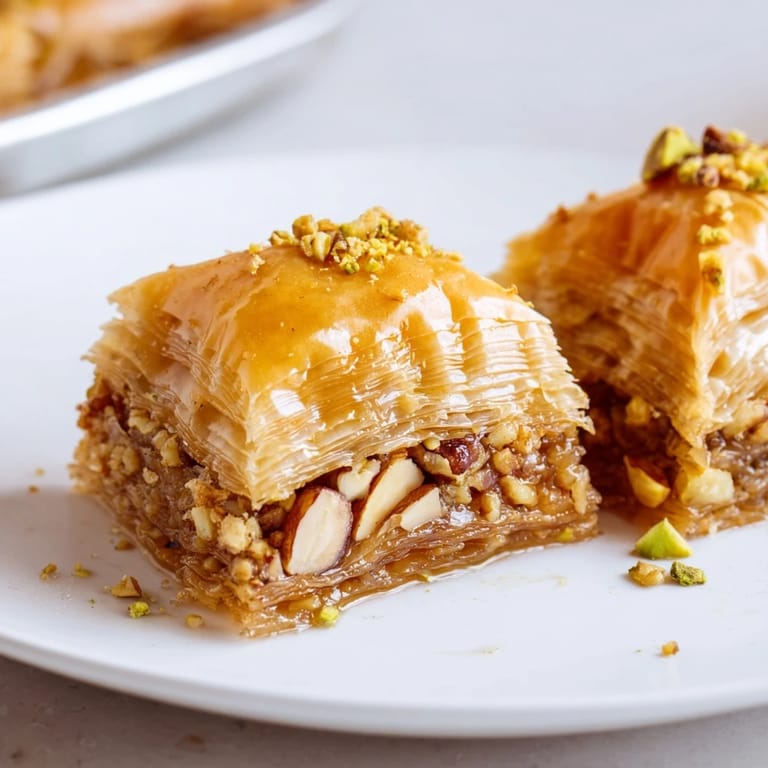
 My first baklava came together in my aunt's Istanbul kitchen on a humid July afternoon, the kind of day where the heat makes you move slowly and deliberately. She handed me a pastry brush still wet from the previous batch and showed me how to layer phyllo so thin it was nearly translucent, each sheet glistening with melted butter. The scent of warming nuts and cinnamon filled the small space as we worked side by side, and I realized this wasn't just about following steps—it was about patience, precision, and understanding why every layer mattered.
Years later, I made this for a dinner party and watched guests close their eyes after the first bite—that quiet moment of pure indulgence. One friend asked for the recipe before dessert was even finished, and I knew I'd gotten it right when she called the next day to say she'd already made it twice.
Ingredients
- Walnuts, finely chopped: The backbone of authentic baklava; their earthy richness keeps the filling from being cloying.
- Pistachios, finely chopped: These add brightness and visual texture—don't skip them even though they cost more.
- Almonds, finely chopped: A softer note that rounds out the nut blend without overwhelming the palate.
- Granulated sugar for the filling: Mix this with your nuts so it dissolves slightly and binds the layers together.
- Ground cinnamon: Use good quality cinnamon; it becomes more pronounced as the baklava rests.
- Phyllo dough, thawed: Never use it cold or you'll snap sheets instead of layer them—patience with thawing saves frustration.
- Unsalted butter, melted: Clarified is even better if you have it, as it browns less quickly and gives a cleaner flavor.
- Honey for the syrup: This is not the place to cheap out; decent honey makes a real difference in the final taste.
- Water: This dilutes the honey enough that it soaks in rather than just sitting on top.
- Granulated sugar for syrup: Dissolves faster than honey alone and creates the perfect consistency when cooled slightly.
- Lemon juice and zest: These prevent the syrup from being one-dimensional and add a subtle Mediterranean brightness.
- Cinnamon stick: Infuses the syrup without overpowering it like ground cinnamon would.
Tired of Takeout? 🥡
Get 10 meals you can make faster than delivery arrives. Seriously.
One email. No spam. Unsubscribe anytime.
Instructions
- Prepare your workspace and preheat:
- Heat your oven to 350°F and generously butter a 9x13 inch baking dish—this step prevents frustration when you're elbow-deep in phyllo. Have everything ready before you touch the dough, since phyllo waits for no one.
- Mix your nut filling:
- Combine walnuts, pistachios, almonds, sugar, and cinnamon in a bowl, stirring until the sugar coats everything evenly. The sugar helps the nuts hold together and prevents them from scattering as you layer.
- Unroll and protect your phyllo:
- Lay out your thawed phyllo sheets and immediately cover them with a damp kitchen towel—even five minutes of air exposure makes them brittle and crumbly. Work with purpose but without rushing; phyllo is forgiving if you treat it with respect.
- Build your first phyllo foundation:
- Lay one phyllo sheet flat in your prepared dish and brush it generously with melted butter using even, light strokes. Repeat this eight times, creating a buttery base that's going to give you that signature crispness.
- Add the first layer of nuts:
- Sprinkle one-third of your nut mixture evenly over the phyllo, pressing down slightly so it stays put when you layer the next sheets. Don't be shy—these nuts are what makes baklava special.
- Build your middle layers:
- Layer five more phyllo sheets, buttering each one, then add another third of the nuts and repeat the process one more time with five sheets and the final nut portion. This three-layer structure is what keeps baklava from being all pastry or all filling.
- Top it off:
- Finish with eight to ten more phyllo sheets, buttering each one meticulously because these top layers are what everyone sees and bites into first. The extra sheets here prevent the nuts from peeking through during baking.
- Cut with intention:
- Using a very sharp knife, cut the baklava into diamonds or squares while it's still in the pan—this is much easier than cutting after baking. Cut all the way through to the bottom so pieces release cleanly later.
- Bake until golden:
- Place in your preheated oven for 45 minutes until the top is deep golden and you can actually hear the phyllo crackling. You'll know it's done when your kitchen smells like caramelized nuts and butter.
- Prepare your syrup while baking:
- Combine honey, water, sugar, lemon juice, zest, and cinnamon stick in a saucepan and bring to a boil, then simmer for 10 minutes. Letting it cool slightly before pouring prevents the phyllo from absorbing it too quickly.
- The critical moment—syrup application:
- Remove the baklava from the oven and immediately pour the warm syrup slowly and evenly over the hot pastry, working corner to corner so every piece gets its share. This temperature contrast is the secret to baklava that's both crispy and soaked through.
- Patient cooling:
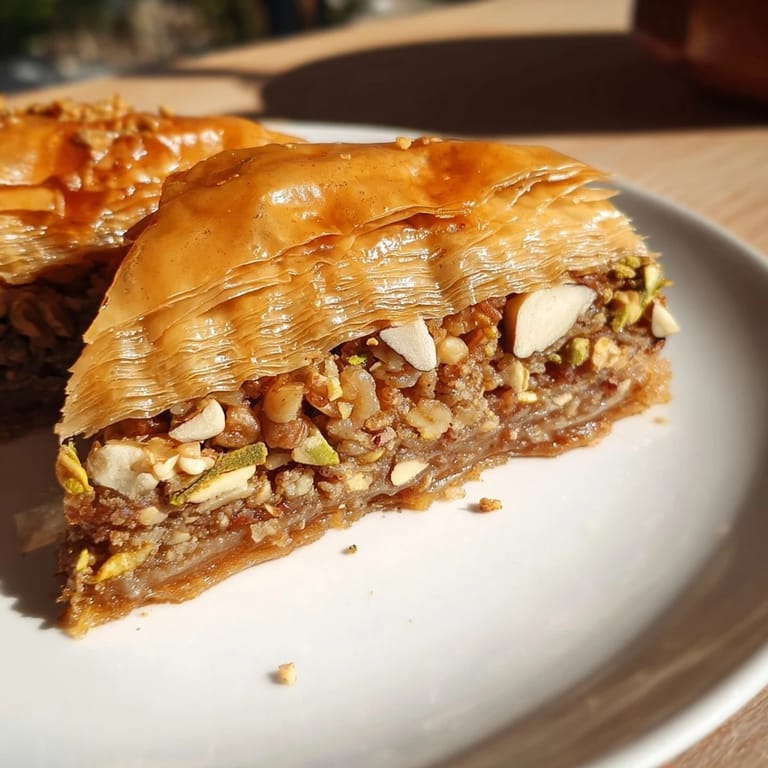
- Let the baklava rest completely at room temperature for at least four hours, though overnight is better—this gives the syrup time to soak all the way through. Resist the urge to cut into it before it cools or you'll end up with a messy situation.
 Save to Pinterest
 There's something almost ceremonial about serving baklava, the way guests pick up their piece with anticipation and that moment when they taste the contrast of shatter and syrup. It stopped being just a dessert for me when my neighbor started requesting it for her book club instead of buying from the bakery.
Why Patience Changes Everything
The hardest part of baklava isn't the assembly or even remembering not to skip the syrup step—it's waiting. The crunch under your teeth means nothing if you cut into it while it's still warm, and the syrup won't penetrate if you don't give it time. I've learned that these four or more hours of waiting are when the magic actually happens, when every layer comes into conversation with every other layer.
Storage and Serving Wisdom
Keep your finished baklava covered at room temperature; it actually improves over the next few days as the flavors settle and deepen. Pair it with strong Turkish coffee or tea, which cuts through the sweetness and makes you want just one more piece, even though one piece is never actually the final piece.
Variations and Personal Touches
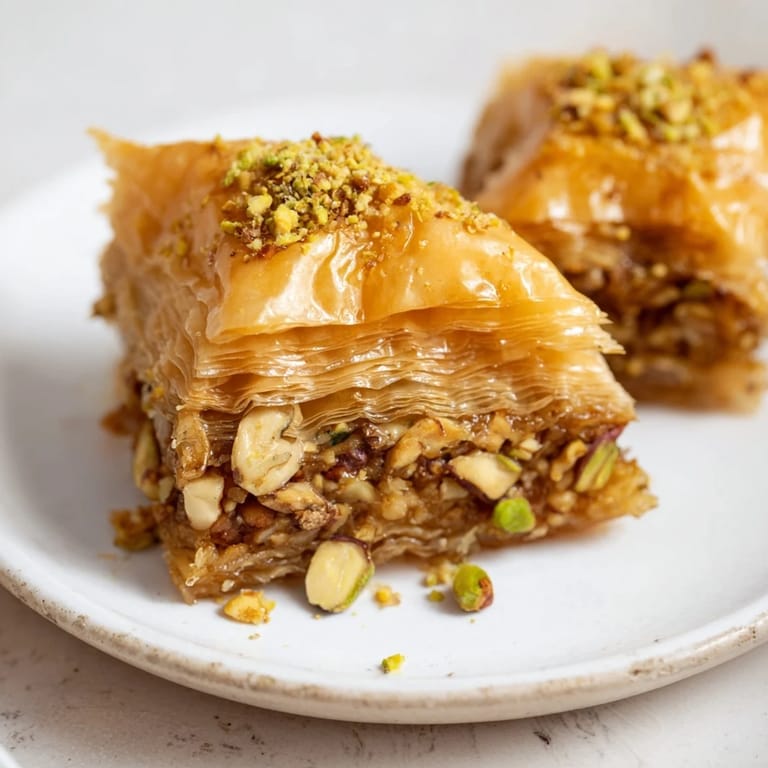
Once you've made this version, you'll start noticing how small changes shift the entire experience. Orange blossom water diluted into some of the honey creates a floral note that feels sophisticated, while a touch of rose water appeals to those who grew up eating Middle Eastern desserts. Experimenting taught me that baklava is forgiving—it's the structure and technique that matter most, not rigid perfection.
- Try substituting a quarter of the honey with orange blossom water for a subtle floral perfume.
- Add a pinch of ground clove or nutmeg to the nut filling for deeper warmth.
- Make extra syrup if you like yours extra-soaked; you can drizzle it on top even after it's cooled.
 Save to Pinterest
 Baklava taught me that the best recipes aren't about shortcuts or clever techniques—they're about respecting the process and the ingredients. Make this once and you'll understand why people have been layering phyllo and nuts the same way for centuries.
Recipe FAQs
- → What nuts are used in the filling?
The filling combines finely chopped walnuts, pistachios, and almonds, enhanced with a touch of cinnamon and sugar for depth of flavor.
- → How is the honey syrup prepared?
The syrup is made by simmering honey with water, sugar, lemon juice, lemon zest, and a cinnamon stick to impart a fragrant sweetness that complements the pastry.
- → What baking temperature and time are required?
Bake the layered pastry in a preheated 350°F (175°C) oven for about 45 minutes until golden and crisp.
- → How should baklava be stored after preparation?
Store the baklava covered at room temperature for up to one week to maintain its texture and flavor.
- → Can the syrup flavor be varied?
Yes, for a lighter flavor, some honey can be substituted with orange blossom water to add floral notes to the syrup.