 Save to Pinterest
 The first time I made baghrir, I was standing in a friend's kitchen in Marrakech, watching her grandmother work with the batter like it was second nature. She'd pour from memory, no measuring, just knowing when the consistency was right by the way it flowed from the spoon. Years later, I finally understood what she was doing—creating those magical honeycomb holes through the simplest, most elegant technique. Now whenever I make baghrir, I think of that morning, the smell of butter melting, and how something so delicate could feel so welcoming.
I made baghrir for my partner one Sunday, and the moment those holes started forming on the surface, they leaned over the stove and just smiled. There's something almost magical about watching a thin layer of batter transform into something lacy and golden without ever turning it over. We ate them straight from the pan with warm butter dripping everywhere, and it became our quiet ritual—less about following a recipe and more about that specific kind of morning magic.
Ingredients
- Fine semolina: The key to those gorgeous honeycomb holes; it absorbs water differently than regular flour, creating the signature texture that makes baghrir instantly recognizable.
- All-purpose flour: Balances the semolina's richness and gives the crepes enough structure to hold together without being tough.
- Warm water: Activates the yeast and creates steam, which is what actually forms those beautiful holes as the batter cooks.
- Active dry yeast: Not just for flavor—it's essential for creating the bubbles that make baghrir different from any other crepe you've ever had.
- Baking powder: A backup bubbler that ensures you'll get that honeycomb pattern even if your kitchen is cool.
- Sugar and salt: Sugar feeds the yeast and adds gentle sweetness; salt deepens the flavor and balances everything.
- Unsalted butter and honey: Serve these warm together so they meld into a luxurious sauce that soaks into all those holes.
Tired of Takeout? 🥡
Get 10 meals you can make faster than delivery arrives. Seriously.
One email. No spam. Unsubscribe anytime.
Instructions
- Mix Your Dry Foundation:
- Combine semolina, flour, sugar, yeast, baking powder, and salt in a large bowl. This is where baghrir's magic begins—getting everything evenly distributed means every crepe will have that perfect texture.
- Build the Batter:
- Whisk in warm water gradually, watching as the mixture transforms from shaggy to impossibly smooth and lump-free. The batter should pour easily but still coat a spoon; if it feels thick, you're on the right track.
- Let Time Do Its Work:
- Cover the bowl and let it rest for 30 minutes at room temperature. You'll see little bubbles forming on the surface—this is your yeast waking up and getting ready to create those holes.
- Heat Your Pan:
- Use a nonstick skillet or crepe pan over medium heat, and here's the important part: do not grease it. The batter has just enough moisture to cook without sticking, and any oil will interfere with how the holes form.
- Pour and Swirl:
- Pour about ¼ cup of batter into the center and swirl gently to spread it into a thin, even layer. Trust the gentle motion—aggressive swirling tears the delicate batter.
- Watch for the Holes:
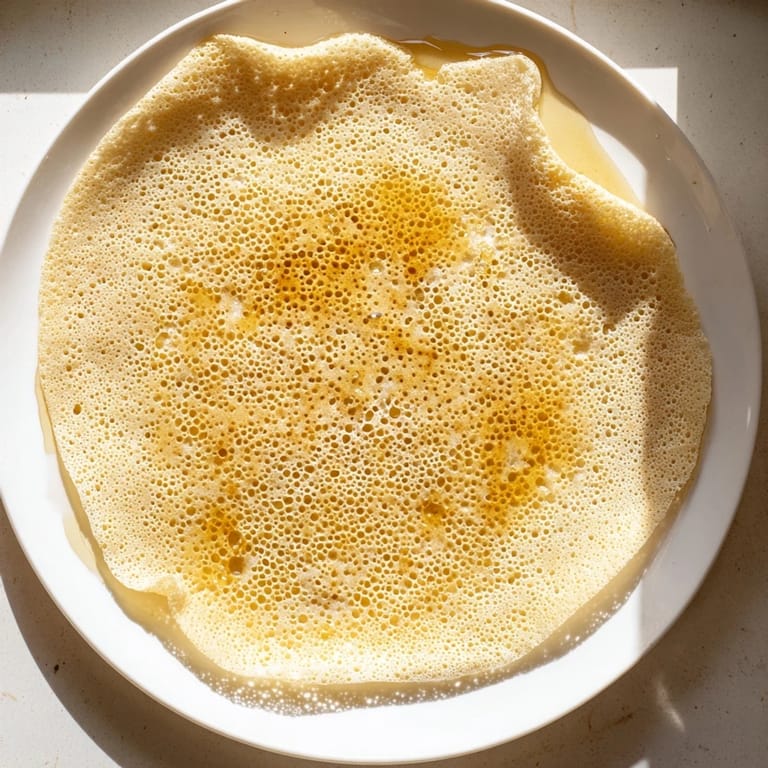
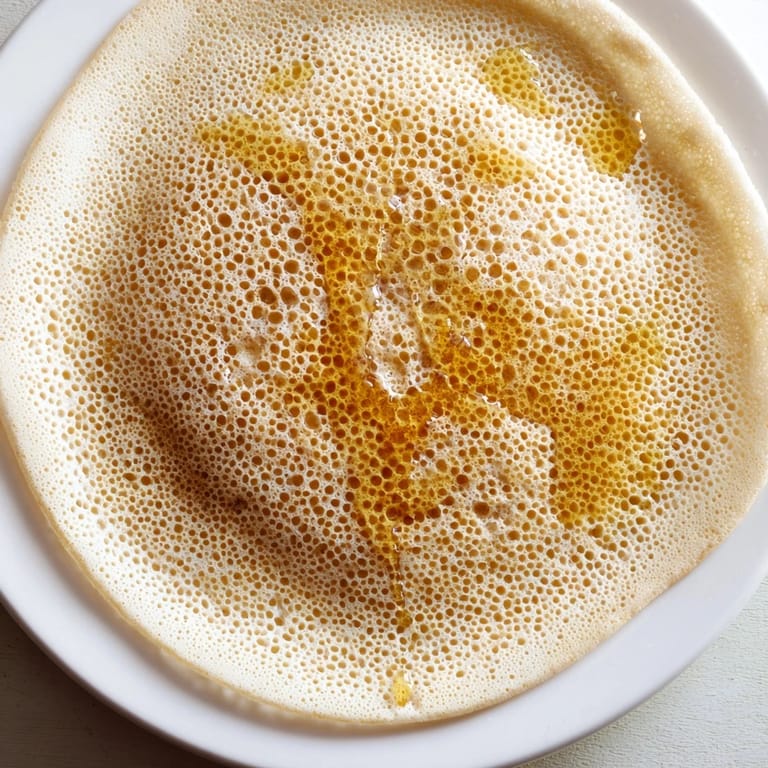
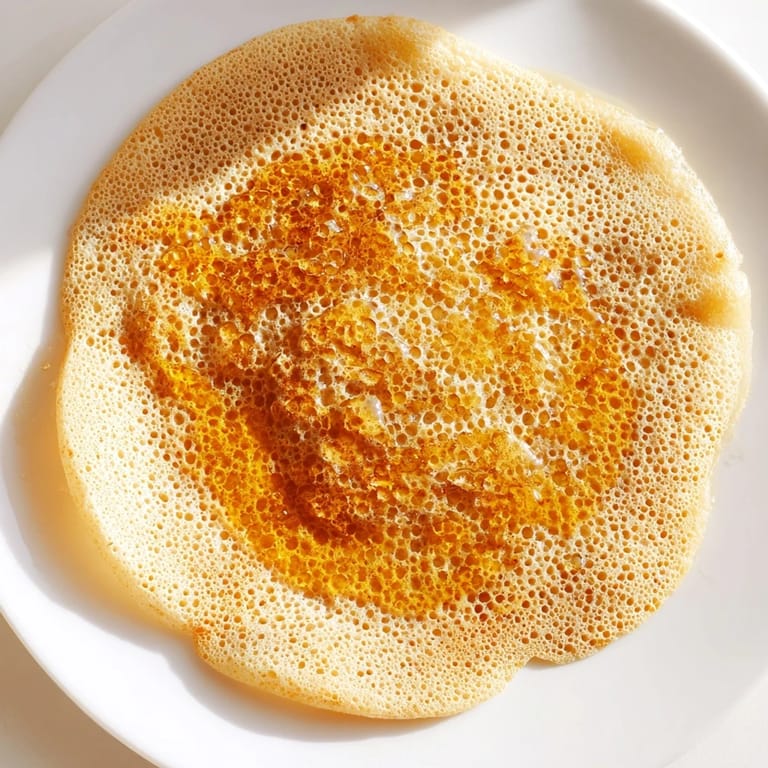
- This is the moment you've been waiting for. After 2–3 minutes, the surface will be completely covered with tiny holes and the top will look dry. Resist the urge to flip; baghrir doesn't need it.
- Remove with Care:
- Use a spatula to gently lift the baghrir onto a plate. Repeat with the remaining batter, stirring occasionally so the yeast and baking powder stay distributed.
- Warm the Honey Butter:
- In a small saucepan, melt butter and honey together over low heat until they're unified and warm. Pour generously over warm baghrir.
 Save to Pinterest
 There was an afternoon when my neighbor smelled baghrir cooking and knocked on my door with her daughter. We ended up making batch after batch together, and watching the little girl's face light up when she saw her first honeycomb surface—perfectly golden, perfectly dotted with holes—reminded me that the best recipes are the ones that bring people together in the simplest way.
The Secret of the Honeycomb
The holes in baghrir aren't a happy accident—they're a direct result of yeast and baking powder creating steam and carbon dioxide right at the surface of the batter. Unlike crepes, which are meant to be thin and delicate, baghrir relies on those bubbles to create its signature texture. The key is understanding that you're not cooking a crepe; you're cooking a very thin pancake that's learning to breathe. Once you see those first few holes pop, you know you're moments away from perfection.
Timing and Temperature Matter
Medium heat is your friend here, and it's worth spending a minute or two finding the exact right temperature before you start cooking. If you rush or turn up the heat, the bottom will char before the surface is set enough to form those holes. If the heat is too low, the batter just sits there and becomes rubbery. The sweet spot is when you can hear a gentle sizzle, see the batter immediately start to bubble, and watch those holes appear steadily over 2 to 3 minutes. It's a rhythm you'll find naturally after the first crepe.
Serving and Storing Your Baghrir
Baghrir is absolutely best served warm, right off the pan, with butter and honey still melting into every hole. If you're making them ahead, you can reheat them very gently—a few seconds in a warm oven or a quick pass over a low flame brings them back to life. Some people love adding chopped almonds or pistachios for texture, which pairs beautifully with the honeycomb and adds a little luxury to breakfast.
- Fresh baghrir tastes infinitely better than cold ones, so time your cooking for when you're ready to eat.
- If you make them in advance, store them in an airtight container and gently warm them before serving to restore their delicate texture.
- Honey-butter can be made ahead and reheated whenever you're ready to serve—it's actually nice when it's infused a bit.
 Save to Pinterest
 Baghrir has a way of turning an ordinary breakfast into something memorable. Make it for someone you care about, and watch their face when they taste that perfect combination of texture and sweetness.
Recipe FAQs
- → What gives Baghrir its honeycomb texture?
The characteristic honeycomb texture comes from the yeast and baking powder in the batter, which creates bubbles during the resting and cooking process, forming tiny holes on the surface.
- → Can I substitute semolina with other flours?
Semolina provides the signature texture and slight nuttiness; substituting with all-purpose flour may affect the consistency and honeycomb appearance, but a blend can be experimented with cautiously.
- → Why is Baghrir cooked only on one side?
Cooking on one side allows bubbles to form and dry on the surface without flipping, preserving the unique texture and preventing deflation of the batter’s air pockets.
- → How should the batter consistency be adjusted?
The batter should be pourable but not too thin; if after resting it’s too thick, adding a small amount of water helps achieve the right texture for smooth spreading.
- → What is the best way to serve Baghrir?
Traditionally served warm, drizzled generously with melted butter and honey, which enhances the light texture with sweet and rich flavors.