 Save to Pinterest
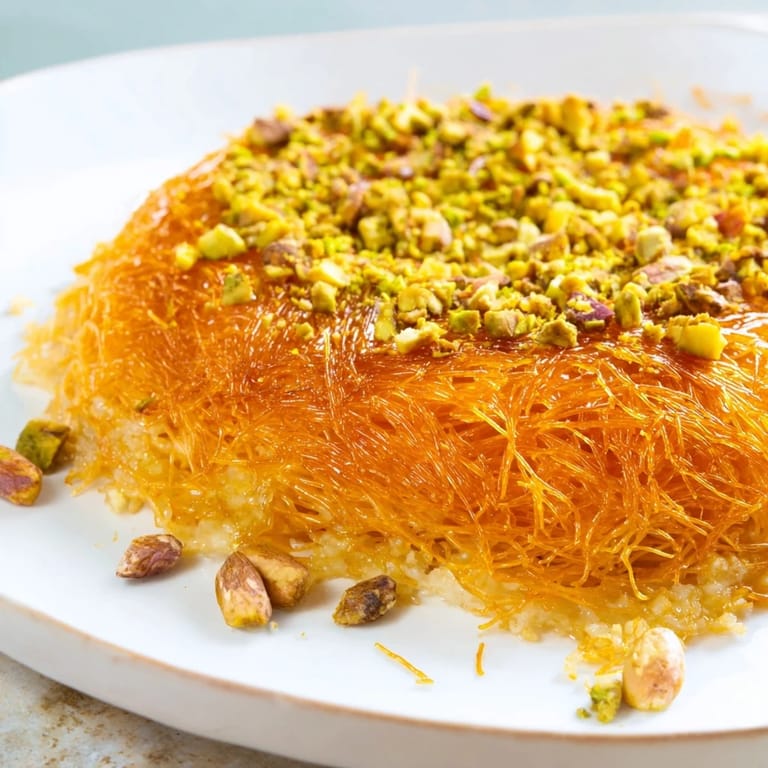
 The first time I watched my neighbor pull a knafeh from her oven, the aroma hit me like a warm embrace—honey and orange blossom swirling together with something almost nutty from the pistachios. She explained that knafeh wasn't just dessert in her family; it was how you said I love you on important days. When she handed me a slice still warm, the cheese stretched like warm silk, and I understood why this Lebanese treasure had traveled so far from home.
I made this for my sister's birthday dinner, and watching everyone's faces when they tasted it reminded me why food matters so much. One guest asked for the recipe before she'd even finished her first bite. By the time I served the last slice, three people were planning their own knafeh nights, and the empty platter was proof that this dessert has a quiet power to bring people together.
Ingredients
- Akawi cheese (400 g): This is the heart of authentic knafeh—mild, slightly salty, and able to stretch beautifully when warm. If you can't find it, unsalted mozzarella works, though the flavor won't be quite as delicate. Soaking removes excess salt and makes the texture perfect for melting.
- Ricotta cheese (200 g): Adds creaminess and prevents the filling from being too dense or rubbery when baked.
- Kataifi pastry (250 g): Those delicate shredded strands create the distinctive crispy texture that makes knafeh unmistakable. Let it thaw completely before using so it separates easily.
- Unsalted butter (100 g): Melted butter coats every strand and brings out that golden, toasted flavor as it bakes.
- Granulated sugar (250 g): The foundation of your syrup, creating sweetness and that light syrupy consistency that soaks into the warm pastry.
- Water (180 ml): Dissolves the sugar and creates the right consistency for the syrup to pour and soak without making everything soggy.
- Lemon juice (1 tbsp): A tiny acidic note that cuts through the sweetness and keeps the syrup from tasting flat or one-dimensional.
- Orange blossom water (1 tbsp): This is where the magic happens—floral, delicate, unmistakably Middle Eastern. A little goes a long way.
- Rose water (1 tbsp): Adds another layer of fragrance that makes each bite feel special and aromatic.
- Pistachios (2 tbsp, finely chopped): The garnish that looks beautiful and adds a slight crunch and subtle flavor.
- Honey (1 tbsp, optional): A final drizzle that adds extra richness if you want it.
Tired of Takeout? 🥡
Get 10 meals you can make faster than delivery arrives. Seriously.
One email. No spam. Unsubscribe anytime.
Instructions
- Start with the oven and begin the cheese ritual:
- Preheat your oven to 180°C (350°F). If you're using Akawi cheese, soak it in water for several hours or overnight, changing the water every hour—this removes the salt and is key to the final taste.
- Mix your cheese filling:
- Drain the Akawi well and pat it dry, then shred or slice it thinly. Combine it with the ricotta in a bowl, stirring gently so the texture stays light and creamy rather than compacted.
- Butter the pastry strands:
- Place the thawed kataifi in a large bowl and gently pull the strands apart with your fingers so they're loose and airy. Pour the melted butter over them and toss gently until every strand is coated and glistening.
- Build the base layer:
- Grease your 23 cm round baking dish well. Spread half the buttered kataifi evenly across the bottom, pressing down gently but firmly to create a sturdy, cohesive base that will hold the filling.
- Add the cheese and top it off:
- Spread the cheese mixture in an even layer over the kataifi base. Top with the remaining buttered kataifi, pressing down lightly so it stays crispy rather than compressed into a dense cake.
- Bake until golden and crackling:
- Bake for 30–35 minutes until the top is deep golden brown and the pastry strands look crispy and slightly curled at the edges. The house will smell incredible.
- Make the syrup while it bakes:
- In a saucepan, combine the sugar, water, and lemon juice. Bring to a boil, then reduce to a simmer and cook for 8–10 minutes until it's slightly thickened and coats the back of a spoon lightly. Remove from heat and stir in the orange blossom and rose water, letting it cool completely.
- The crucial flip:
- Remove the knafeh from the oven and let it rest for just a moment—not long enough to cool, just enough to handle. Place your serving platter upside down over the baking dish, take a breath, and flip it in one confident motion so the crispy layer is now on top.
- Soak and garnish:
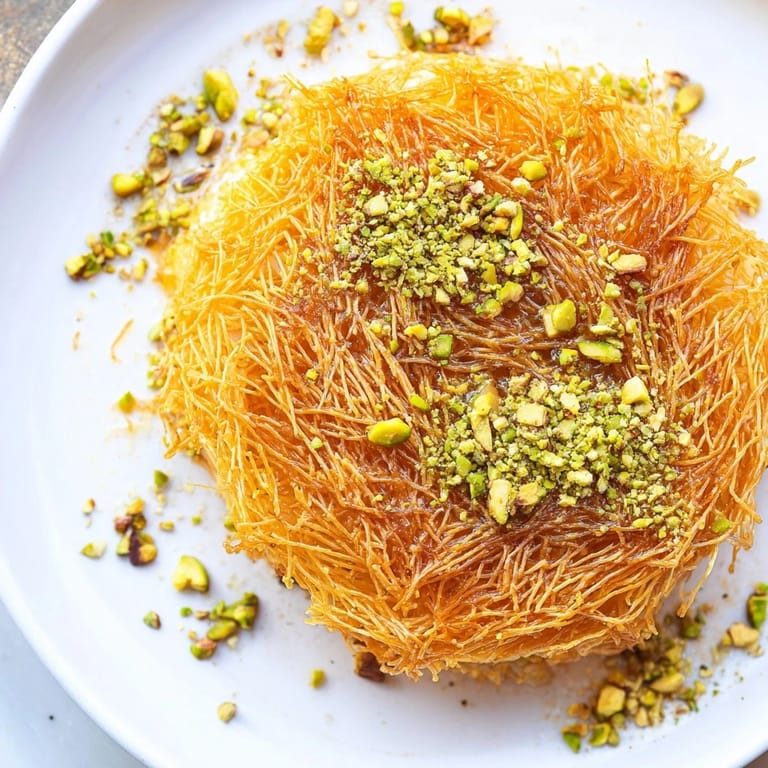
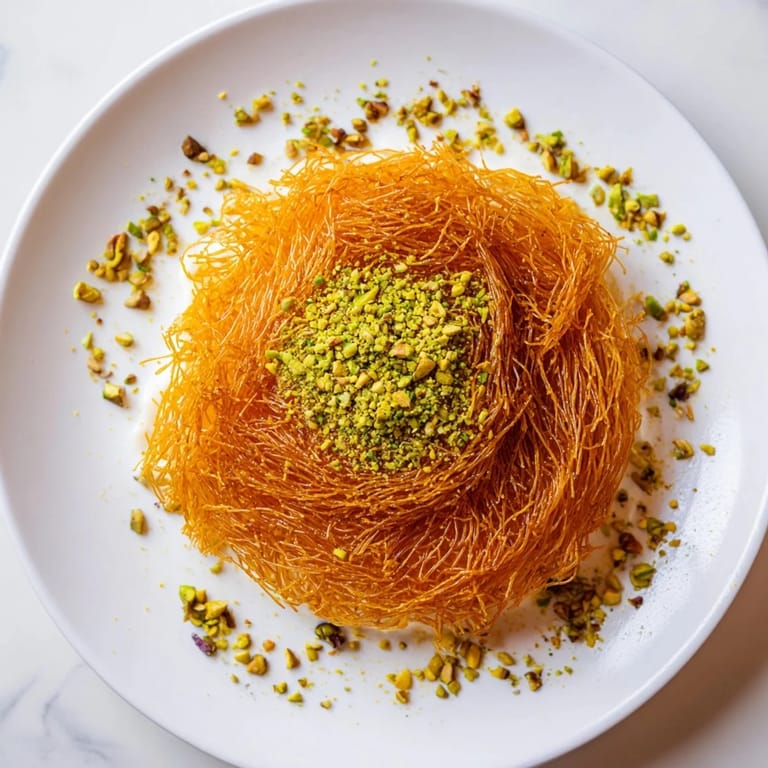
- Pour half the cooled syrup evenly over the hot knafeh, letting it soak in and soften the top layer slightly while keeping the bottom crispy. Scatter the chopped pistachios over the top and drizzle with honey if you like.
 Save to Pinterest
 My grandmother once told me that knafeh is a dessert that asks you to be present—you can't rush it, and you can't take shortcuts. That afternoon in her kitchen, I realized she wasn't just talking about the recipe; she was describing a way of cooking that honors both the food and the people eating it.
The Syrup—Your Secret Weapon
The syrup is what separates a good knafeh from the kind you dream about. Many people think it's just sweetener, but it's actually an aromatic experience delivered in every bite. The balance of orange blossom and rose water matters enormously—too little and you lose the distinctive flavor, too much and it tastes perfumey rather than delicate. I learned this by making it three times before I got the proportions right, and now I can taste the difference immediately. The lemon juice is the unsung hero that keeps everything from tasting cloying or one-note.
Texture and Timing
The beauty of knafeh is the contrast between the crispy, caramelized pastry on the outside and the soft, melty cheese inside. This doesn't happen by accident. The kataifi needs to be loosely separated so air can circulate and crisp it up, and the oven temperature needs to be moderate enough that the cheese melts without the pastry burning. If you want an extra-crunchy top, you can slide the whole thing under the broiler for 1–2 minutes right after baking, but watch it closely because the line between golden and burnt is quick. Serve it warm—this is not a dessert that improves with time sitting on the counter.
Making It Your Own
While the traditional recipe is beautiful as-is, I've discovered small ways to make it feel more personal. Some nights I use a touch more rose water because I love that floral note. Other times I add a tiny pinch of ground cardamom to the syrup for warmth and spice. The pistachios are traditional, but I've also scattered toasted almonds or even a few unsalted roasted seeds on top when pistachios weren't available. The core structure stays the same, but the personality shifts with your mood and what you have on hand.
- If you can't find kataifi, thin shredded phyllo dough pressed into strands works, though the texture won't be identical.
- Make the syrup first so it has time to cool completely before you need it.
- This dessert is best served the same day it's made, but leftovers reheat beautifully in a low oven for about 10 minutes if you need them the next day.
 Save to Pinterest
 Knafeh is one of those desserts that feels both simple and special at the same time, which is probably why it's been celebrated in Middle Eastern kitchens for generations. Make it once and you'll understand why.
Recipe FAQs
- → What type of cheese is best for knafeh?
Akawi cheese offers a traditional flavor and texture, but unsalted mozzarella or a mix with ricotta can work well for creaminess and stretchiness.
- → How do I prepare the kataifi pastry?
Gently separate the thawed kataifi strands and coat them evenly with melted butter to ensure a crisp, golden bake.
- → Why soak the cheese before use?
Soaking Akawi cheese removes excess salt, balancing its flavor and improving the final dish's taste.
- → How is the syrup made for soaking?
Combine sugar, water, and lemon juice, boil then simmer until slightly thickened, then flavor with orange blossom and rose water.
- → What garnishes complement knafeh?
Finely chopped pistachios add crunch and color; a drizzle of honey enhances sweetness and aroma.