 Save to Pinterest
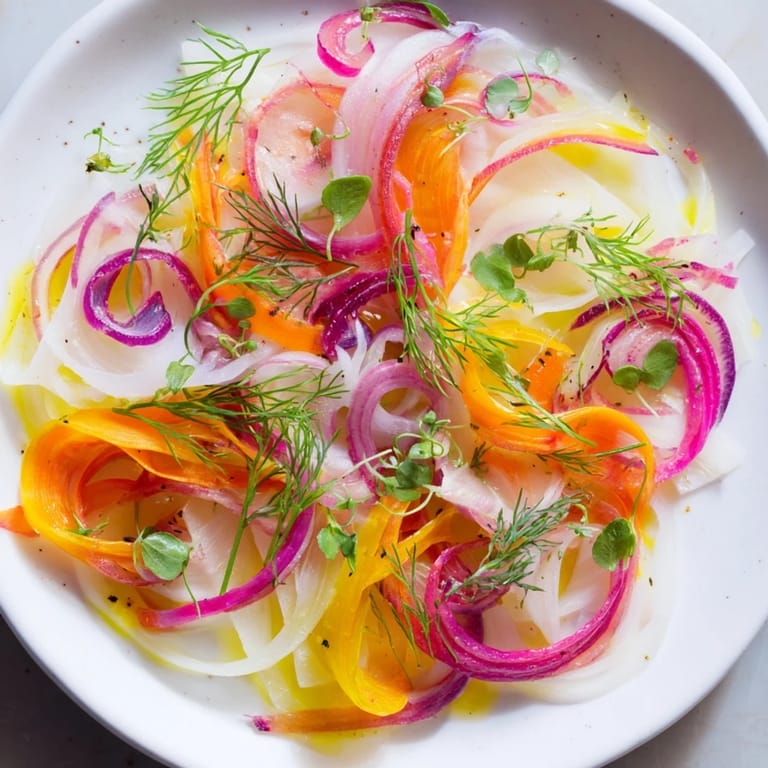
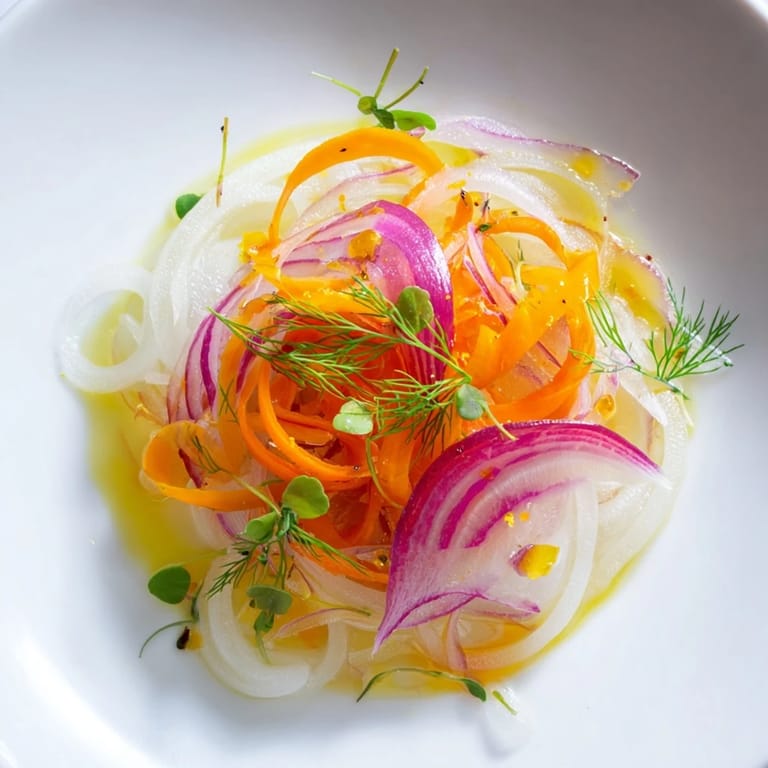
 I discovered The Spinning Top while watching a chef friend plate vegetables on a quiet Tuesday evening—she wasn't following a recipe, just moving her hands in circles, letting thin ribbons of fennel and beet create this hypnotic pattern on the plate. What struck me wasn't the technique but how alive the salad looked, like it was still moving even after she stepped away. I had to learn it, and now whenever I need to turn something ordinary into something that makes people pause, this is what I make.
The first time I made this for a dinner party, I arranged the vegetables on the plate and watched a guest lean in to look at it before tasting—like she was examining art instead of food. That moment of hesitation before the fork, that's what I'm chasing now. It taught me that salad doesn't have to apologize for being light or simple.
Ingredients
- Fennel bulb: The foundation—its slight anise sweetness becomes even more delicate when shaved paper-thin, almost like breathing licorice.
- Rainbow carrots: Use different colors if you can; the reds, oranges, and yellows are what make this salad actually spin visually.
- Golden beet: Earthier than its red cousin but less staining, which means less worry about color bleeding into everything else.
- Red onion: Just a small piece adds a sharp whisper that keeps the salad from feeling one-note.
- Fresh dill and chervil: These delicate herbs stay tender and won't wilt into the dressing if you add them just before serving.
- Microgreens: The final flourish—they catch light and make the whole thing look intentional.
- Extra-virgin olive oil: Good oil matters here because there's nowhere for it to hide.
- Lemon juice: Bright and immediate, waking up everything it touches.
- Honey and Dijon mustard: These two together create a dressing that coats without weighing down.
Tired of Takeout? 🥡
Get 10 meals you can make faster than delivery arrives. Seriously.
One email. No spam. Unsubscribe anytime.
Instructions
- Slice everything razor-thin:
- Using a mandoline or a sharp vegetable peeler, work slowly across the fennel, carrots, beet, and red onion. You want them wispy and almost see-through—if you can't hold them up to light and see through them, go thinner. Listen for the gentle scrape of blade on vegetable; it's meditative.
- Give them an ice bath:
- Drop the ribbons into a bowl of ice water and let them curl and crisp for 5–10 minutes. This is when they transform from floppy into bouncy, ready to hold their shape on the plate.
- Make the dressing:
- Whisk together the oil, lemon juice, honey, and mustard in a small bowl until it emulsifies slightly and turns pale. Taste it—you should feel the sharpness of lemon and the sweetness of honey in conversation with each other.
- Build the spiral:
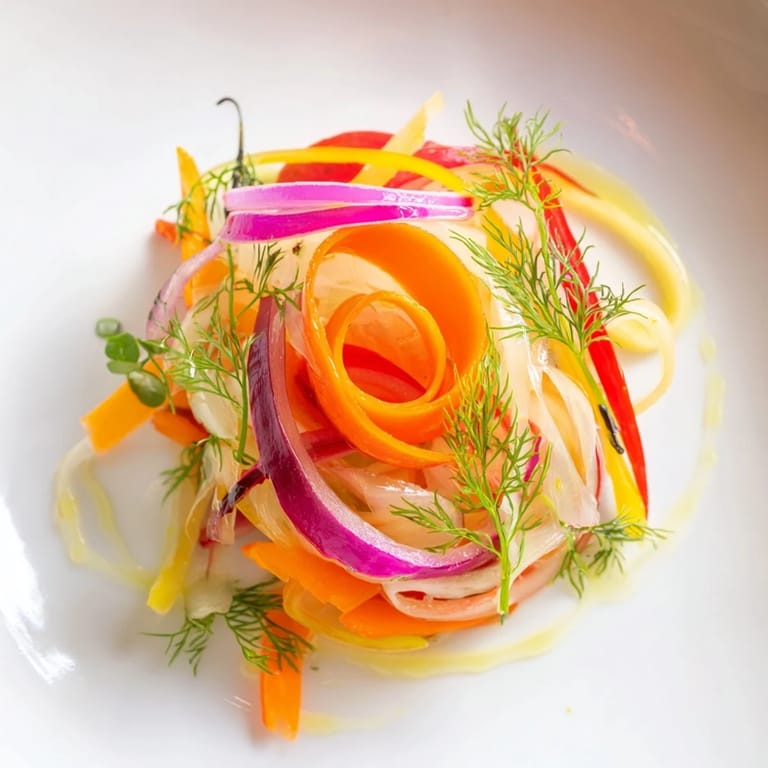
- Pat the vegetables completely dry, then arrange them on your plate in overlapping circles, starting from the center and spiraling outward. Let the edges curl slightly past the rim of the plate for that blurred, spinning effect.
- Layer the herbs:
- Scatter dill, chervil, and microgreens over the top, placing extra herbs around the outer edge where they'll catch the light and emphasize that sense of motion.
- Dress at the last second:
- Drizzle the dressing over everything just before it reaches the table—this keeps the vegetables crisp and the whole thing looking alive.
 Save to Pinterest
 I remember my sister taking a photo of this salad before eating it, something she'd never done before. When I asked why, she said it was too beautiful to let disappear into hunger without proof. That's when I understood this dish isn't just about taste—it's about creating a moment where food becomes something worth noticing.
The Mandoline Is Worth Learning
The first time I used a mandoline, I was nervous—the blade is serious and unforgiving. But once you find the rhythm, it becomes almost meditative, watching vegetables transform into silk. If you don't have a mandoline, a sharp vegetable peeler works, though it takes longer and your hand will remind you why tomorrow. Either way, take your time and keep your fingers away from the blade; the salad isn't worth the trip to urgent care.
Color and Contrast Are Everything
This dish lives on what it shows, not what it hides. When you pick your vegetables, look for a range—deep purple carrots next to bright orange, golden beet against red onion. The ice bath will make the colors pop further, and when light hits the plate, the whole thing glows like stained glass. Boring vegetables make a boring salad, no matter how perfectly you slice them.
Variations and Timing
Once you understand the technique, this salad becomes a canvas for whatever's fresh. I've added shaved radish for extra snap, thin ribbons of cucumber for subtle coolness, even delicate slices of crisp apple in autumn. The principle stays the same: thin, fresh, arranged with intention, and dressed at the last second. Some notes that help: This is a salad that demands to be served immediately, so don't make it more than 15 minutes before guests arrive. For a dinner party, you can prep all the vegetables ahead and assemble on the plate just before plating the main course. If you're feeding four people, one plate feeds everyone if you present it family-style, or you can portion it individually—the spinning effect is stronger when undisturbed.
- Shaved radishes or cucumber add textural variation and a subtle peppery or cool note.
- A handful of edible flowers scattered on top turns this into something even more precious-looking.
- Keep extra herbs on hand in case you want to add more at the table for guests to customize their own.
 Save to Pinterest
 The Spinning Top reminds me that sometimes the most impressive things on the table are the simplest to make. It's a salad that celebrates vegetables for being exactly what they are.
Recipe FAQs
- → How do I achieve the thin, wispy vegetable ribbons?
Use a mandoline slicer or sharp vegetable peeler to shave vegetables into almost translucent ribbons for delicate texture and appearance.
- → Why soak the shaved vegetables in ice water?
Ice water helps the ribbons curl slightly and crisp up, enhancing both texture and visual appeal.
- → Can I substitute herbs in this salad?
Yes, parsley can replace chervil, and other fresh herbs like tarragon or basil may add interesting flavor notes.
- → What is the best way to arrange the salad for presentation?
Arrange the vegetable ribbons tightly in a circular, overlapping pattern, scattering herbs toward the outer edges for a wispy, dynamic look.
- → How soon should the dressing be added?
Drizzle the dressing just before serving to maintain the crispness and delicate structure of the vegetable ribbons.
- → What drink pairs well with this dish?
A crisp white wine such as Sauvignon Blanc complements the fresh, bright flavors beautifully.