 Save to Pinterest
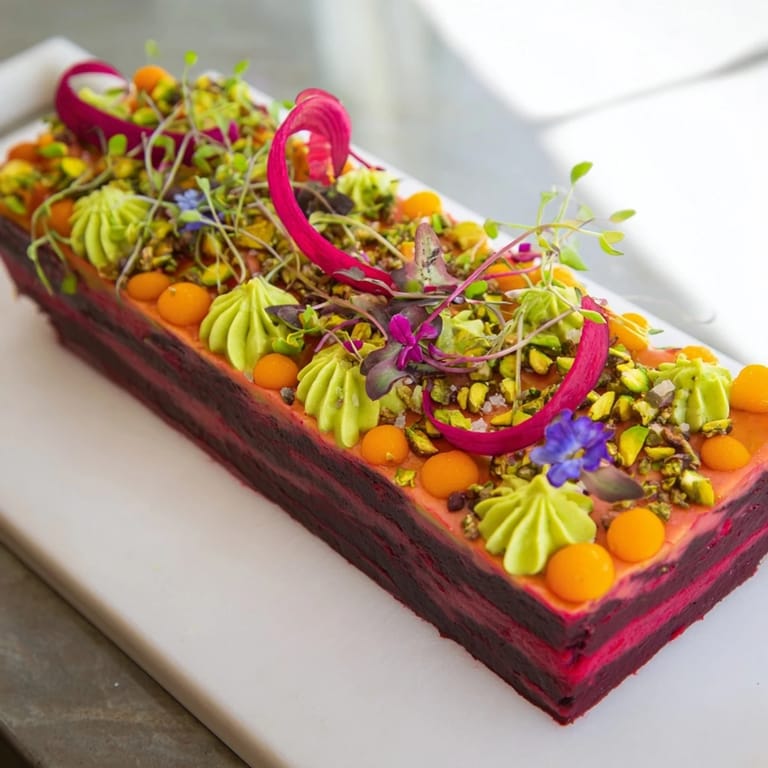
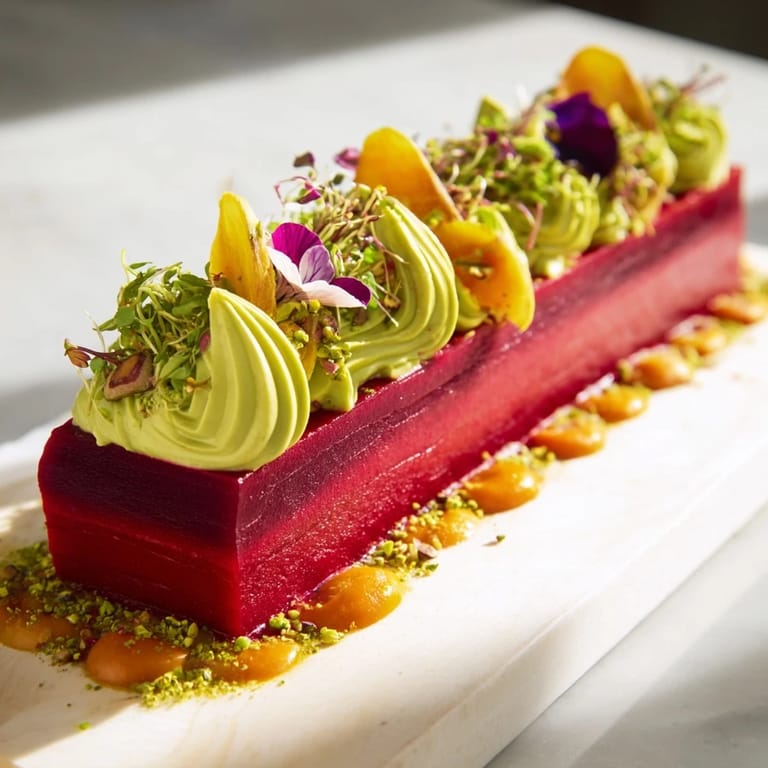
 I was standing in a gallery-style restaurant when a server placed the most arresting plate in front of me—nothing but a single bold stripe of color cutting across white porcelain. It stopped me cold. The beet deepened into magenta, the carrot glowed gold, and a whisper of green cream threaded through it all. I realized right then that food doesn't need to shout to be memorable; sometimes a clean line and honest colors say everything.
The first time I made this at home, I invited my sister over and told her nothing about what was coming. She walked in expecting pasta, and instead I set down this quiet, geometric beauty on a wooden board. She didn't say anything for a moment—just looked at it, then at me—and that silence was better than any compliment. That's when I understood the power of this dish: it makes people pause.
Ingredients
- Beets (2 medium, peeled and diced): The foundation of your stripe—roasting concentrates their earthiness into pure sweetness, and they're forgiving if your oven runs hot or cold.
- Carrots (3 large, peeled and sliced): Steam them until they're almost collapsing; undercooked carrots won't blend into silk, they'll stay grainy.
- Fresh ginger (1 tsp grated): Don't skip this—it's the thread that ties the carrot purée from sweet to sophisticated.
- Avocado (1 ripe one): This is the textural secret, adding creaminess and a gentle contrast to the earthier purées below.
- Greek yogurt (2 tbsp): Keeps the avocado cream from oxidizing too quickly and adds a subtle tang that brightens everything.
- Lime juice (1 tsp): Acid is your friend here—it prevents browning and cuts through richness with precision.
- Olive oil, sea salt, lemon juice: The quiet players that make everything taste like it remembers where it came from.
- Microgreens, edible flowers, crushed pistachios, flaky salt: These aren't garnish—they're the conversation starter, the reason someone asks for the recipe.
Tired of Takeout? 🥡
Get 10 meals you can make faster than delivery arrives. Seriously.
One email. No spam. Unsubscribe anytime.
Instructions
- Roast the beets until they collapse into themselves:
- Heat your oven to 400°F, toss your diced beets with olive oil and sea salt, spread them on a tray, and let them roast for 30–35 minutes. You'll know they're ready when a fork slides through them like they're already giving up. The kitchen will smell like earth and honey.
- Soften the carrots while the beets do their thing:
- Steam or boil your sliced carrots until they're almost falling apart—about 15–20 minutes—then drain and let them cool just enough to handle. This is not the time to undercook; mushy is your target.
- Blend the beets into a jeweled purée:
- Put your roasted beets and lemon juice into a blender or food processor and blend until the texture is completely smooth, glossy, almost liquid. If it's too thick, add splashes of water until you reach a spreadable consistency that'll hold a clean line on the board.
- Turn the carrots and ginger into a warm, spiced cloud:
- Blend the cooked carrots with ginger, butter, and salt until the mixture is equally smooth. Taste it—it should taste like distilled sweetness with a whisper of heat underneath.
- Mash the avocado into creamy submission:
- In a small bowl, mash the ripe avocado with yogurt, lime juice, and a pinch of salt until it's silky and uniform. If you're using a piping bag or squeeze bottle, transfer it there now for control; if you're using a spoon, that works too.
- Paint the beet stripe across your canvas:
- On a clean serving board, use a wide offset spatula or the back of a large spoon to spread a thick, roughly 3-inch-wide stripe of beet purée straight down the center. Don't second-guess the line—confidence matters here. Step back and look at it.
- Layer and arrange the secondary purées:
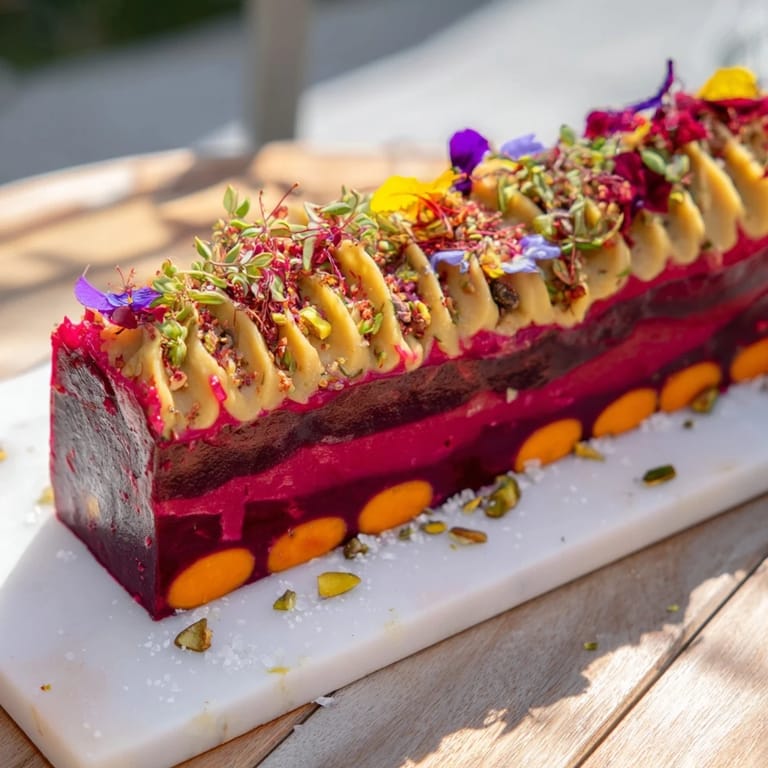
- Using a piping bag, squeeze bottle, or the back of a spoon, layer the carrot and avocado creams across the top of the beet stripe in artistic strokes or precise dots, whatever feels right in the moment.
- Garnish with intention:
- Scatter microgreens, edible flowers, and crushed pistachios across the stripe, then finish with a light sprinkle of flaky sea salt. The garnish should feel like punctuation, not apology.
- Serve it while it's still perfect:
- This is best eaten immediately, while the purées are at their ideal temperature and texture. Encourage your guests to scoop directly from the stripe—it's part of the experience.
 Save to Pinterest
 What surprised me about this dish is how it shifted the way I thought about feeding people. There's no sauce to hide behind, no complexity to excuse imprecision. It's just vegetables, done well, arranged with honesty. And somehow that simplicity made everyone around the table sit a little straighter.
Building the Perfect Stripe
The stripe is everything. I've learned that width matters—too thin and it looks precious, too wide and it loses its drama. Three inches down the center of a rectangular board is the sweet spot. The surface matters too; a light wood or even a pale ceramic creates contrast without fighting the colors. I once tried a black board thinking it would be striking, and it just absorbed all the light. Let the vegetables shine.
When Purées Won't Cooperate
Sometimes a purée comes out thicker than expected, and that's when you need a splash of vegetable stock or water to bring it to the right consistency. The beet purée especially can be stubborn—it wants to be thick and proud. I've also learned that letting purées cool to room temperature before plating helps them hold their shape better; warm purées want to spread and mingle, which is beautiful until it's not. Think of room temperature as the purée hitting its confidence peak.
Variations and Playful Swaps
This concept is endlessly adaptable. I've made it with roasted sweet potato instead of carrot, swapped in pea purée for something verdant, even experimented with a roasted squash stripe when beets felt too familiar. The magic isn't in the vegetables themselves—it's in the idea of taking something humble and presenting it with such clarity that it feels noble. Each time I try a variation, I learn something new about flavor combinations I never would have tested otherwise.
- Try roasted sweet potato, pea, or squash purées for different color stories and flavor profiles.
- Swap Greek yogurt for coconut yogurt to keep the dish fully vegan.
- Add roasted chickpeas or pickled onions if you want crunch and acid alongside the smoothness.
 Save to Pinterest
 This dish taught me that elegance isn't about complexity—it's about restraint and respect for what you're working with. Every time I plate it, I'm reminded that sometimes the most memorable meals are the ones that trust their ingredients to speak for themselves.
Recipe FAQs
- → How are the vegetable purées prepared?
Beets are roasted with olive oil and salt until tender and blended smooth. Carrots are steamed with ginger, then blended with butter or oil for creaminess. Avocado is mashed with yogurt and lime juice for a silky texture.
- → What garnishes complement this dish?
Microgreens, edible flowers, crushed pistachios, and flaky sea salt add fresh, crunchy, and aromatic accents to the vibrant purée stripe.
- → Can this be adapted for vegan diets?
Yes, substitute butter with olive oil and use coconut yogurt to keep the creamy avocado layer vegan-friendly.
- → What tools are needed for preparation and plating?
A baking tray for roasting, a blender or food processor for purées, a saucepan for steaming carrots, and an offset spatula or spoon for spreading the purée stripe.
- → How should this dish be served?
Present the layered purée stripe on a clean board and encourage guests to enjoy it by scooping directly from the vibrant layers, highlighting its visual and flavor appeal.