 Save to Pinterest
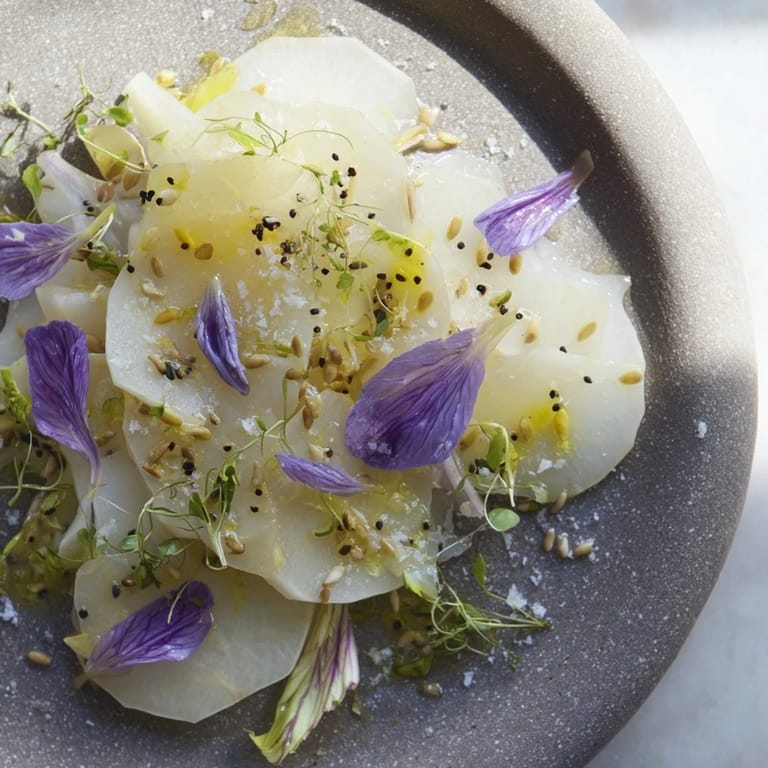
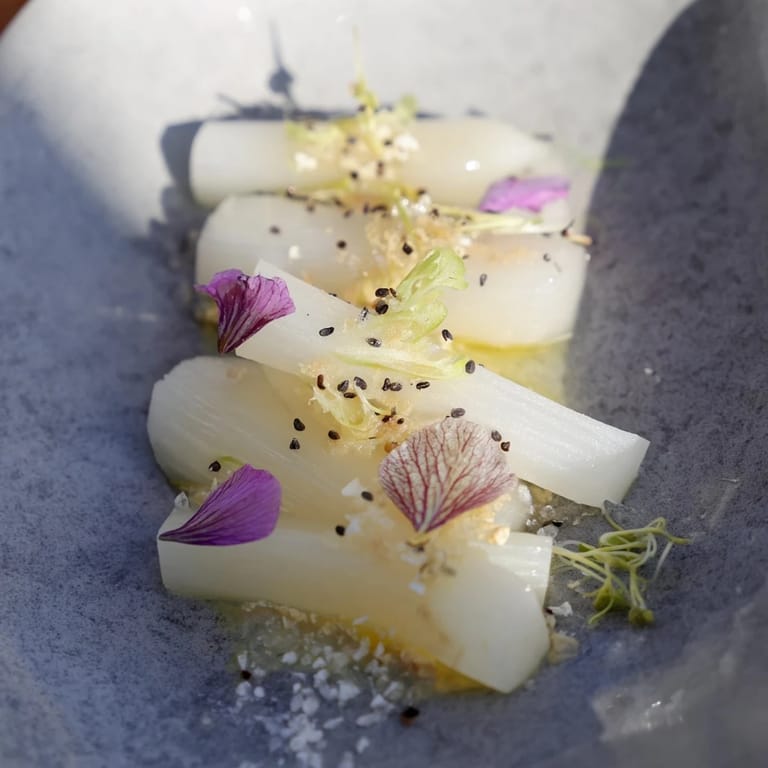
 I discovered this dish on a particularly gray afternoon, scrolling through photos of Iceland's barren landscape and feeling restless in my kitchen. Something about the stark, colorless beauty of tundra made me want to cook with the same visual philosophy—taking the simplest, palest ingredients and arranging them like nature's own art installation. The first time I plated it on a chilled stone, watching how the white sesame seeds caught the light against pale daikon slices, I realized I'd stumbled onto something that felt less like dinner and more like edible minimalism.
I remember serving this to my brother after he'd spent months in Arctic research, and watching his face shift as he recognized something familiar in the plate—the bleakness, but also its strange beauty. He didn't say much, just kept eating slowly, pausing between bites. That's when I understood this wasn't just a salad; it was a conversation between the cook and the eater about restraint, about finding richness in emptiness.
Ingredients
- Daikon radish: This pale, crisp root vegetable is the foundation of your tundra landscape—slice it thin enough to let light pass through, and it becomes almost translucent.
- Kohlrabi: Often overlooked, but when raw and thinly sliced, it has a delicate sweetness and satisfying crunch that anchors the plate.
- Belgian endive: Use the pale inner leaves for visual purity; their slight bitterness balances the sweetness of other vegetables.
- Cauliflower florets: Finely chop them into tiny pieces so they scatter like snow across the arrangement rather than sitting as heavy chunks.
- Coconut flakes: Unsweetened is key—sweetened flakes will throw off the subtle flavor balance and look too golden.
- Sesame seeds: Lightly toast the white seeds for a whisper of nuttiness; the black seeds are purely for contrast and visual drama.
- Microgreens: Pea shoots or radish sprouts add life and a peppery note that cuts through the delicate vegetables.
- Flaky sea salt: Don't skip this or use table salt—the texture and mineral quality matter here.
- Extra-virgin olive oil: A quality oil becomes half the flavor profile, so choose one you actually enjoy tasting.
- Lemon juice and white wine vinegar: Together they create brightness without the harsh acidity of either one alone.
- White pepper: Milder than black pepper and visually invisible, which keeps the monochromatic aesthetic intact.
Tired of Takeout? 🥡
Get 10 meals you can make faster than delivery arrives. Seriously.
One email. No spam. Unsubscribe anytime.
Instructions
- Chill your canvas:
- Pop that stone or marble platter into the freezer for 15 minutes. The cold plate keeps vegetables crisp and makes the whole experience feel intentional and special.
- Make the dressing:
- Whisk together olive oil, lemon juice, white wine vinegar, and white pepper in a small bowl until it tastes balanced—not too sharp, not too mellow. Taste it plain if you need to adjust.
- Scatter the foundation:
- Remove the chilled stone and begin arranging daikon and kohlrabi slices sparsely across the surface, leaving negative space—think of it as a white canvas with intentional gaps. Add Belgian endive leaves, keeping them scattered rather than clustered.
- Build the texture layers:
- Sprinkle the finely chopped cauliflower, coconut flakes, and both sesame seeds randomly across the vegetables. The pattern should feel windswept and organic, not symmetrical or overly composed.
- Add the liquid element:
- Drizzle the dressing lightly and unevenly across the plate—you want the vegetables to remain crisp, not soggy.
- Finish with life:
- Top with microgreens and a final pinch of flaky sea salt just before serving, so everything remains at peak texture and visual appeal.
- Serve immediately:
- This dish is all about the moment—the temperature, the crispness, the first bite when everything is still perfectly cold and crunchy.
 Save to Pinterest
 There was an evening when I made this for a dinner party and one guest, who'd never eaten anything quite so quiet and understated, asked why nothing tasted like much of anything. I suddenly realized that was exactly the point—this dish teaches you to taste vegetables for what they actually are, without the noise of heavy dressings or cooked complications. By the end of the meal, she came back for seconds, and whispered that she could finally taste the actual lemon.
The Art of Negative Space
What makes this dish work visually and texturally is restraint. It's tempting to fill every gap, to pile on more ingredients, to make it fuller and richer. But that's where the recipe loses its identity. The empty space on the plate is just as important as what sits on it—it's what makes your eye rest, what lets each element stand alone and together at the same time. I learned this the hard way, overloading my first attempt and watching the beauty collapse into visual chaos.
Playing with Temperature
One small detail changed everything for me: serving this alongside something warm. A bowl of hot vegetable broth on the side, or warm bread, or even just warm hands around a cold cup of soup. The contrast between the icy crispness of the plate and warmth elsewhere created a kind of tension that made people more aware of every sensation. It's like the tundra itself—harsh, pale, cold, but somehow more beautiful when you can retreat to warmth afterward.
Variations and Flexibility
Once you understand the framework of this dish, you can play with it. Some evenings I've swapped the white wine vinegar for yuzu juice and felt like I was cooking something entirely new. Other times I've added thin slices of apple or pear for a subtle sweetness. The skeleton of the recipe—pale vegetables, cold plate, minimal dressing, scattered seeds—stays the same, but the personality can shift with what you find at the market or what your mood calls for. If you want protein, thin flakes of smoked whitefish or a few chilled shrimp transform this into a more substantial course without disrupting its quiet elegance.
- Try rice vinegar instead of white wine vinegar for a different kind of brightness.
- Experiment with different microgreens to shift the flavor profile slightly each time you make it.
- A drizzle of white sesame oil adds richness without changing the visual palette.
 Save to Pinterest
 This dish reminds me that sometimes the most memorable meals are the ones that don't try so hard. It's a conversation starter precisely because it's so quiet. Serve it when you want people to slow down.
Recipe FAQs
- → What vegetables are used in this dish?
Thinly sliced daikon, kohlrabi, Belgian endive leaves, and finely chopped cauliflower create the foundation.
- → How is the dish presented?
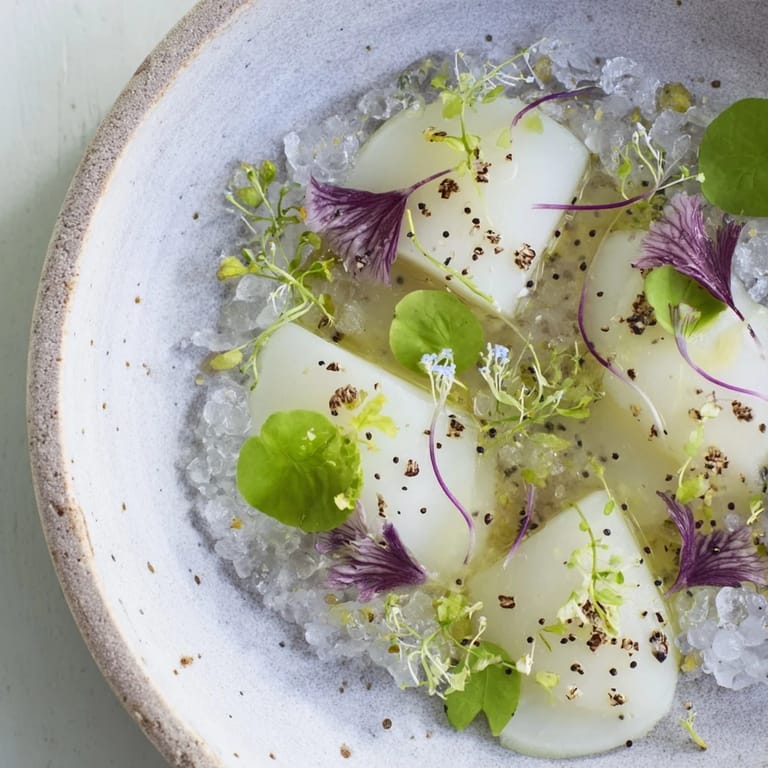
The ingredients are artfully scattered over a chilled stone or marble platter to evoke a minimalist, windswept tundra effect.
- → What dressing flavors complement the vegetables?
A light blend of extra-virgin olive oil, fresh lemon juice, white wine vinegar, and white pepper adds gentle acidity and spice.
- → Can this dish accommodate different dietary needs?
It is vegetarian and gluten-free; protein can be added with smoked whitefish or poached shrimp for non-vegetarian options.
- → Are there suggested garnishes or seasonings?
Toasted white and black sesame seeds, unsweetened coconut flakes, microgreens, and flaky sea salt add texture and flavor contrast.