 Save to Pinterest
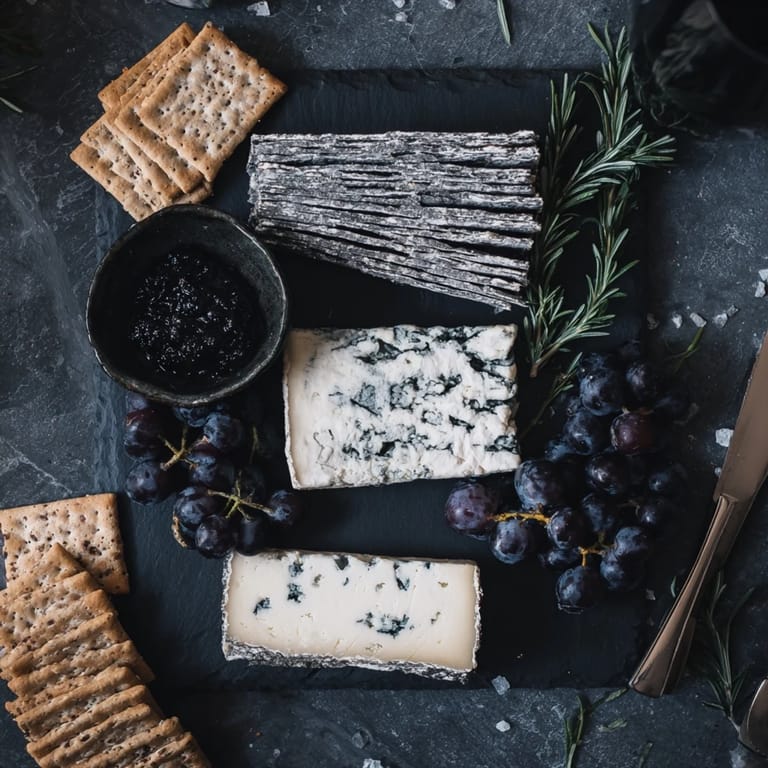
 I'll never forget the first time I saw a monochrome cheese board at a gallery opening in the city. It was so striking, so deliberately sophisticated, that I found myself studying it longer than the actual art on the walls. The interplay of ash-gray rinds, dark slate, and deep charcoal crackers felt like a conversation about elegance conducted entirely through texture and restraint. That night, I decided to recreate that experience at home, and what started as a visual experiment became one of my favorite ways to entertain—a board that whispers rather than shouts, yet somehow commands every eye in the room.
I made this board for my partner's colleagues last winter, and I remember one guest asking where I'd bought it from a bakery or catering company. When I said I'd assembled it myself in my kitchen, something shifted in the room—suddenly everyone wanted to know how, which cheeses I'd chosen, why slate made such a difference. That's when I realized a cheese board isn't just food; it's a small act of curation, a reflection of taste and intention.
Ingredients
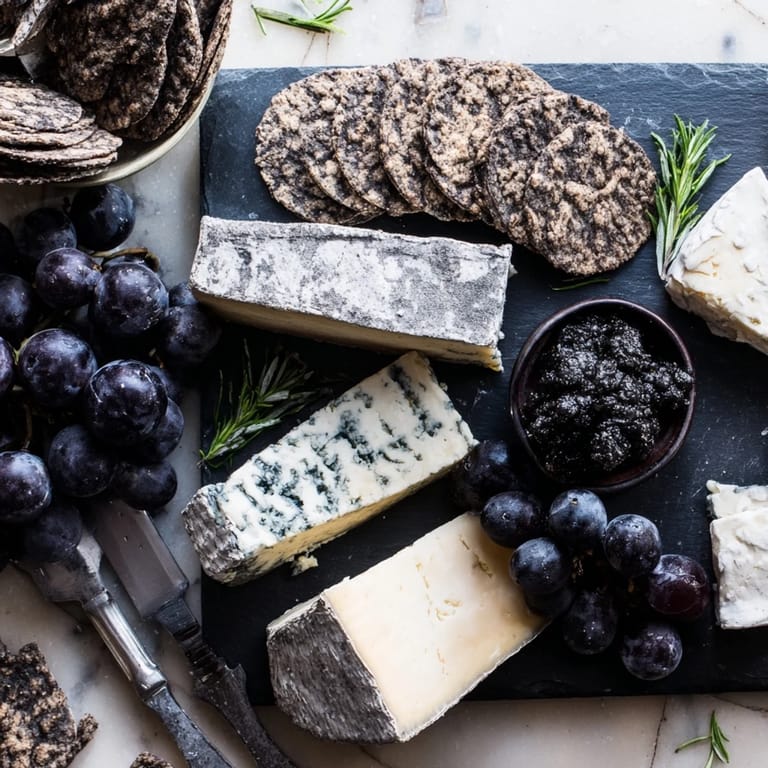
- Morbier or other ash-rinded semi-soft cheese (150 g): This cheese has a natural charcoal line running through its center—it's not just delicious with its buttery, nutty flavor, but it's the visual anchor of the board. I learned to slice it gently, letting the knife do the work rather than pressing down, which keeps those beautiful layers intact
- Humboldt Fog or similar ash-ripened goat cheese (120 g): Ash-ripened goat cheeses have a subtle tang that becomes creamy and almost floral as they sit. The gray rind isn't just for show; it creates a protective layer that keeps the delicate interior perfect. I slice these just before serving so they stay at their best
- Valdeon blue cheese with gray veining (100 g): Any blue with gray or silvery veins works here, but Valdeon is special—it's milder than many blues, with a buttery quality that doesn't overwhelm. The color is naturally there, which feels honest on this board
- Slate-colored charcoal crackers (8–10 pieces): These are the unsung heroes of the board. Find them at specialty stores or use black sesame crackers as a backup. They're dense, earthy, and provide the perfect textural contrast to soft cheese
- Dark rye or pumpernickel bread (6–8 slices): The deep color matters here, but so does the flavor—pumpernickel's slight sweetness plays beautifully against salty cheese. I cut the slices in half or thirds so they don't overwhelm the more delicate cheeses
- Black grapes or dark plums: These provide juicy sweetness against the salt and funk of cheese. I leave grapes whole but slice plums to show their deep interior color—it adds dimension
- Blackberries or blueberries: A small handful fills visual gaps and offers a moment of bright fruit. Blackberries especially add a slightly tart note that cleanses the palate
- Black olive tapenade (2 tbsp): This is a umami anchor, a savory moment that bridges between cheese and fruit. I spoon it into a small dark bowl so it doesn't get lost on the board
- Edible charcoal salt: A pinch of this is the final touch—not just for visual drama but for a subtle mineral quality that enhances the cheeses' own depth
- Fresh rosemary or thyme sprigs (optional): If you use herbs, choose gray-green varieties that won't break the monochrome mood. They add aroma and a delicate textural contrast
Tired of Takeout? 🥡
Get 10 meals you can make faster than delivery arrives. Seriously.
One email. No spam. Unsubscribe anytime.
Instructions
- Start with your canvas:
- Place your dark stone or slate board on a clean, flat surface where it has room to breathe. This is your stage, so let it be the hero. If you don't have a stone board, a dark ceramic platter or even a black cutting board works—the point is that darker surface that makes everything else feel richer
- Arrange the cheeses with intention:
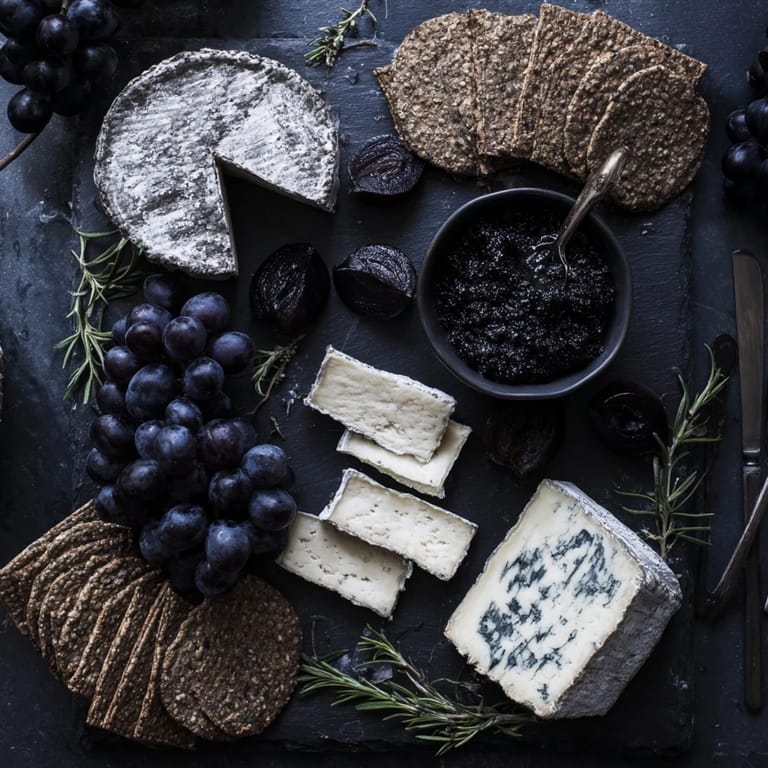
- Slice your cheeses thoughtfully—not paper-thin, but thin enough that they show their character. Morbier should be cut into thick slices so you see that charcoal line. The ash-ripened goat cheese can be cut into wedges or rounds. The blue cheese, into cubes or thin triangles. Arrange each type in its own section, leaving breathing room between them. This isn't a puzzle to fill; it's a landscape to admire
- Build the architecture:
- Stand your charcoal crackers and pumpernickel slices in small, casual stacks around the cheeses. Fan them slightly, as if inviting someone to reach in. This motion—the standing, the fanning—is what makes the board feel alive
- Fill the gaps with fruit:
- Scatter clusters of black grapes, sliced plums, and blackberries into the empty spaces. Let some berries roll slightly; imperfection is more beautiful than rigid symmetry. The dark fruit should nestle against the pale cheeses, creating visual contrast
- Add the tapenade moment:
- Pour the black olive tapenade into a small dark bowl and nestle it onto the board, or spoon it directly onto the board's surface. This is a flavor bridge, the salty-savory moment between creamy and fruity
- Season with drama:
- Sprinkle a pinch of edible charcoal salt over the cheeses—not everywhere, but strategically. This enhances flavor and deepens the visual sophistication. I learned this by accident once when salt spilled, and it was the moment the board clicked into place
- Garnish and present:
- Add a sprig or two of rosemary or thyme if you're using it, keeping the green minimal. Step back. Look at it. Serve immediately with cheese knives and small plates alongside
 Save to Pinterest
 Years ago, a friend came to dinner after a difficult week and didn't want to talk. We sat with a board like this—the kind that doesn't demand conversation but invites lingering—and somehow, between the cheese and the quiet beauty of the platter, the hard parts became easier to share. That's when I understood: a cheese board is never just cheese. It's permission to slow down, to look, to taste something good and feel a little more elegant just by being in its presence.
Choosing Your Cheeses: A Small Education
Ash-rinded cheeses are less common than their orange or white cousins, but they're worth seeking out. The ash isn't a gimmick—it creates a natural barrier that protects the cheese's delicate interior and develops a subtle, complex flavor as the cheese ages. Goat cheeses like Humboldt Fog have this ethereal quality, almost floral, that tastes like summer even in winter. Blue cheeses bring umami, that savory depth that makes everything else taste more like itself. When you combine these three, you're not just putting cheese on a board; you're creating a narrative of flavors. I learned this by accident, years ago, when I bought these cheeses separately for different reasons and then realized how perfectly they spoke to each other. Now, I always think about how cheeses will converse before I buy them.
The Art of Restraint: Why Less is More Here
There's a temptation, when building a cheese board, to add everything you can think of—nuts, dried fruit, honey, fresh herbs in rainbow colors. I had to learn, through trial and error (and one board that looked like a farmer's market exploded), that monochrome has rules. It's a discipline. The point isn't abundance; it's clarity. Every element should either echo the gray-and-charcoal palette or provide subtle textural contrast. Black grapes do both. Pistachio nuts would break the mood entirely. This board is an exercise in saying no to most things so that what remains can shine. That lesson has spilled into other parts of my cooking—and life—in unexpected ways.
Pairing and Serving: Creating the Complete Experience
A monochrome cheese board deserves thoughtful company—literally and figuratively. Serve it with wine that honors its sophistication: a Malbec with its deep red-black color and earthy notes, or a smoky Pinot Noir that matches the board's mood without competing with it. The cheese knives matter more than you'd think; dull knives tear delicate cheese, and tearing breaks the visual precision. Small plates should be dark or neutral. Bread plates from a casual dinner set work perfectly. I once served this board on mismatched plates—all dark, all different textures—and it somehow added to the intentional elegance. The key is thinking through every detail so that when someone reaches for a knife and small plate, they feel like they're part of something considered and beautiful.
- Pour wine just before serving so the board remains the visual star
- Keep extra cheese knives nearby in case one needs rinsing
- If guests ask what something is, tell them—part of the pleasure is learning
 Save to Pinterest
 This board isn't complicated, but it asks something of you: intention. That's what makes it special. When you serve it, you're not just feeding people; you're inviting them into a moment of considered beauty.
Recipe FAQs
- → What cheeses work best for this board?
Ash-rinded semi-soft cheeses like Morbier, ash-ripened goat cheeses such as Humboldt Fog, and blue cheeses with gray veining like Valdeon complement the monochrome theme and flavors.
- → Which breads and crackers suit this arrangement?
Slate-colored charcoal crackers and dark rye or pumpernickel bread slices provide the ideal visual contrast and texture balance.
- → What fresh fruits enhance the board?
Black grapes, dark plums, blackberries, or blueberries infuse sweet juiciness while maintaining the gray and dark color palette.
- → How does edible charcoal salt affect the board?
Sprinkling edible charcoal salt enhances flavor depth and adds a striking visual element, reinforcing the monochrome aesthetic.
- → Can the board be customized for vegetarian diets?
This board is inherently vegetarian, but it’s important to check cheese labels for animal rennet if strict vegetarian guidelines are required.
- → What optional garnishes can be added?
Fresh sprigs of rosemary or thyme add herbal aroma and visual contrast without overpowering the overall presentation.