 Save to Pinterest
 I first made this salad on a sun-drenched afternoon when my sister challenged me to create something that looked like edible art. Standing in the kitchen with vibrant green ingredients spread across my counter, I realized I could build an entire landscape with just vegetables and herbs. The moment I arranged those first layers of spinach and arugula, something clicked—this wasn't just a salad anymore, it was a canvas. That day, watching my family's faces light up as they saw this emerald masterpiece before diving in, I understood why presentation matters so much when you're cooking from the heart.
I remember making this for a small dinner party when one of my guests mentioned she was tired of looking at beige salads. I wanted to prove that healthy eating could be visually stunning too. When I brought that platter to the table and set it down, the entire room fell silent for just a moment before someone said, 'Did you actually make that?' It became the dish people texted me about weeks later, asking for the recipe because they couldn't stop thinking about how beautiful it was.
Ingredients
- Baby spinach leaves (100 g): These form your foundation—tender, mild, and the perfect backdrop for all the other greens. Baby spinach is more delicate than mature spinach, so it won't overpower your other flavors.
- Arugula (50 g): This adds a gentle peppery bite that wakes up your palate. It's what keeps the salad from feeling one-note.
- Cucumber, thinly sliced (1 small): Slice it just thin enough to see light through it if you can—that's when it becomes elegant instead of chunky. The cool, refreshing quality balances everything else.
- Green bell pepper, diced (1): Choose one that's a deep green rather than pale—it indicates ripeness and better flavor. Dice it into small, uniform pieces so it distributes beautifully.
- Kiwis, peeled and sliced (2): The tartness and those gorgeous seeds create little surprises. Slice them just before serving so they don't weep into the salad.
- Green grapes, halved (100 g): They add sweetness and a jewel-like quality to every bite. Halving them keeps them from rolling away and ensures they're easier to eat.
- Green olives, pitted and sliced (50 g): These contribute a briny depth that you didn't know you needed. Quality matters here—choose ones you actually enjoy eating on their own.
- Fresh basil leaves (30 g): Tear them by hand rather than cutting to avoid bruising. Basil is delicate and deserves that respect.
- Basil pesto (3 tbsp): Whether you buy it or make it, this is your salad's soul. It ties everything together with herbaceous richness.
- Extra-virgin olive oil (2 tbsp): Use something you love the taste of—this is where quality shows. It's not just a fat, it's flavor.
- Lemon juice (1 tbsp): Fresh lemon is non-negotiable here. It brightens everything and prevents the salad from tasting heavy.
- Salt and freshly ground black pepper: Season to taste, but remember that pesto and olives already bring saltiness, so go gently.
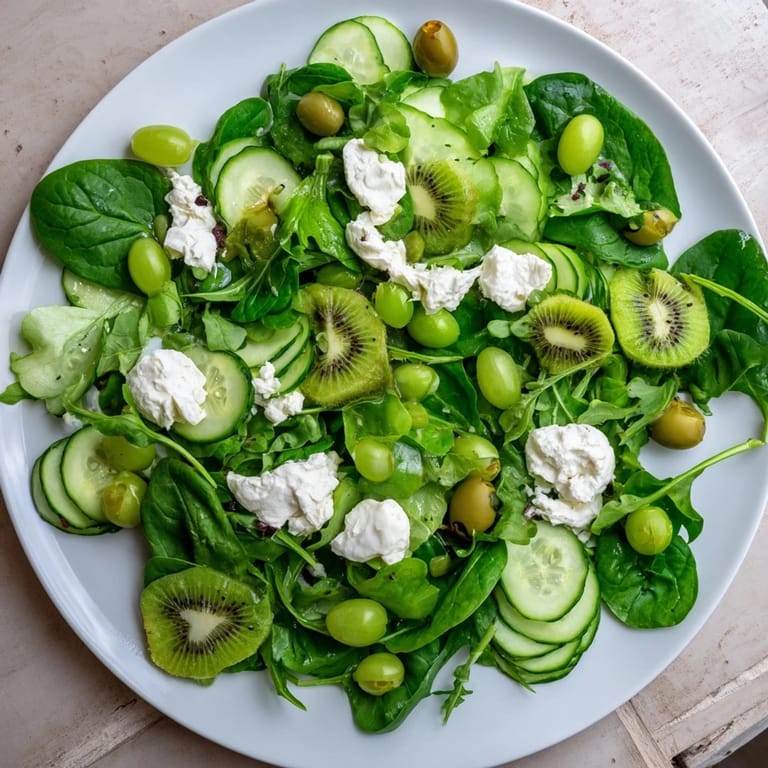
- Fresh mozzarella (100 g): This is your 'river.' Tear it into pieces if you want rustic charm, or slice it into thin ribbons for elegance. Room-temperature mozzarella tastes better than cold.
- Crème fraîche or Greek yogurt (1 tbsp, optional): This makes the cheese look even more luxurious and adds a subtle tang that makes people pause and ask what that flavor is.
Tired of Takeout? 🥡
Get 10 meals you can make faster than delivery arrives. Seriously.
One email. No spam. Unsubscribe anytime.
Instructions
- Build your green foundation:
- Tear the baby spinach into manageable pieces and scatter it across your largest serving platter, creating a generous base. Sprinkle the arugula over and around it. Don't be timid—you want visible layers of both greens, like you're painting with vegetation. This is where the magic of presentation begins, so take a moment to make it look intentional.
- Add the cool, crisp layers:
- Arrange your cucumber slices in overlapping rows or scattered patterns—whatever feels artistic to you. Distribute the diced green bell pepper evenly across the platter, letting the colors blend naturally. The cucumber and pepper should look like they're nestled into the greens, not just sitting on top.
- Create visual depth with jewel tones:
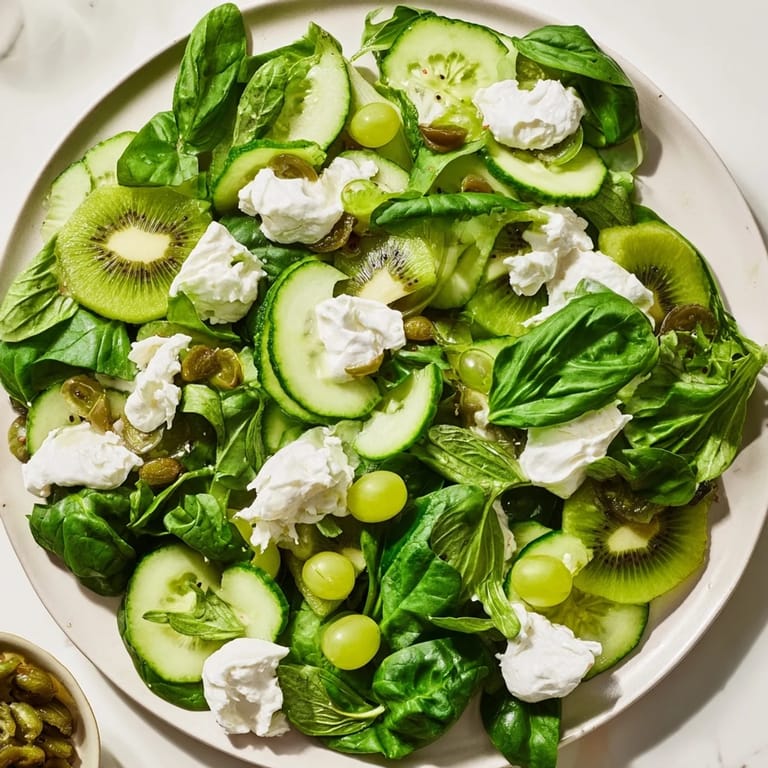
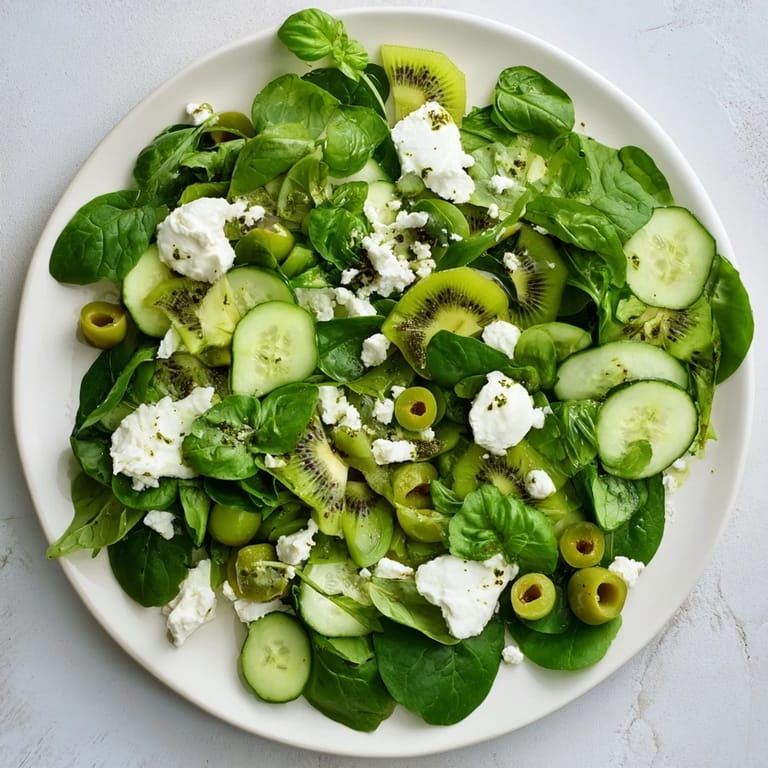
- This is where the salad goes from vegetable platter to edible landscape. Fan out the kiwi slices so you can see those gorgeous seeds. Scatter the halved grapes randomly but intentionally—let some nestle into the greens, let others sit prominently. Distribute the olive slices so they catch the light. Step back and look. You should see variation in shades of green and bursts of other colors.
- Weave in the basil:
- Tear fresh basil leaves by hand and tuck them throughout the salad. Let some lie flat on the surface, hide others underneath. This isn't just flavor—it's the aromatic finishing touch that makes people lean in closer.
- Make your dressing:
- In a small mixing bowl, whisk together the basil pesto, olive oil, and lemon juice. Taste it. Does it need more lemon brightness? A pinch more salt? This dressing should taste bold enough that you'd be happy eating it on a plain piece of bread. Season with salt and pepper until it sings.
- Dress with intention:
- Drizzle the dressing evenly across the salad using a spoon or by slowly pouring from a small pitcher. Don't drown it—you want to enhance, not saturate. A light hand here keeps the salad looking fresh and the textures crisp.
- Create the signature 'river':
- Here's where your salad becomes a work of art. Take your torn mozzarella pieces or thin slices and arrange them in a meandering line across the platter, like a river cutting through a landscape. Let it curve, wind, create movement. If you're using crème fraîche or yogurt, place tiny spoonfuls along this 'river' to enhance its creamy appearance.
- Serve with ceremony:
- Bring the platter to the table without tossing it. Let everyone admire what you've created for a moment. This is the reward for your effort—the pause before the meal, where you've made something beautiful. Then toss together or let guests serve themselves, keeping that artistry in mind as you combine everything.
 Save to Pinterest
 The most meaningful moment with this salad came when my seven-year-old nephew asked if he could help me make it for a family gathering. He was so careful arranging the kiwis in perfect rows, his tongue poking out in concentration. When the other kids asked if they could help themselves, he was so proud that he'd created something that made his cousins excited to eat their vegetables. That's when I realized the beauty of this salad isn't really about impressing adults—it's about making people feel something, including the person making it.
The Art of Layering
This salad teaches you something important about cooking that goes beyond recipes: presentation affects how food tastes and how people feel when they eat it. When you take the time to layer ingredients thoughtfully, you're not being pretentious—you're honoring the ingredients and respecting the people eating them. I've learned that a salad assembled with care tastes better than one thrown together haphazardly, even if the ingredients are identical. There's something about knowing that someone took time for you that changes the whole eating experience.
Variations and Personal Touches
Once you understand the structure of this salad, you can play with it endlessly while keeping that signature green aesthetic. I sometimes add roasted green pumpkin seeds for crunch, or sneak in some green goddess cheese instead of regular mozzarella. A friend of mine added thinly shaved fennel for a subtle licorice note that shouldn't work but somehow does. Another person I know tosses in some blanched green beans for something more substantial. The magic is in respecting the color palette while making it your own.
Pairing and Serving
This salad sits somewhere between a light lunch and an elegant side dish, which makes it surprisingly versatile. I serve it alongside grilled fish or chicken, and it feels like a restaurant-quality meal at home. It pairs beautifully with crisp white wines—a Sauvignon Blanc or Pinot Grigio if you're being traditional, or a citrusy sparkling water if you want to keep it refreshing and alcohol-free. The acidity in the wine or the fizz in the water complements the salad without competing with it. Make this for a potluck and watch it become the first thing people finish.
- Serve it on your most beautiful platter because the presentation is genuinely half the appeal.
- If you're making this ahead, keep the components separate and assemble it just before serving—your future self will thank you when everything is still crisp and vibrant.
- Don't skip the mozzarella 'river' even if you think it's silly—it's the detail that makes people remember this salad and ask for the recipe.
 Save to Pinterest
 Every time I make this salad, I'm reminded that cooking is really just an act of care. You're taking raw ingredients and arranging them into something that makes people pause and smile before they even taste it. That matters.
Recipe FAQs
- → What greens are used in this salad?
Baby spinach and arugula form the fresh leafy base, providing a mild and peppery foundation.
- → How is the creamy cheese layer created?
Fresh mozzarella is arranged in a flowing line across the salad, optionally dotted with crème fraîche for extra creaminess.
- → Can the dressing be made ahead of time?
Yes, the basil pesto dressing can be prepared in advance and drizzled just before serving to maintain freshness.
- → What adds the green accents and texture?
Slices of kiwi, green grapes, olives, and fresh basil leaves add diverse textures and vibrant shades of green throughout.
- → Is there a recommended pairing for this dish?
This salad pairs well with crisp Sauvignon Blanc or citrusy sparkling water, complementing the fresh and herbaceous flavor profile.