 Save to Pinterest
 The first time I made paella, I was standing in my friend's kitchen on a rainy Barcelona afternoon, watching her mother work with the confidence of someone who'd done this a thousand times. She didn't measure the saffron or worry about timing—her hands just knew. Years later, I finally understood: it wasn't magic, just patience and a willingness to let the rice listen to the heat. Now when I make this dish, I hear the gentle crackle at the bottom of the pan and know exactly where we are in the journey.
I remember making this for a table of eight on a chaotic Thursday night, and someone asked me what the secret was. I almost laughed—there's no secret, just good ingredients and the discipline to not stir the rice once it hits the pan. That moment of restraint, of trusting the process, felt like the most Spanish thing about it.
Ingredients
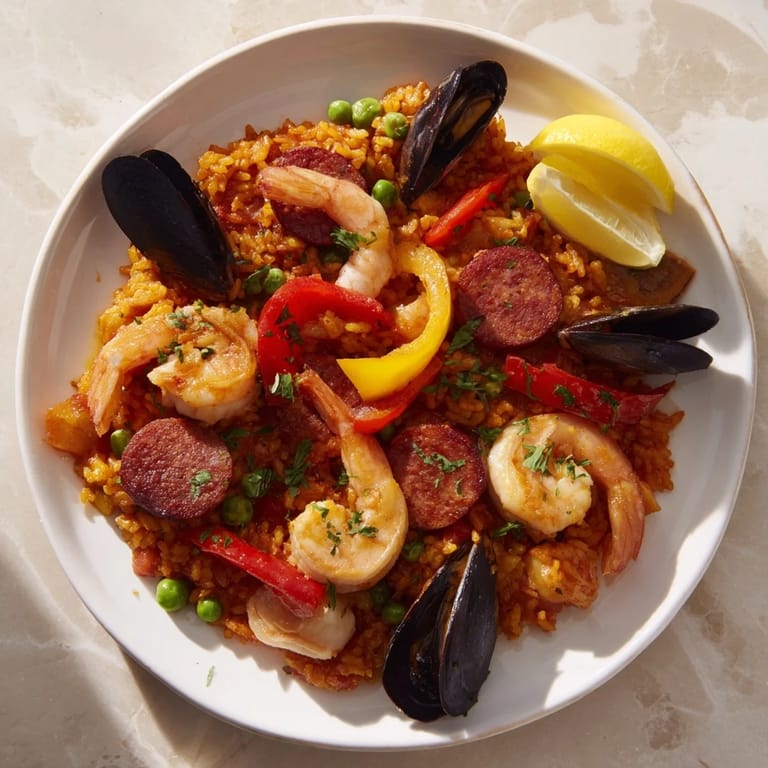
- Chorizo sausage, sliced: The smoke from good chorizo is non-negotiable; it's what gives paella its soul and colors the oil a beautiful brick red.
- Chicken thighs, bite-sized pieces: Dark meat stays juicy and flavorful where breast meat would dry out by the end of cooking.
- Large shrimp and mussels: Add them near the end so they stay tender and don't overcook into rubber.
- Calamari rings: Optional, but they add a gentle sweetness and interesting texture if you're feeling adventurous.
- Short-grain paella or Arborio rice: This rice absorbs liquid without turning mushy, and the grains stay distinct.
- Saffron threads: Worth the investment—it's bitter, earthy, and warm all at once, impossible to fake with turmeric.
- Smoked paprika: Use the Spanish kind (pimentón); it tastes like a campfire in a jar.
- Bell peppers, onion, tomatoes, garlic: This soffritto base is where the flavor foundation lives; don't rush browning it.
- Peas: They add brightness and a little sweetness; frozen ones work beautifully here.
- Bay leaf: Subtle but present, like a whisper of Mediterranean air.
Tired of Takeout? 🥡
Get 10 meals you can make faster than delivery arrives. Seriously.
One email. No spam. Unsubscribe anytime.
Instructions
- Prepare your saffron:
- Steep those threads in hot stock right away so they have time to release their golden color and earthy warmth. This step takes three minutes and changes everything.
- Brown the meat:
- Heat your oil until it shimmers, then add chorizo and chicken. Let them sit undisturbed for a minute or two so they get a proper crust—this is where the caramelized flavor comes from. Remove them to a plate once they're golden.
- Build your soffritto:
- In that same oil, now infused with chorizo fat, soften your onions and peppers slowly over medium heat. This isn't a race; four or five minutes of gentle cooking lets them release their sweetness without burning. Add garlic and tomatoes, stir, and let it all come together.
- Toast the rice:
- Pour the rice into the pan and stir it constantly for two minutes, coating every grain in the oil and vegetables. You'll smell when it's right—toasted, nutty, alive.
- Bring it together:
- Return the chicken and chorizo to the pan, pour in your saffron-infused stock and remaining stock, add the bay leaf, salt, and pepper. Give it one gentle stir to make sure nothing's stuck to the bottom, then step back.
- Simmer without stirring:
- Bring everything to a boil over medium-high heat, then lower the temperature and let it simmer uncovered for fifteen minutes. This is the hardest part—not stirring—but it's essential. The rice needs to absorb the liquid and form that prized crispy, caramelized bottom layer called the socarrat.
- Nestle in the seafood:
- Gently push the shrimp, mussels, and calamari (if using) into the rice so they're surrounded but not buried. Scatter peas over the top, cover loosely with foil, and cook for another ten to twelve minutes until the seafood is cooked through and the mussels have opened.
- Rest and reveal:
- Remove from heat, keep it covered, and let it rest for five minutes. This lets the heat distribute evenly and gives the flavors a moment to settle. Discard any mussels that didn't open.
 Save to Pinterest
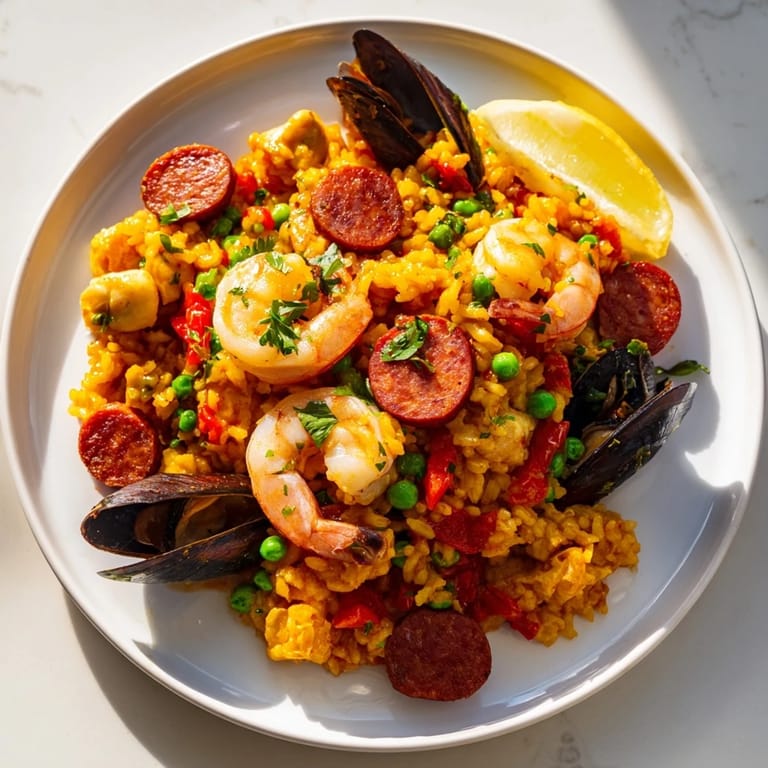
 There's a moment, right after you remove the foil and the steam clears, when the aroma of saffron and sea hits you like a memory you didn't know you had. That's when you know you've made something worth the time.
The Socarrat—Your Secret Weapon
The crispy, caramelized rice at the bottom of the pan is called the socarrat, and it's not a mistake—it's the goal. Listen for a gentle crackling sound about two-thirds of the way through cooking; that's your signal that magic is happening. If you're nervous, you can peek by lifting the edge of the rice with a wooden spoon, but once you know what to listen for, you won't need to look.
Choosing Your Seafood
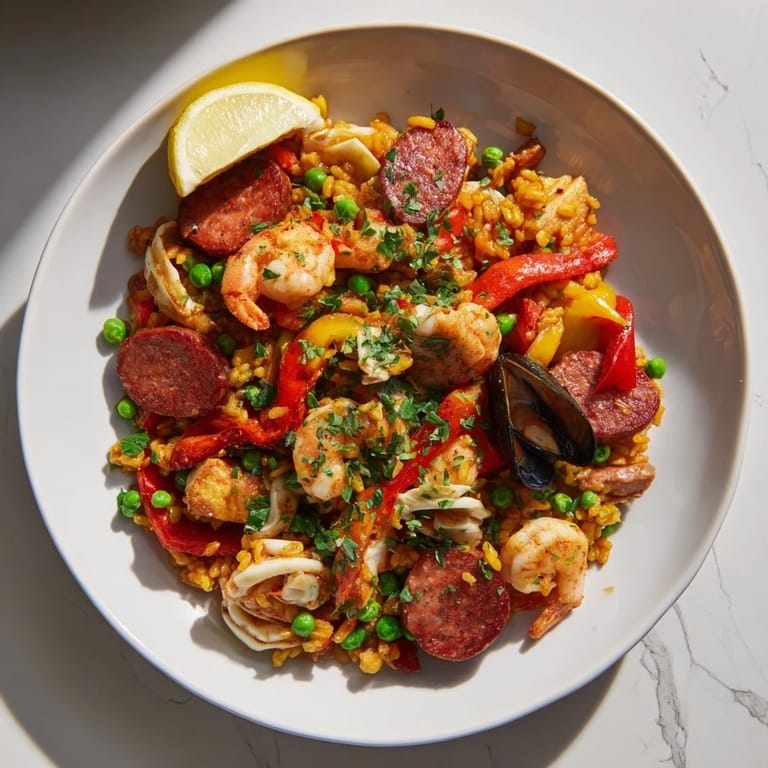
Paella is flexible, which is both its blessing and its challenge. Shrimp and mussels are the classics, but clams, scallops, even squid all work beautifully. The key is timing—everything should finish cooking at exactly the same moment the rice does. Larger pieces of seafood can go in earlier; delicate ones should wait until the last few minutes.
Wine Pairings and Serving
A crisp Spanish white wine like Albariño or Verdejo is the obvious choice, but honestly, a cold beer works just as well on a warm evening. Serve paella family-style directly from the pan if you're among people you love, and always have lemon wedges ready—a squeeze of brightness over each plate is the final flourish that ties everything together.
- Make sure your stock is hot when you add it; cold stock will shock the rice and mess with the cooking time.
- Don't skip the bay leaf—it's subtle, but it adds a depth that's hard to name.
- Taste the rice before serving; it should be tender with the slightest resistance when you bite it, not mushy.
 Save to Pinterest
 Paella is a dish that rewards presence, not perfection. Show up, pay attention to the sounds and smells, and trust that good ingredients and patience will get you where you need to go.
Recipe FAQs
- → What type of rice works best for this dish?
Short-grain rice like paella rice or Arborio is ideal as it absorbs flavors while keeping a tender texture.
- → Can I substitute seafood proteins in this dish?
Yes, clams or scallops can replace or complement shrimp, mussels, and calamari for variety.
- → How important is saffron in the preparation?
Saffron imparts a distinct color and earthy aroma that defines the dish's character. Using quality saffron threads is recommended.
- → What is the role of smoked paprika in this preparation?
Smoked paprika adds depth and a subtle smoky flavor that enhances the sausage and overall profile.
- → How do I prevent the rice from sticking during cooking?
Use a wide, deep pan and avoid stirring once simmering starts to encourage a delicate crust while preventing excessive sticking.