 Save to Pinterest
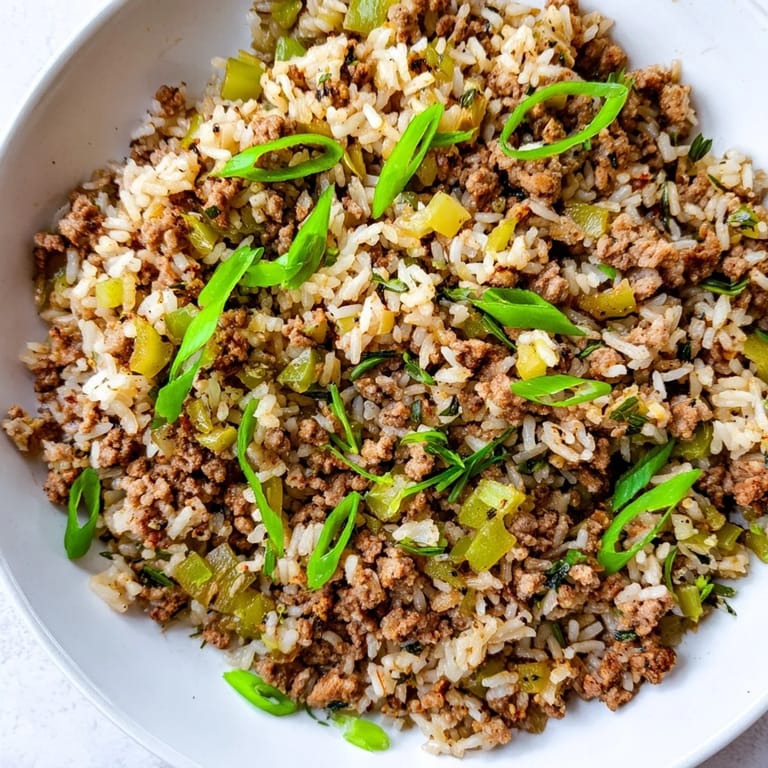
 There's something about dirty rice that stops you mid-conversation at the dinner table. I learned to make it from a neighbor who'd grown up in New Orleans, and the first time she walked me through it, I was struck by how the kitchen filled with the smell of sautéing meat and that holy trinity of onion, bell pepper, and celery before we'd even touched the rice. She said the name came from the meat coloring the rice, but really it's about nothing going to waste, everything mattering, and bold flavors that don't apologize. Now when I make it, I'm right back in her kitchen, learning that cooking Southern means letting your ingredients tell their own story.
The first time I made this for a weeknight family dinner, I remember my daughter asking why it was called "dirty" and then laughing when I explained it wasn't an insult at all. My husband went back for seconds before everyone else had finished their first plate, and that's when I knew this recipe belonged in regular rotation, not tucked away for special occasions. It became the thing I'd make when we needed comfort without ceremony.
Ingredients
- Ground pork (225 g): The backbone of this dish—it renders fat that flavors everything, unlike leaner meats.
- Ground beef or chicken livers (225 g): Beef keeps it approachable; livers are traditional and give deeper, earthier notes if you're brave.
- Onion, bell pepper, celery: This is your base, the holy trinity that builds flavor from the first minute you start cooking.
- Garlic (3 cloves): Mince it fine so it melts into the meat and seasons every grain of rice.
- Long-grain white rice (200 g): Rinse it first to remove excess starch—this prevents mushiness and keeps grains separate.
- Chicken broth (480 ml): Quality matters here since it's not masked by cream or fat; use low-sodium so you control the salt.
- Cajun seasoning (1 1/2 tsp): You can buy it or blend paprika, thyme, cayenne, and garlic powder—homemade costs less and tastes fresher.
- Smoked paprika, thyme, salt, black pepper, cayenne: These layer complexity—start conservative with cayenne, then taste and adjust.
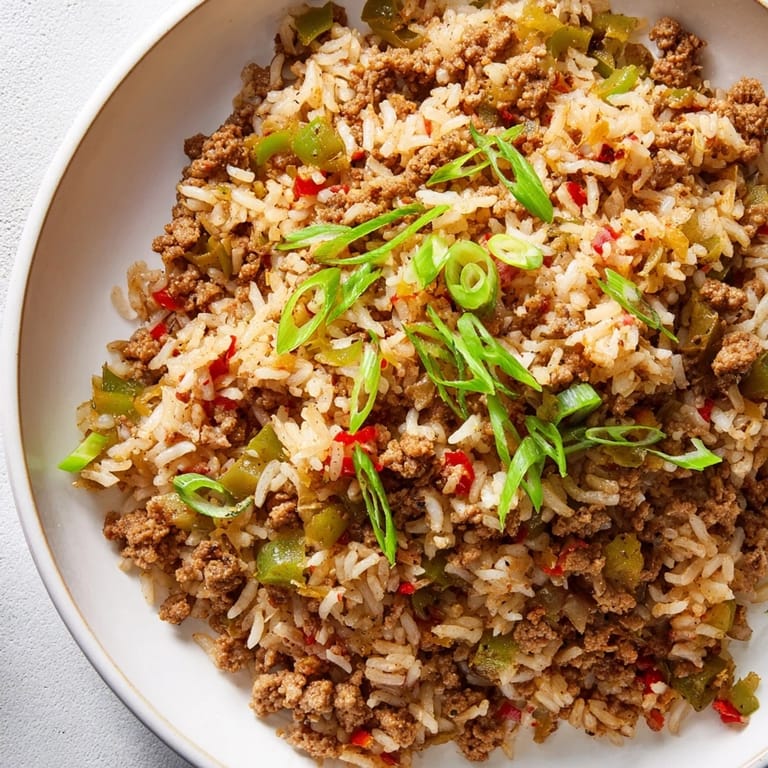
- Spring onions for garnish: The fresh bite at the end cuts through richness and reminds you this is food meant to be alive on the plate.
Tired of Takeout? 🥡
Get 10 meals you can make faster than delivery arrives. Seriously.
One email. No spam. Unsubscribe anytime.
Instructions
- Brown the meat:
- Heat oil in your largest skillet over medium-high heat until it shimmers. Add both meats and break them into small pieces with a wooden spoon as they cook—aim for crumbly, not chunky. You'll smell when it's ready, about 6 to 7 minutes, when the pink is completely gone and the meat starts catching color on the bottom.
- Build the flavor base:
- Add onion, bell pepper, celery, and garlic all at once. Let them soften together for 5 minutes, stirring occasionally so nothing sticks. This is where the kitchen gets fragrant in a way that promises something good is coming.
- Toast the spices:
- Sprinkle in your Cajun seasoning, thyme, smoked paprika, salt, pepper, and cayenne. Stir constantly for about a minute—you want the spices to wake up and coat everything evenly, releasing their oils into the meat and vegetables.
- Toast the rice:
- Add your rinsed rice and stir it around in the hot pan for 1 to 2 minutes. This dries the grains slightly and lets them soak up flavor instead of turning to mush later.
- Simmer until tender:
- Pour in chicken broth and bring everything to a boil—you'll see steam rising and hear the sizzle settle. Reduce heat to low, cover tightly, and let it cook undisturbed for 20 to 22 minutes. Resist the urge to peek; you want the liquid absorbed and the rice just tender.
- Rest and fluff:
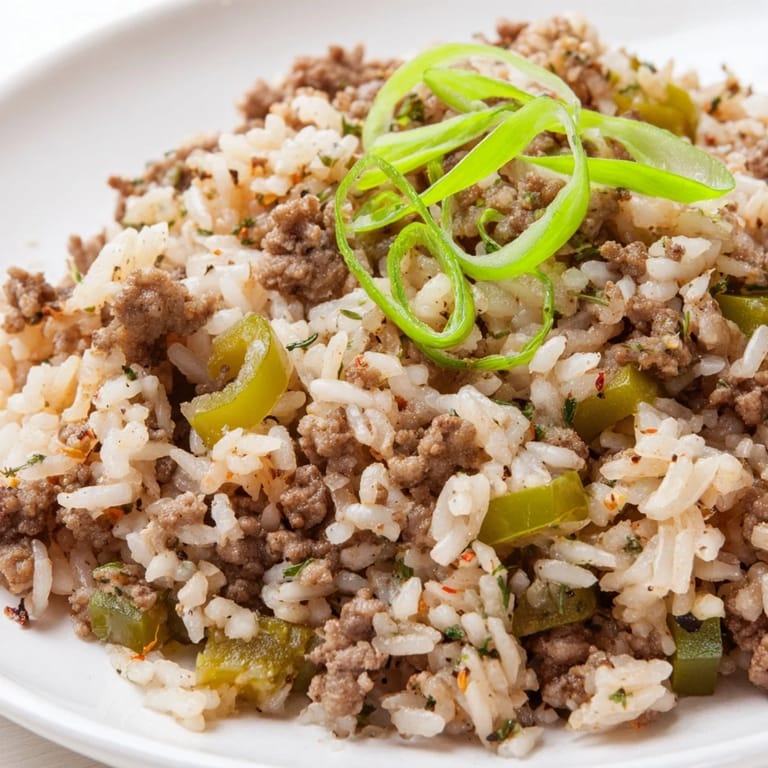
- Take it off heat and leave it covered for 5 minutes. This resting time lets the rice firm up slightly. Use a fork to fluff it gently, breaking up any clumps, so each grain stays separate and fluffy.
- Finish with freshness:
- Scatter sliced spring onions over the top just before serving. The green color and fresh bite are your last impression, balancing all that savory warmth underneath.
 Save to Pinterest
 I remember serving this at a dinner party where my friend brought hot sauce because she said it sounded too mild, then drizzled exactly one small line over her portion and spent the rest of the meal going back for more plain spoonfuls. That's when I realized the best recipes don't need to be the spiciest or most complicated—they just need to be honest and good enough that people come back for another bite.
Why This Dish Matters
Dirty rice comes from a time when nothing went to waste in the kitchen, when meat scraps and organ meats stretched further with rice and vegetables. It's not fancy or precious, but it's built on real technique and respect for ingredients. Making it connects you to generations of cooks who understood that the most satisfying food often comes from simplicity and bold flavoring, not fussy steps or exotic ingredients.
Choosing Your Protein
The pork is non-negotiable—it renders fat that flavors everything else and has a flavor that plays well with Cajun spicing. Your choice is really between beef and chicken livers for the second half. Beef is safer; it's familiar and reliable. Livers are traditional and worth trying at least once because they add a deeper, earthier dimension that purists expect. If you've never cooked livers before, buy them, smell them, and if you're not immediately put off, throw them in. You might surprise yourself.
Adjusting Heat and Flavor
Cajun seasoning does most of the heavy lifting here, but the cayenne pepper is optional and yours to control. I start with a quarter teaspoon and taste after cooking, then add more if I want heat. Some people love it fiery; others prefer it warm but not aggressive. There's no wrong answer—season to your table. If you want brightness, chop fresh parsley and stir it in at the end alongside the spring onions, or squeeze fresh lemon juice over individual servings.
- Taste the broth before you start; some broths run salty, and you'll need to adjust your salt accordingly.
- Make it your own with a pinch of dried oregano or a dash of hot sauce stirred in at the very end.
- Leftover dirty rice keeps beautifully in the fridge for three days and reheats gently with a splash of broth if it's drying out.
 Save to Pinterest
 This is the kind of recipe that works because it's forgiving and honest, asking only that you pay attention to what you're cooking and taste as you go. Make it once and it becomes yours to adjust, to make your own, to share with people you want to feed well.
Recipe FAQs
- → What meats are traditionally used in Cajun dirty rice?
Ground pork and beef are commonly used, with chicken livers as a traditional alternative to add depth of flavor.
- → How is the rice cooked to achieve the right texture?
The rice is toasted briefly with the spices before simmering in chicken broth, allowing it to absorb rich flavors and become tender.
- → Which spices provide the characteristic Cajun flavor?
Cajun seasoning typically includes smoked paprika, thyme, cayenne pepper, black pepper, and salt to create a bold and aromatic profile.
- → Can this dish be made dairy-free?
Yes, this dish naturally avoids dairy ingredients, making it suitable for dairy-free diets.
- → What garnishes enhance this dish best?
Sliced spring onions add freshness and color, while optional chopped parsley and a side of hot sauce can complement the flavors.