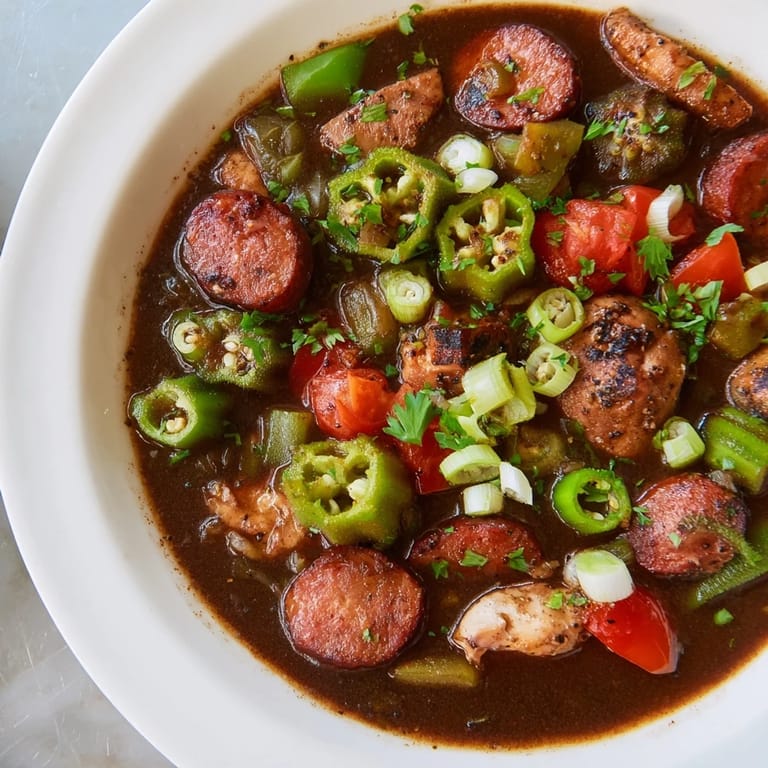
 Save to Pinterest
 My first real gumbo came together on a humid Saturday when my neighbor stopped by with a bag of fresh okra from her garden. I'd never made it before, just eaten it at family gatherings, and suddenly I was committed to getting it right. There's something about that dark roux that intimidated me—watching oil and flour transform into liquid chocolate over a burner felt like actual alchemy. Once I nailed that first batch, I understood why people talk about gumbo the way they do.
I made this for my partner's coworkers on a Thursday night, and watching them go quiet after that first spoonful told me everything. No one asked for a recipe that night, but three people came back asking how long it took. That's when I realized gumbo isn't just about flavor—it's about making people feel like you spent all day thinking about feeding them.
Ingredients
- Boneless, skinless chicken thighs (350 g): Thighs stay tender through the long simmer, never dry like breast meat would get.
- Smoked andouille sausage (225 g): This is the salty backbone of gumbo—don't skip it or substitute with regular sausage, the smoke matters.
- Fresh or frozen okra (250 g): Fresh is ideal, but frozen works if you thaw and drain it first; this vegetable thickens the whole pot as it cooks.
- Onion, bell pepper, celery (the holy trinity): This combination is why Louisiana food tastes like itself—get the proportions close and you're golden.
- Garlic (3 cloves): Minced fine, it disappears into the base but makes everything smell alive.
- Tomatoes (2 fresh or 1 can): Fresh is brighter, canned is reliable—either way, drain them so you control the liquid.
- All-purpose flour and vegetable oil (60 g each): This 1:1 ratio makes the roux; don't eyeball it, measure it out.
- Chicken stock (1.5 liters): Good stock makes the difference between soup and something memorable.
- Bay leaves, thyme, smoked paprika, cayenne (seasonings): These build layers—the paprika adds depth, cayenne adds heat, thyme ties it together.
- Worcestershire sauce (1 tsp): A quiet umami bomb that rounds everything out.
Tired of Takeout? 🥡
Get 10 meals you can make faster than delivery arrives. Seriously.
One email. No spam. Unsubscribe anytime.
Instructions
- Make your roux with patience:
- Heat oil over medium heat, whisk in flour, and stir constantly for 15–20 minutes until it's deep chocolate brown. This is non-negotiable—rushing it means a thin, bitter gumbo instead of rich and silky. Don't walk away; watch it change color like it's the most important thing happening that day.
- Toast the holy trinity:
- Once the roux is perfect, add your chopped onion, bell pepper, and celery. They'll sizzle and soften in about 3–4 minutes, filling your kitchen with that smell that says Louisiana cooking. Stir in the garlic after, just for a minute so it doesn't burn.
- Brown the proteins:
- Add your chicken and sausage to the mix and let them sit undisturbed for a couple minutes before stirring, so they pick up color. This takes about 5 minutes total—you're not cooking them through, just giving them a seared edge that adds richness.
- Add the okra and build the broth:
- Toss in the okra and let it cook for 3–4 minutes until it starts to get tender. Then pour in tomatoes, stock, and all your seasonings—bay leaves, thyme, paprika, cayenne, Worcestershire, salt, and pepper. Bring it to a boil, then drop the heat and let it simmer low and gentle for 45–50 minutes.
- Taste, adjust, finish:
- Before serving, remove the bay leaves and taste—add more salt, heat, or whatever it needs to taste like yours. If you want it thicker, sprinkle filé powder off the heat and let it work its magic.
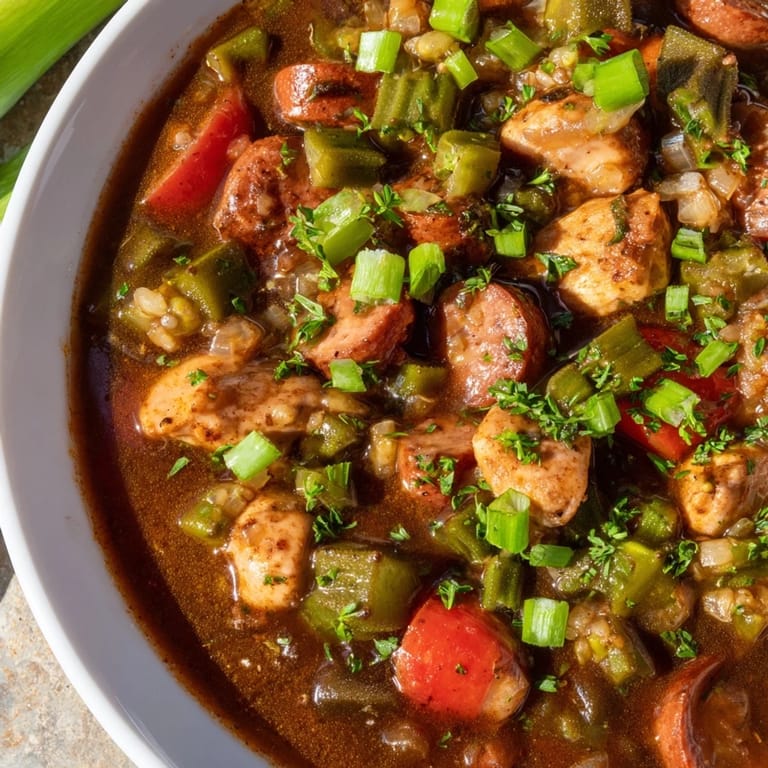 Save to Pinterest
 The real turning point came when I stopped thinking about gumbo as a recipe to follow and started thinking about it as a conversation. Each ingredient gets its moment, each step builds on the last, and at the end you've made something that tastes like care. That's when people don't just eat it—they come back asking how you did it.
The Roux: Why It Matters So Much
The roux is where gumbo lives or dies, and it's also the part that scared me most at first. That deep chocolate color isn't decoration—it's where all the flavor concentration happens. I learned this by burning one and tasting the difference: burnt roux tastes bitter and thin, dark chocolate roux tastes rich and foundational. The difference is literally five minutes and constant attention on a medium burner.
Okra: The Secret Thickener
Okra gets a bad reputation for being slimy, but in gumbo, that sliminess is exactly the point—it's how the soup gets its silky, clinging texture. I used to think I had to avoid cooking it long, but gumbo is the exception. Let that okra break down into the broth, and it becomes part of the whole rather than a vegetable you're aware of. This is what separates gumbo from just chicken and sausage soup.
Serving and Storage Wisdom
Gumbo tastes even better the next day once all the flavors have settled into each other, so don't hesitate to make it ahead. Store it in an airtight container in the fridge for up to four days, or freeze it for longer. When you reheat, you might need a splash of stock to loosen it back up because the okra keeps thickening as it sits.
- Serve it over fluffy white rice, letting the rice soak up all that broth.
- Crusty bread on the side is non-negotiable for wiping the bowl clean.
- A bottle of hot sauce at the table means everyone gets to make it their own.
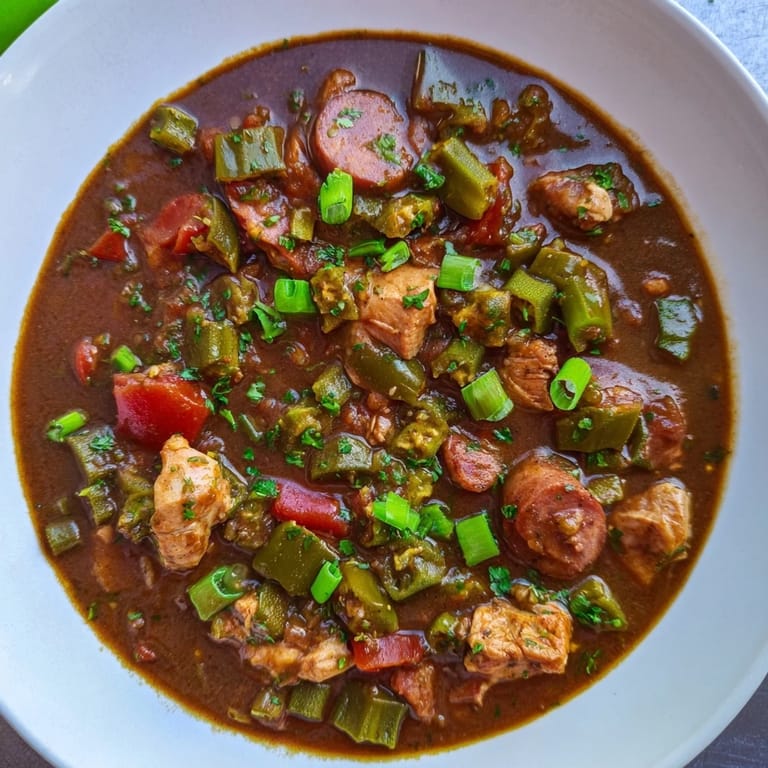 Save to Pinterest
 Gumbo is patient food, the kind that rewards you for showing up and paying attention. Make it once and you'll understand why people guard their recipes like secrets.
Recipe FAQs
- → What gives gumbo its signature deep flavor?
The rich, dark roux made from flour and oil is essential, providing a nutty, caramelized base that imparts depth and color to the dish.
- → Can I substitute the andouille sausage?
Yes, any smoked sausage with a similar flavor profile works well, but traditional andouille adds authentic smokiness.
- → How is okra used in this dish?
Fresh or thawed okra is sliced and added mid-cooking to contribute texture and a slight thickening effect on the broth.
- → What is the purpose of filé powder?
Filé powder, made from ground sassafras leaves, is added off heat to thicken the gumbo and add a unique earthy flavor.
- → How long should the gumbo simmer?
Simmering uncovered for about 45-50 minutes allows flavors to meld and the broth to thicken beautifully.