 Save to Pinterest
 There's something about the smell of sautéed onions and carrots filling the kitchen that makes everything feel right. My neighbor knocked on my door one cold afternoon with a container of minestrone she'd made, and that first spoonful—packed with soft vegetables and tender pasta—became my blueprint for comfort. Now, whenever I want something that feels both nourishing and effortless, this is what I reach for. The beauty of it is how it shifts with the seasons, taking whatever's fresh and making it sing.
I made this soup for my partner when they had a rough week, nothing fancy, just the quiet kind of care that only a warm bowl can offer. They sat at the kitchen counter eating slowly while I chopped herbs, and by the time they finished, something had shifted. That's when I realized minestrone isn't really about the ingredients—it's about showing up for someone with something real.
Ingredients
- Olive oil: Two tablespoons creates the foundation for everything else, coaxing out sweetness from the vegetables as they soften.
- Onion, carrots, and celery: This trio is your flavor base, and I've learned dicing them roughly equal sizes helps them cook at the same pace.
- Garlic: Three cloves minced releases their gentle power without overwhelming the soup, though I've been known to sneak in an extra clove.
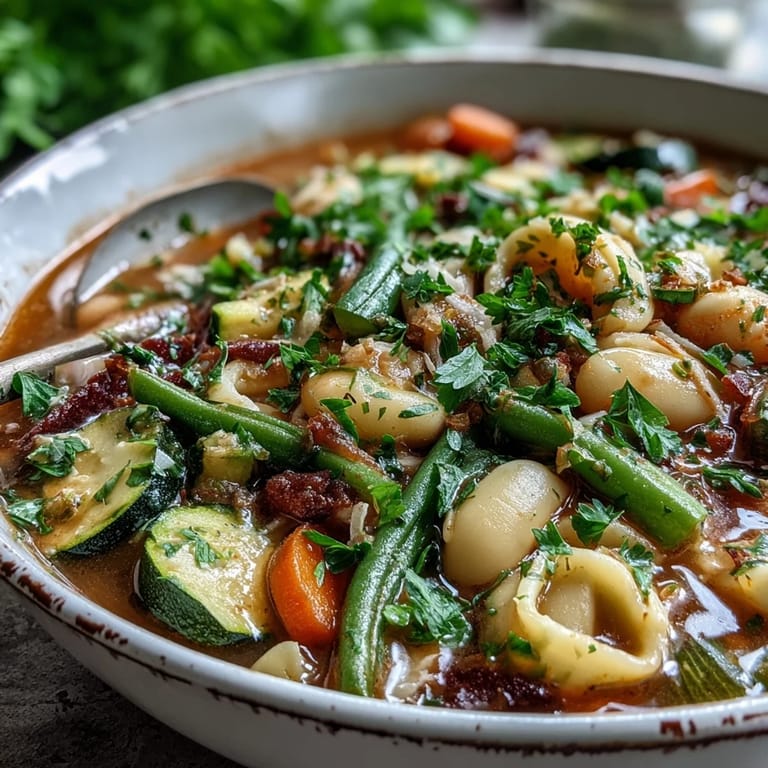
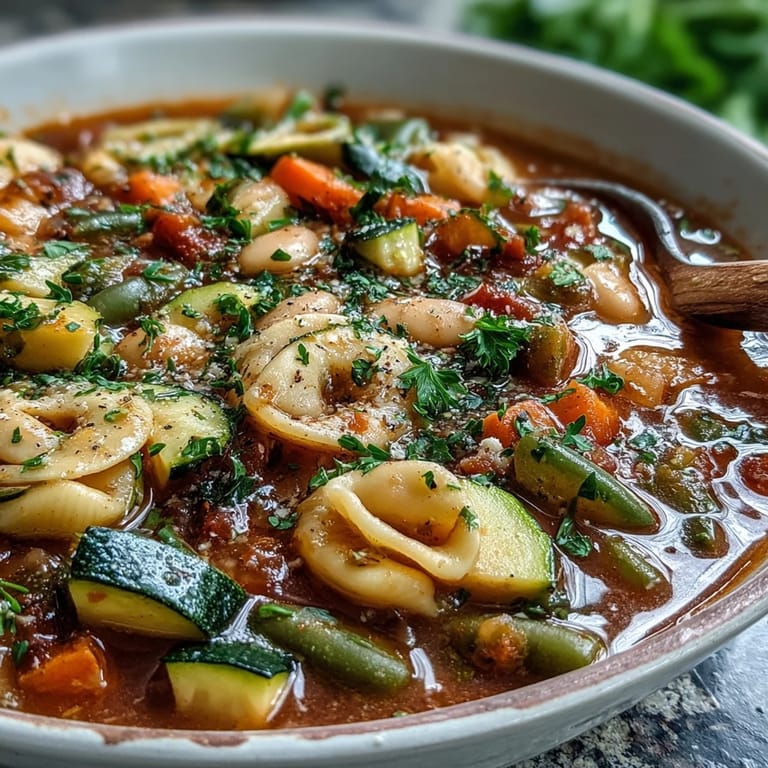
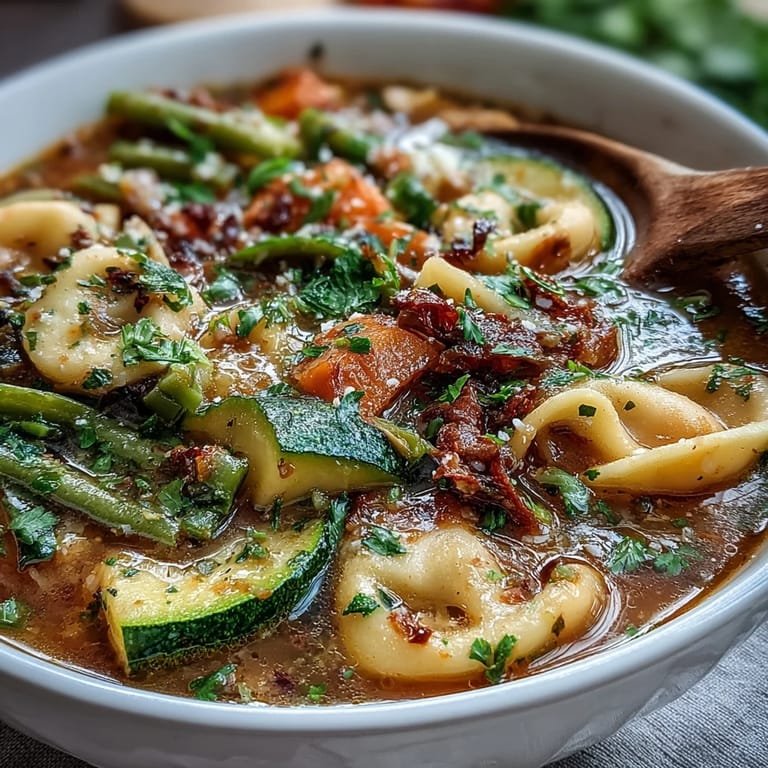
- Seasonal vegetables: Summer calls for zucchini and green beans; winter asks for butternut squash and kale or spinach—the soup practically tells you what it wants.
- Diced tomatoes: One can anchors the whole thing with brightness and depth, no need for anything fancy here.
- Vegetable broth: One and a half liters keeps everything liquid and luxurious, and homemade broth makes a noticeable difference if you have it.
- Cannellini or borlotti beans: Drained and rinsed, they add creaminess and substance without any heaviness.
- Small pasta: Ditalini, elbow, or shells work equally well, and I usually keep a box on hand because they finish cooking in the broth.
- Bay leaf, oregano, and basil: Dried herbs work fine, though fresh basil stirred in at the end feels like a small gift to yourself.
- Fresh parsley: Two tablespoons stirred in plus more for serving adds a brightness that whispers rather than shouts.
- Parmesan cheese: Grated and scattered on top, it's optional but transforms the bowl into something you'll think about later.
Tired of Takeout? 🥡
Get 10 meals you can make faster than delivery arrives. Seriously.
One email. No spam. Unsubscribe anytime.
Instructions
- Build your aromatics:
- Warm the olive oil in a large pot over medium heat, then add your diced onion, carrots, and celery. Let them soften for about five minutes, stirring occasionally—you're not rushing this, just coaxing out their sweetness. The kitchen will smell like an Italian grandmother is about to walk in and approve of your work.
- Add color and texture:
- Stir in the minced garlic along with your seasonal vegetables and green beans or kale, cooking for three minutes until everything becomes fragrant. At this point, you can taste the garlic without it being raw—that's your signal you're on the right track.
- Deepen the base:
- Pour in the diced tomatoes, your potato if you're using it, and the bay leaf, letting them cook together for two minutes. Then add the vegetable broth, watching as everything becomes a beautiful soup rather than just vegetables in a pot.
- Simmer and soften:
- Bring the whole thing to a boil, then lower the heat and let it bubble gently for fifteen minutes. This is when you can step away, wipe down your cutting board, or simply stand there listening to it burble peacefully.
- Finish with pasta and beans:
- Add your beans and pasta, letting them cook uncovered for ten to twelve minutes until the pasta is tender and the vegetables yield to a spoon. Taste as you go—this is when the soup becomes yours to season.
- Season and serve:
- Remove the bay leaf, then stir in oregano, basil, salt, and pepper to your taste. Finish with fresh parsley and a generous ladle into waiting bowls, topped with Parmesan if you'd like.
 Save to Pinterest
 I keep a pot of this simmering on Sunday afternoons, partly because it fills the house with comfort, but mostly because I know I'll feel taken care of all week long. There's a kind of magic in knowing exactly what's for lunch—no decisions, just warmth.
Making It Seasonal
The first time I made this in spring, I swapped in fresh peas and tender leeks instead of what the recipe suggested, and something clicked. Now I see minestrone as a conversation between what's in my kitchen and what the season offers. Summer wants lightness with zucchini and green beans, while autumn and winter whisper for squash and hardy greens. There's no wrong choice, only what tastes true to where you are.
Making It Your Own
A friend once added white beans instead of cannellini, another stirred in spinach at the very end so it stayed bright green, and someone else I know swears by adding a splash of balsamic vinegar right before serving. These aren't departures from the recipe—they're invitations to treat it as a starting point rather than a set of rules. The soup doesn't mind; it adapts like a good friend adjusts to whoever's sitting across the table.
Serving and Storing
Crusty bread dipped into a bowl of this is one of life's quiet pleasures, and a drizzle of extra virgin olive oil across the top feels luxurious without being fussy. Minestrone keeps for three or four days in the fridge, and it actually tastes better as it sits because the flavors have more time to know each other. If you're freezing it, leave out the pasta and add fresh noodles when you reheat, so everything stays exactly as you want it.
- Serve with thick slices of crusty bread and a small bowl of grated Parmesan on the side for people to scatter as they please.
- For a vegan version, skip the cheese entirely or use a plant-based alternative without missing a single comfort note.
- Store in airtight containers and reheat gently, adding a splash of broth or water if the soup has thickened overnight.
 Save to Pinterest
 This soup asks very little of you and gives back everything. Make it when you need comfort, when you're cleaning out the vegetable drawer, or simply because a warm bowl waiting on the stove is never a bad idea.
Recipe FAQs
- → What vegetables work best in minestrone?
Classic choices include onion, carrots, celery, zucchini, green beans, and tomatoes. For winter versions, butternut squash, kale, or spinach work beautifully. Spring welcomes peas and leeks, while summer shines with fresh green beans and zucchini.
- → Can I make minestrone gluten-free?
Absolutely. Simply substitute regular pasta with gluten-free alternatives like rice pasta, corn pasta, or legume-based pasta. The soup remains just as hearty and satisfying with these substitutions.
- → How should I store leftover minestrone?
Cool completely and refrigerate in an airtight container for up to 4 days. Note that pasta will continue absorbing liquid, so you may need to add more broth when reheating. This soup actually tastes better the next day as flavors meld together.
- → Can I freeze minestrone?
Yes, but consider cooking pasta separately. Freezing pasta can make it mushy. Freeze the soup base without pasta for up to 3 months, then cook fresh pasta when reheating for the best texture.
- → What makes minestrone authentic?
Traditional minestrone includes the holy trinity of Italian cooking—onion, carrot, and celery—plus tomatoes, beans, and pasta. A Parmesan rind simmering in the broth adds depth, while fresh basil and parsley provide brightness.
- → Is minestrone suitable for meal prep?
Excellent choice. Prepare a large batch on Sunday and portion into containers for easy lunches throughout the week. The flavors develop beautifully over time, making it ideal for make-ahead meals.