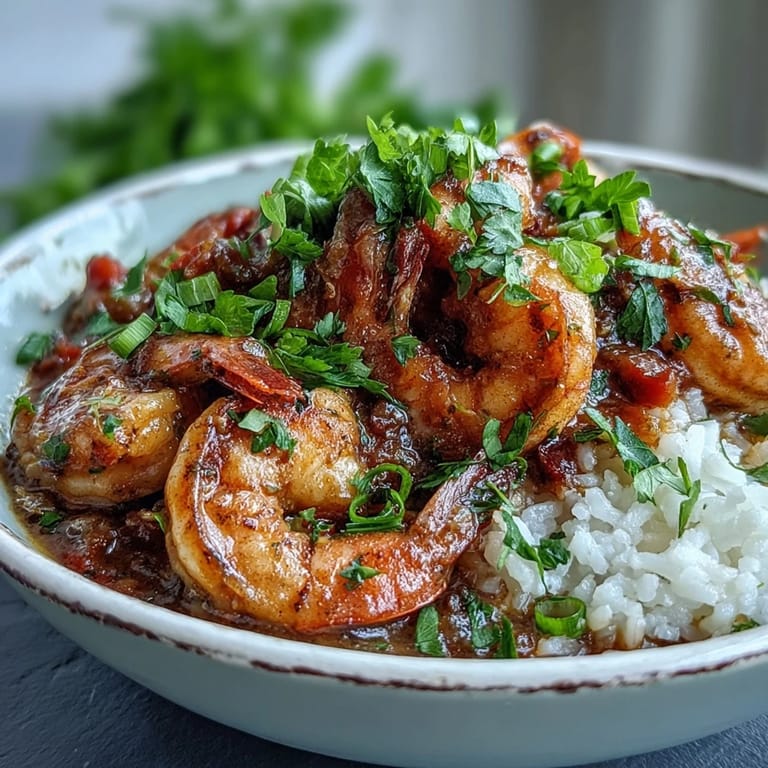
 Save to Pinterest
 My neighbor knocked on my door one Saturday morning holding a bag of fresh Gulf shrimp and a knowing smile. She'd just returned from Louisiana and insisted I needed to learn how to make a proper étouffée. We spent the afternoon in my kitchen, her guiding my hand as we stirred that roux, the smell of toasting flour filling every corner of the house. I burned the first batch, panicked over the second, but by the third attempt, I understood what she meant when she said you have to listen to the roux, not just watch it.
The first time I made this for friends, I worried the spice level would be too bold, so I held back on the cayenne. They devoured it anyway, but one friend gently suggested I trust the heat next time. Now I let the cayenne speak, and every pot I make carries a little more confidence than the last. It has become my go to when I want to feed people something that feels like a hug and a celebration at once.
Ingredients
- Vegetable oil and all purpose flour: These two simple ingredients transform into the soul of the dish, a dark roux that requires patience and constant attention but rewards you with nutty, complex flavor.
- Onion, green bell pepper, and celery: Known as the holy trinity in Cajun cooking, this trio builds the aromatic foundation and should be diced evenly so they soften at the same rate.
- Garlic: Fresh minced garlic adds a sharp, fragrant note that blooms quickly, so add it after the vegetables have softened to avoid bitterness.
- Shrimp: Look for shrimp that smell like the ocean, not fishy, and peel them yourself if possible for the sweetest, most tender result.
- Seafood stock: Homemade is wonderful, but a good quality store bought version works beautifully and saves precious time on a weeknight.
- Worcestershire sauce: Just a tablespoon deepens the savory umami backbone without making the dish taste overtly tangy.
- Cajun seasoning and cayenne pepper: These bring the heat and the signature spice blend, but start conservatively and build up to your preferred level of fire.
- Bay leaf: One dried leaf adds an herbal, slightly floral undertone that rounds out the richness of the roux.
- Cooked white rice: Fluffy, plain rice is the perfect canvas to soak up every drop of that luscious, spiced sauce.
- Green onions and fresh parsley: A bright, fresh garnish that cuts through the richness and makes each bowl look as vibrant as it tastes.
Tired of Takeout? 🥡
Get 10 meals you can make faster than delivery arrives. Seriously.
One email. No spam. Unsubscribe anytime.
Instructions
- Start the roux:
- Heat the oil in a heavy pot over medium heat, then whisk in the flour slowly, making sure no lumps form. Stir constantly with a wooden spoon, scraping the bottom and edges, as the mixture darkens from blonde to caramel to a deep chocolate brown over 15 to 20 minutes.
- Add the holy trinity:
- Once your roux reaches that rich, dark color, toss in the onion, bell pepper, and celery, stirring quickly to coat them in the roux. Let them cook for 5 to 7 minutes until they soften and release their sweetness, stirring occasionally to prevent sticking.
- Bloom the garlic:
- Stir in the minced garlic and let it sizzle for about a minute until the kitchen smells irresistible. Be careful not to let it burn, as burnt garlic turns bitter fast.
- Build the sauce:
- Pour in the seafood stock gradually, whisking to blend it smoothly with the roux and vegetables until no clumps remain. The mixture will thicken as it heats, transforming into a velvety base.
- Add shrimp and seasonings:
- Stir in the shrimp, Worcestershire sauce, Cajun seasoning, cayenne, bay leaf, salt, and black pepper, making sure everything is evenly distributed. Bring the pot to a gentle simmer, then lower the heat and let it cook uncovered for 20 to 30 minutes, stirring occasionally, until the shrimp are pink and tender and the sauce has thickened beautifully.
- Finish and serve:
- Taste and adjust the salt, pepper, or cayenne to your liking, then fish out and discard the bay leaf. Spoon the étouffée generously over bowls of hot rice and top with green onions and parsley for a pop of color and freshness.
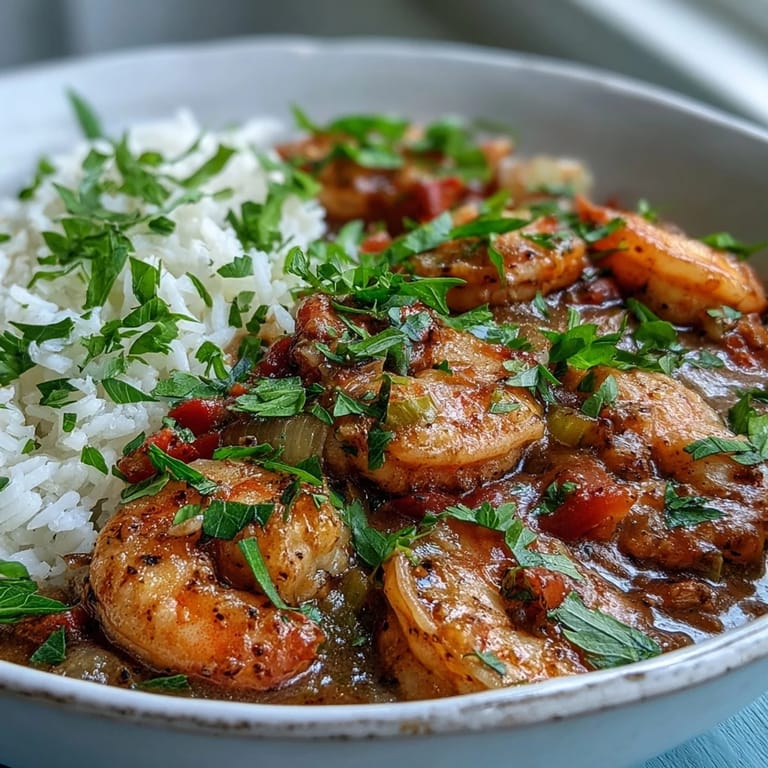 Save to Pinterest
 One rainy evening, I made this for my sister after a long week, and we sat at the kitchen table with our bowls, not saying much, just savoring the heat and the comfort. She looked up halfway through and said, this tastes like something that matters. I think about that every time I make it now.
Making It Your Own
Swap the shrimp for crawfish tails if you can find them fresh or frozen, or use diced chicken thighs and andouille sausage for a heartier, meatier version. I have even made it with thick sliced mushrooms for a vegetarian friend, and the earthy flavor paired beautifully with the roux. Do not be afraid to play with the proteins, the technique stays the same and the results are always delicious.
Storing and Reheating
Let the étouffée cool completely before transferring it to an airtight container, where it will keep in the fridge for up to three days. Reheat gently on the stovetop over low heat, adding a splash of stock if it has thickened too much overnight. I have found that the flavors deepen and meld beautifully after a day, making leftovers something to look forward to rather than an afterthought.
Serving Suggestions
Serve this with crusty French bread for soaking up every last bit of sauce, or pair it with a crisp green salad dressed simply with lemon and olive oil to balance the richness. A cold beer or a glass of chilled white wine cuts through the spice beautifully, and if you are feeding a crowd, set out hot sauce and extra green onions so everyone can customize their bowl.
- Double the recipe and freeze half for an easy weeknight dinner down the road.
- Use day old rice if you have it, as it holds up better under the saucy étouffée without getting mushy.
- Taste as you go, especially when adjusting the cayenne, because heat builds and you can always add more but cannot take it away.
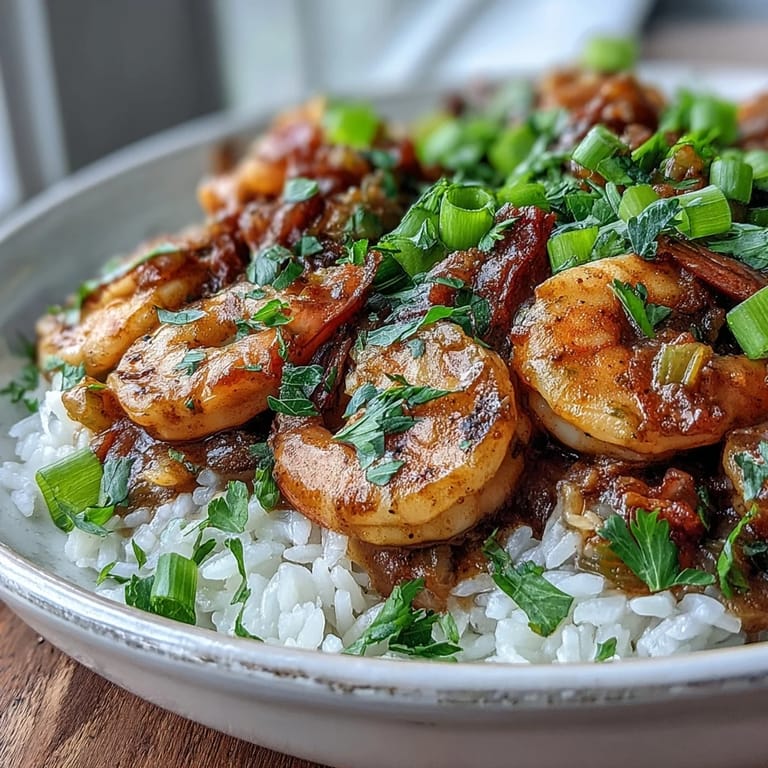 Save to Pinterest
 This dish has a way of turning an ordinary dinner into something memorable, the kind of meal people ask you to make again. I hope it brings as much warmth to your table as it has to mine.
Recipe FAQs
- → What is the difference between étouffée and gumbo?
Étouffée has a thicker, more concentrated sauce and typically features one protein, while gumbo is thinner, soup-like, and often contains multiple proteins and vegetables. Étouffée also uses less liquid and focuses on smothering the main ingredient in rich sauce.
- → Can I use crawfish instead of shrimp?
Yes, crawfish is a traditional and delicious alternative to shrimp. Use the same amount of peeled crawfish tails and follow the same cooking instructions. Crawfish actually gives a more authentic Louisiana flavor to the dish.
- → How dark should the roux be?
The roux should reach a deep golden brown color similar to milk chocolate. This takes about 15-20 minutes of constant stirring. A darker roux adds richer flavor, but be careful not to burn it as it will taste bitter and you'll need to start over.
- → Can I make this ahead of time?
Yes, étouffée actually tastes better the next day as the flavors have time to meld together. Store it in an airtight container in the refrigerator for up to 3 days. Reheat gently on the stovetop, adding a splash of stock if needed to thin the sauce.
- → What can I substitute for seafood stock?
Chicken stock works well as a substitute and is commonly used in Louisiana kitchens. You can also use vegetable stock for a lighter flavor. For more depth, add a teaspoon of fish sauce or a splash of clam juice to chicken or vegetable stock.
- → How do I prevent the roux from burning?
Use medium heat and stir constantly with a wooden spoon or whisk. Never leave the roux unattended, and if you see black specks forming, discard it and start over. Having your vegetables prepped and ready to add helps, as they stop the cooking process immediately.