 Save to Pinterest
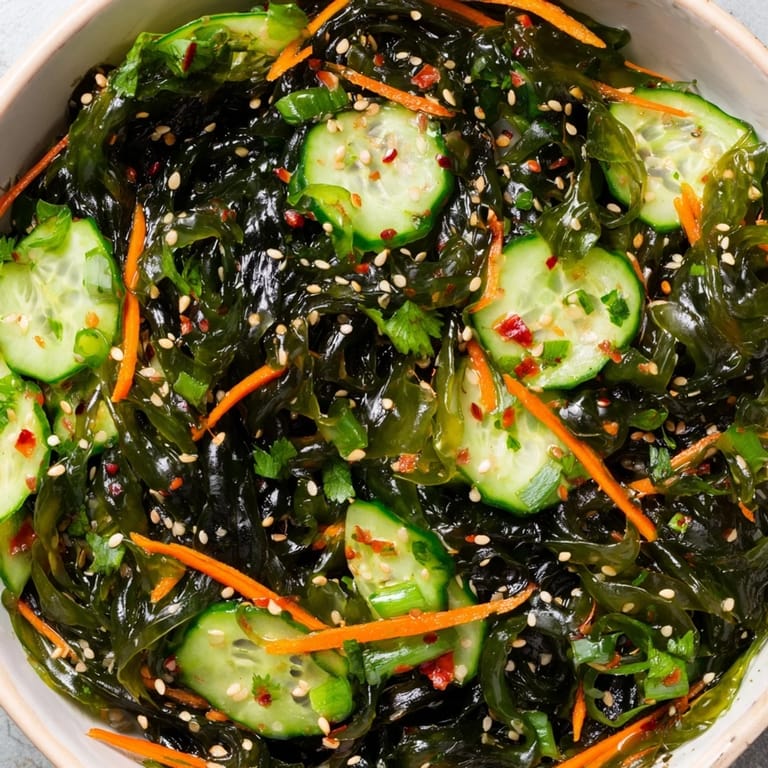
 The first time I encountered seaweed salad at a tiny Japanese restaurant in my college town, I kept ordering it until the owner finally laughed and asked if I wanted to learn how to make it myself. Something about the slippery, cool texture and that perfect balance of salty, sweet, and tangy made it feel like eating ocean air. Now it's my go-to when I need something that feels nourishing but doesn't require turning on the stove, especially during those sweltering summer evenings when cooking anything feels like too much.
I served this at a dinner party last spring alongside some grilled fish, and my friend who swore she hated seaweed went back for thirds. There's something magical about watching people discover that seaweed can be crisp and refreshing instead of the chewy, briny stuff they remember from beach trips as kids.
Ingredients
- 30 g dried wakame seaweed: This expands dramatically when rehydrated, so don't be alarmed by how little you start with. I learned to buy the kind that's already cut into strands rather than sheets.
- 1 small cucumber: Thinly sliced adds the perfect cool crunch that balances the rich sesame oil.
- 1 small carrot: Julienned into matchsticks provides sweetness and a pop of color that makes the bowl look vibrant.
- 2 scallions: Thinly sliced on a diagonal for that mild onion bite that cuts through the dressing.
- 2 tbsp toasted sesame oil: This is the backbone of the dish, so don't skip the toasted variety.
- 1 1/2 tbsp rice vinegar: Adds that bright acidity that makes everything taste fresh and alive.
- 1 tbsp low-sodium soy sauce or tamari: Tamari keeps it gluten-free and has a slightly deeper, smoother flavor.
- 1 tbsp freshly grated ginger: Use a microplane if you have one to get it really fine, no fibrous bits.
- 1 tbsp maple syrup or honey: Just enough to round out the sharp edges of the vinegar and soy sauce.
- 1 tsp toasted sesame seeds: Mixed right into the dressing for extra nuttiness in every bite.
- 1/2 tsp chili flakes: Optional, but I love the gentle warmth that lingers after each mouthful.
Tired of Takeout? 🥡
Get 10 meals you can make faster than delivery arrives. Seriously.
One email. No spam. Unsubscribe anytime.
Instructions
- Rehydrate the seaweed:
- Place the dried wakame in a bowl and cover with cold water. Let it soak for 7 to 10 minutes until it's tender and transformed into silky, glossy strands. Drain well and squeeze gently to remove excess water, but don't wring it dry.
- Prep the vegetables:
- While the seaweed soaks, slice your cucumber into thin half moons and julienne the carrot into matchsticks. Thinly slice the scallions on a diagonal for a prettier presentation.
- Make the dressing:
- In a small bowl, whisk together the sesame oil, rice vinegar, soy sauce or tamari, grated ginger, maple syrup or honey, sesame seeds, and chili flakes until emulsified. The mixture should look glossy and thickened slightly.
- Combine everything:
- In a large bowl, toss the rehydrated seaweed with the cucumber, carrot, and scallions. Pour the dressing over and use salad spoons to gently fold everything together until each strand is glistening.
- Finish and serve:
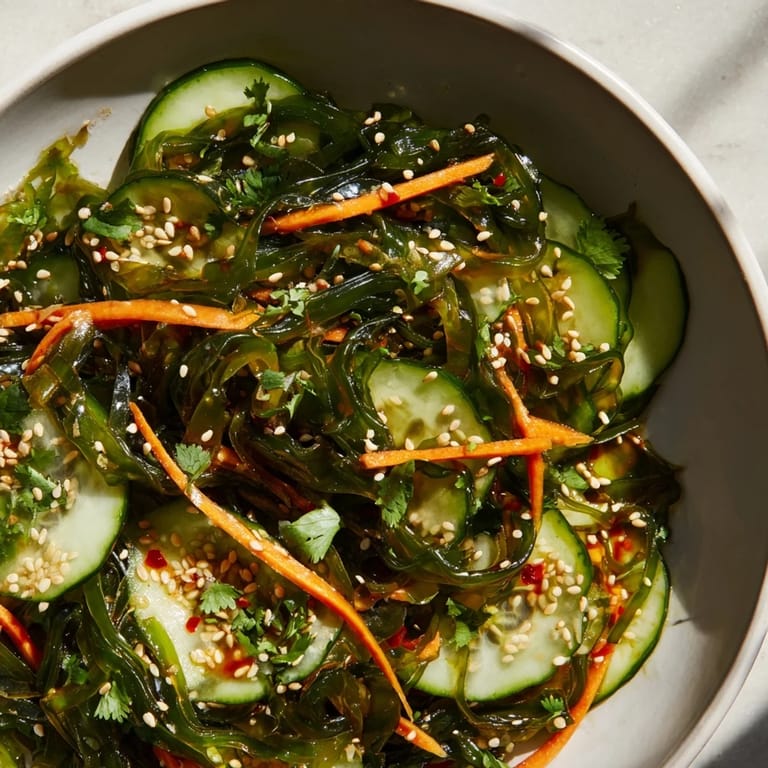
- Transfer to a serving bowl and sprinkle with extra sesame seeds and chopped cilantro or parsley if you're using it. Let it sit for at least 5 minutes before serving, or chill for 15 to 30 minutes if you have the patience.
 Save to Pinterest
 My daughter now requests this for school lunch, and I love that I can make a big batch on Sunday and it holds up beautifully for days. Watching her develop a taste for something so nourishing feels like a small parenting victory.
Making It Your Own
I've discovered that adding thinly sliced radish gives it an extra peppery crunch, and sometimes I throw in shredded red cabbage for color. The dressing is versatile enough that you can use it on regular green salads or even as a marinade for grilled vegetables.
Serving Suggestions
This shines alongside any Japanese meal, but I also love it as part of a grain bowl with brown rice and avocado. It's particularly refreshing after something rich and heavy, like a curry or braised meat dish.
Storage And Meal Prep
The salad keeps well in an airtight container for up to 2 days, though the vegetables will soften slightly. I recommend storing the dressing separately if you're meal-prepping for the week, then tossing it together just before serving.
- Make a double batch of the dressing to keep in the fridge for quick salads all week
- Add the fresh herbs right before serving so they stay vibrant
- If the seaweed seems too salty, give it an extra rinse under cold water before dressing
 Save to Pinterest
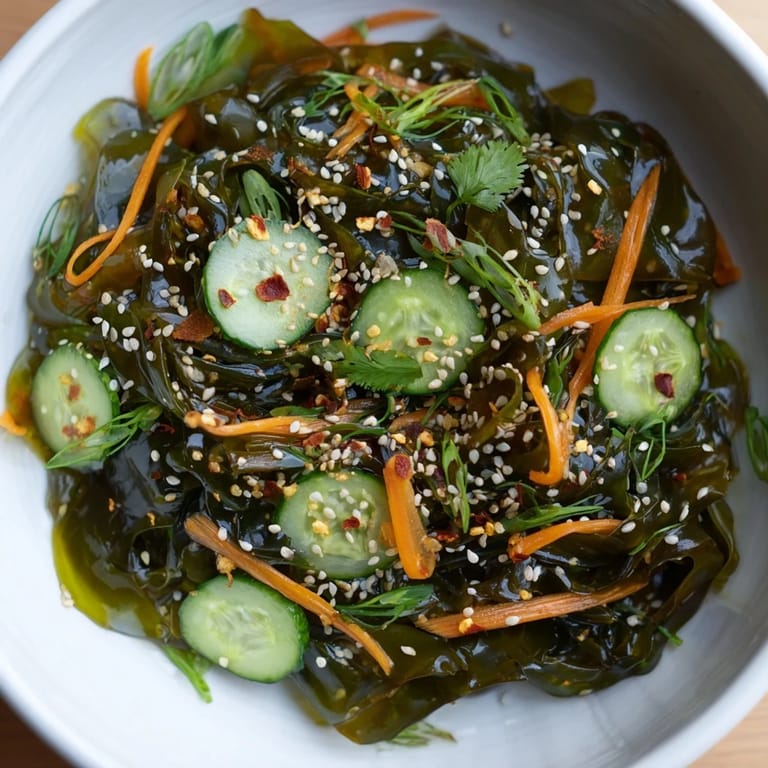
 This salad has become my answer to the question what can I bring that's actually impressive but takes almost no time at all.
Recipe FAQs
- → What type of seaweed works best?
Dried wakame is ideal—it rehydrates quickly to a tender, slightly slippery texture. Look for deep green pieces without brown spots. Avoid kombu (too thick) or nori (designed for dry eating).
- → Can I prepare this ahead?
Absolutely. This tastes even better after 15–30 minutes of chilling, allowing the seaweed to absorb the dressing. Store in an airtight container for up to 2 days, though the vegetables will lose some crunch.
- → Is this gluten-free?
Yes, if you use tamari instead of regular soy sauce. Always check your seaweed package for potential cross-contamination warnings if you have severe gluten sensitivity.
- → What can I substitute for maple syrup?
Honey works beautifully for the same sweetness. For a completely sugar-free version, omit the sweetener entirely—the dressing will be more tangy but still balanced.
- → How do I prevent the seaweed from being too salty?
Rinse rehydrated seaweed briefly under cold water before adding to the bowl. This removes excess salt from the drying process while preserving the ocean flavor.
- → Can I add protein?
Yes! Edamame, steamed shrimp, or cubed teriyaki tofu all complement the flavors without overwhelming the delicate seaweed. Add protein just before serving to maintain texture.