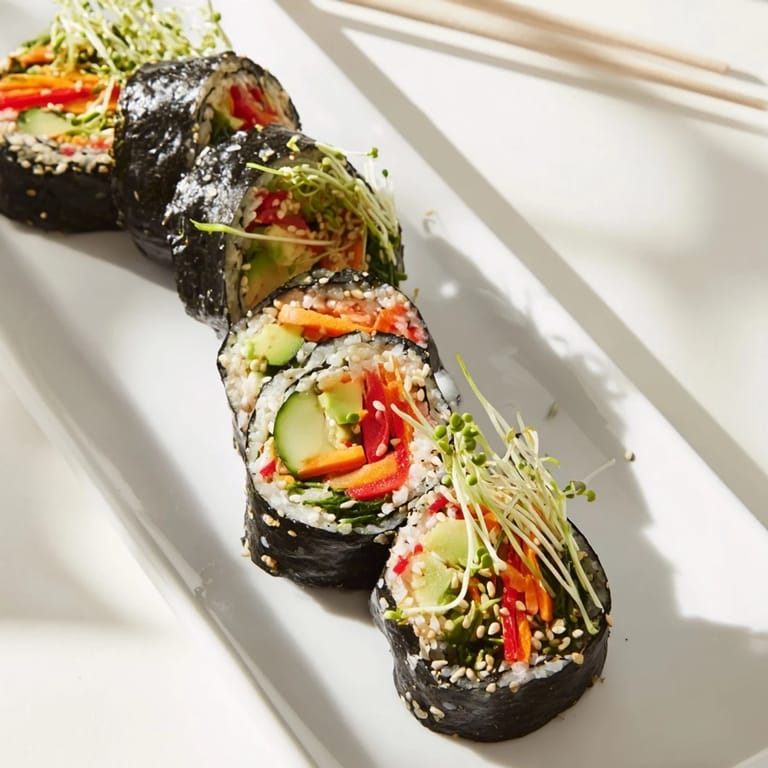
 Save to Pinterest
 Last summer my neighbor invited me over for a homemade sushi night, and I was amazed at how satisfying nori rolls could be without any fish at all. We stood around her kitchen counter, hands sticky with rice, laughing at our first attempts and celebrating the ones that actually held together. The combination of cool vegetables wrapped in that salty, crisp seaweed just felt so fresh and alive. Now I make these whenever I want something that feels like a treat but still leaves me feeling light and energized.
My sister-in-law came over last month feeling overwhelmed with work, and I set up a little nori rolling station on the kitchen table. We made a mess of rice and vegetables, but something about the ritual of rolling these little packages of vegetables helped her shoulders drop down an inch. There is something deeply meditative about the repetitive motion, and by the time we had eight rolls lined up on a plate, we were both smiling again.
Ingredients
- Nori sheets: The roasted variety gives you that perfect crisp texture and umami flavor that makes everything inside taste better
- Cucumber and carrot: Julienne these into thin strips for that satisfying crunch that contrasts with the softer vegetables
- Avocado: Use a perfectly ripe one to add creaminess that holds everything together and balances the salty nori
- Fresh sprouts: Alfalfa, radish, or broccoli sprouts add a fresh, bright flavor and a wonderful delicate crunch
- Red bell pepper: This brings sweetness and gorgeous color that makes each roll look absolutely beautiful inside
- Sushi rice: Optional but adds heartiness, mix with rice vinegar while warm for that authentic tangy flavor
- Toasted sesame seeds: These little nutty sprinkles make such a difference in the overall flavor profile
Tired of Takeout? 🥡
Get 10 meals you can make faster than delivery arrives. Seriously.
One email. No spam. Unsubscribe anytime.
Instructions
- Prepare the rice:
- If using sushi rice, mix the warm cooked rice with rice vinegar and spread it out to cool to room temperature while you prep your vegetables.
- Prep your vegetables:
- Julienne the cucumber, carrot, and bell pepper into thin strips, and slice the avocado into manageable pieces that will roll easily.
- Set up your rolling station:
- Place a nori sheet shiny side down on your bamboo mat or clean towel, and have a small bowl of water nearby for sealing the rolls.
- Add the fillings:
- Arrange your vegetables in a neat line across the lower portion, sprinkle with sesame seeds, then roll tightly using the mat.
- Seal and slice:
- Dab a little water along the top edge to seal, then use a sharp damp knife to cut each roll into bite-sized pieces.
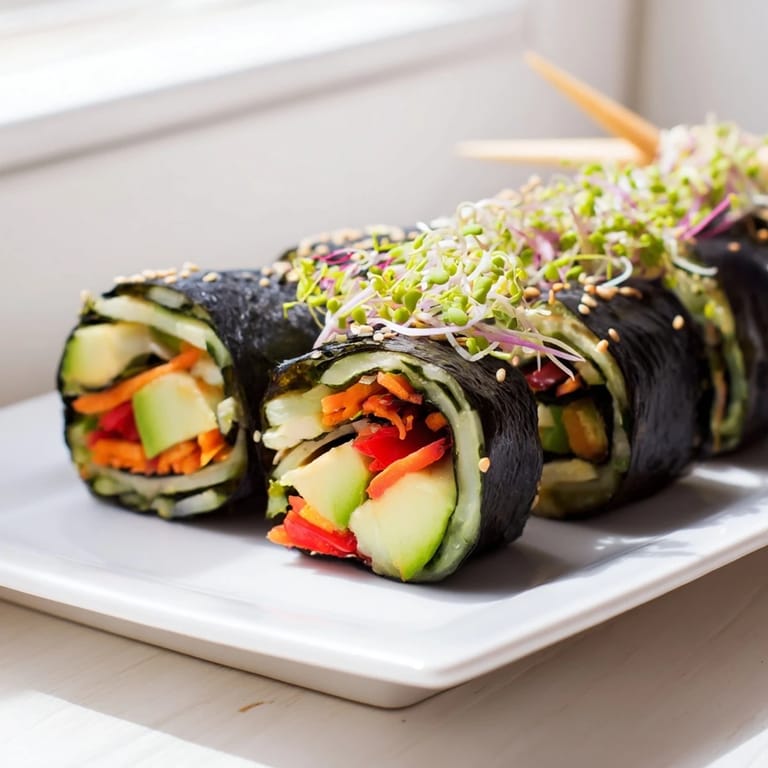 Save to Pinterest
 These rolls became my go-to during a particularly busy month when cooking felt like just another chore on an endless list. The whole process is so calming, and sitting down to something so beautiful and nourishing felt like an act of self-care I actually looked forward to.
Perfecting Your Rolling Technique
The first few times I made nori rolls, they fell apart immediately or had fillings spilling out both ends. The secret is to spread everything evenly and not overstuff them, plus using the bamboo mat to apply even pressure as you roll. It takes a few tries to get the feel of it, but suddenly your muscle memory kicks in and you are making these tight, beautiful rolls like it is second nature.
Making It a Complete Meal
Sometimes I serve these alongside a simple miso soup and a green salad with ginger dressing for a more substantial dinner. The rolls feel fancy enough for company but casual enough for a quiet Tuesday night at home. I love how something so light can still feel completely satisfying when you pair it thoughtfully.
Customization Ideas
These rolls are incredibly forgiving, so please use whatever vegetables speak to you at the market or are already in your refrigerator. I have added marinated baked tofu, pickled daikon radish, or even some microgreens when I want to feel extra fancy. The beauty of this recipe is how easily it adapts to your preferences and what you have available.
- Try adding a thin spread of spicy mayo or tahini inside the roll for extra creaminess
- Sprinkle some everything bagel seasoning inside instead of plain sesame seeds
- Leftover rolls actually keep reasonably well in the refrigerator for a quick next-day lunch
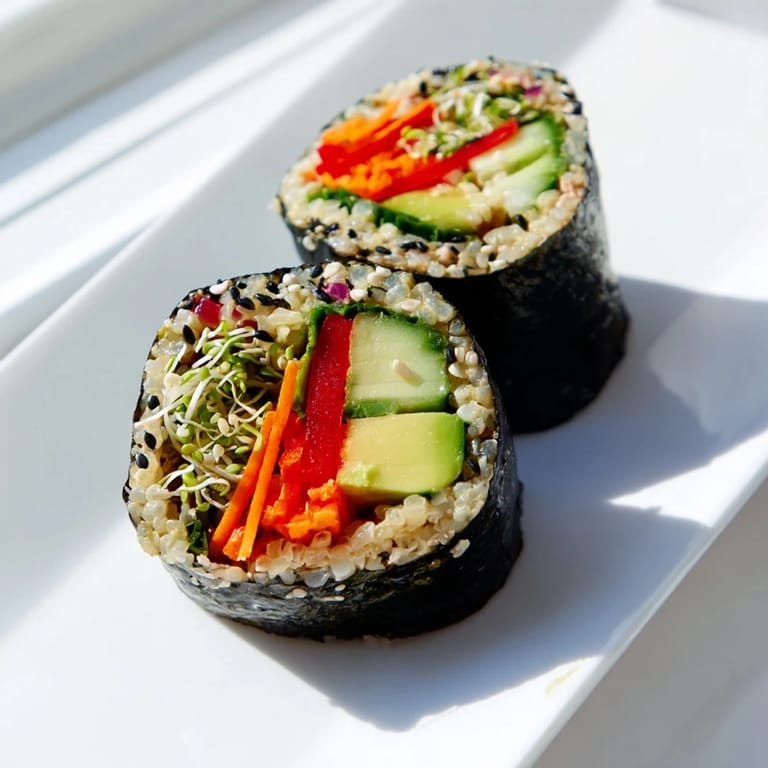 Save to Pinterest
 There is something so satisfying about making your own sushi, even simple vegetable rolls like these. Hope they bring you as much joy and calm as they have brought me.
Recipe FAQs
- → Do I need a bamboo mat to make nori rolls?
A bamboo sushi rolling mat makes the process easier, but you can use a clean kitchen towel or even your hands. The key is applying even pressure as you roll to create tight, compact cylinders that hold their shape when sliced.
- → Can I prepare these rolls ahead of time?
For best results, serve nori rolls immediately after preparing. The nori becomes soggy over time as vegetables release moisture. If you must prep ahead, keep components separate and assemble just before serving, or wrap tightly in plastic and consume within 2-3 hours.
- → What vegetables work best in nori rolls?
Crunchy, crisp vegetables hold up beautifully. Try julienned cucumber, carrot, bell pepper, radishes, or jicama. Creamy elements like ripe avocado complement the crunch. Steamed vegetables like asparagus or sweet potato also work well for variety.
- → How do I prevent nori rolls from falling apart?
Leave a 2 cm border at the top edge of your nori sheet. After rolling, moisten this strip with water and press firmly to seal. Don't overfill your rolls—too much filling prevents tight rolling. A sharp, damp knife helps create clean slices without crushing.
- → Are nori rolls nutritious?
These vegetable-packed rolls offer excellent nutrition. Nori provides iodine, vitamins, and minerals, while vegetables contribute fiber, vitamins, and antioxidants. Avocado adds healthy fats. Without rice, each serving contains approximately 90 calories with 5g fat and 3g protein.
- → Can I add protein to these rolls?
Absolutely. Consider adding marinated tofu strips, baked tempeh, cooked edamame, or shredded cooked chicken. Smoked salmon or cooked shrimp work well if you eat seafood. Marinated mushrooms provide a savory umami element and meaty texture for plant-based versions.