 Save to Pinterest
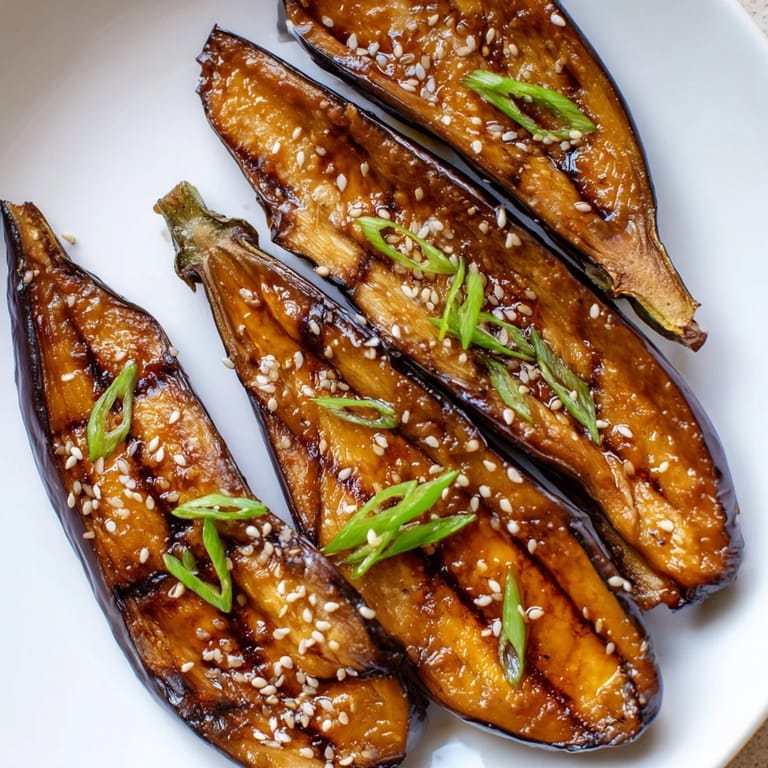
 The first time I had miso glazed eggplant was at a tiny izakaya in Tokyo, where the bartender cooked everything on a single portable burner behind the counter. I watched him brush that glossy glaze onto the eggplants with such careful precision, and when they emerged from his small oven, bubbling and golden, I understood why this dish is considered comfort food in Japan. Now whenever I make it at home, the smell of miso caramelizing takes me right back to that cramped, warm bar where strangers became friends over shared plates.
Last summer, I served this at a dinner party where one guest claimed to hate eggplant entirely. She took a tiny polite bite, then went back for seconds and thirds, eventually asking for the recipe before she even left the table. Thats the kind of conversion story this dish inspires, the way the high heat transforms something often dismissed as spongy into this luxurious, meltingly tender experience.
Ingredients
- 2 medium Japanese eggplants: These have thinner skin and fewer seeds than globe varieties, becoming incredibly silky when roasted. Look for ones that feel heavy for their size with glossy, unblemished skin.
- 3 tbsp white miso paste: The foundation of our glaze. White miso is fermented for a shorter time, giving it a milder, sweeter flavor that wont overpower the delicate eggplant.
- 1 tbsp mirin: This sweet Japanese rice wine adds gloss and helps balance the saltiness of the miso while contributing to that beautiful caramelized finish.
- 1 tbsp sake: Adds depth and subtle fermentation notes. If you dont have sake, dry sherry works in a pinch, though the flavor profile shifts slightly.
- 1 tbsp sugar: Essential for the glaze to caramelize properly under the broiler. The sugar creates those gorgeous burnt edges and crackly bits.
- 1 tbsp sesame oil: Divided use. Some goes on the eggplant before roasting to encourage browning, the rest goes into the glaze for nutty richness.
- 1 tbsp toasted sesame seeds: These add a crucial crunch and nutty aroma that contrasts beautifully with the soft eggplant. Toast them in a dry pan for extra fragrance.
- 2 green onions, thinly sliced: Fresh brightness to cut through the rich, savory glaze. The green pop makes the dish look finished and inviting.
Tired of Takeout? 🥡
Get 10 meals you can make faster than delivery arrives. Seriously.
One email. No spam. Unsubscribe anytime.
Instructions
- Get your oven ready:
- Preheat to 400°F and line a baking sheet with parchment paper. This prevents the sticky glaze from creating a mess on your pan later.
- Score the eggplants:
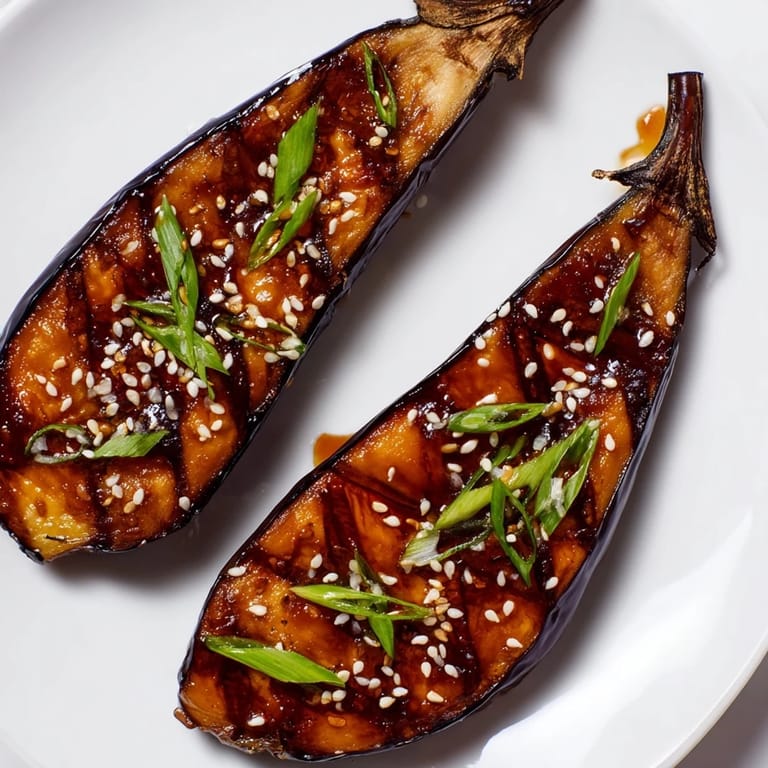
- Slice each eggplant in half lengthwise, then make a crosshatch pattern in the flesh, cutting about halfway deep but being careful not to pierce the skin. This helps the heat penetrate and creates more surface area for the glaze to cling to.
- Start the roasting:
- Brush the cut sides with a little sesame oil and place them cut side up on your prepared baking sheet. Roast for 20 to 25 minutes until the flesh is tender and starting to turn golden.
- Make the magic glaze:
- While the eggplants roast, whisk together the miso paste, mirin, sake, sugar, and remaining sesame oil in a small bowl until completely smooth. The miso can be stubborn, so keep whisking until no lumps remain.
- Glaze and broil:
- Remove the eggplants from the oven and spread that miso mixture generously over the cut sides. Switch your oven to broil and return the eggplants for 2 to 3 minutes, watching closely as the glaze bubbles and caramelizes. It goes from perfect to burned quickly, so stay nearby.
- Finish with garnish:
- Sprinkle immediately with toasted sesame seeds and those fresh green onions. The warmth of the eggplant will wake up the aromatics in the sesame seeds.
 Save to Pinterest
 My daughter now requests this for her birthday dinner every year, a tradition that started when she was eight and decided she was sophisticated enough to appreciate Japanese flavors. Watching her carefully dip each piece of eggplant into the extra glaze I always make reminds me that some of the best food memories are the ones we create right at our own kitchen table.
Making It Your Own
Sometimes I add a teaspoon of grated fresh ginger to the glaze, especially when Im serving this alongside other Japanese dishes. The ginger adds a warm kick that cuts through the richness, and honestly, Ive never met a miso glaze that didnt benefit from a little ginger. Other times, when I want more heat, a pinch of red pepper flakes goes into the glaze mixture.
The Roasting Technique
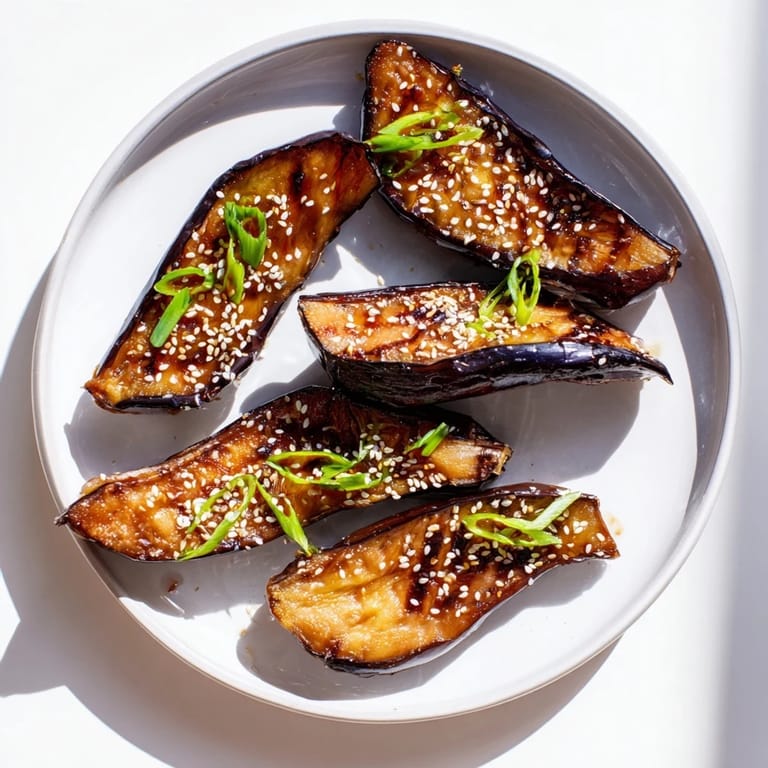
The crosshatch scoring is not just for looks, though it does create those beautiful restaurant style patterns. Each cut exposes more flesh to the heat, helping the eggplant cook evenly and creating pockets for the glaze to settle into. I used to skip this step when I was in a hurry, but once I tried it properly, I realized what a difference it makes in both texture and flavor absorption.
Serving Suggestions
This eggplant shines alongside simple steamed rice and maybe some quick pickled cucumbers to balance the richness. I also love it as part of a larger Japanese inspired spread with tofu and a simple soup. The flavors are strong enough that it works as a light main, but substantial enough to feel satisfying.
- Make extra glaze to serve on the side for anyone who wants that extra hit of flavor
- Let the eggplants rest for 5 minutes after broiling so the glaze sets slightly and becomes easier to eat
- If serving as part of a multi course meal, portion them in quarters rather than halves
 Save to Pinterest
 There is something deeply satisfying about a dish that looks so impressive but comes from such humble ingredients. This miso glazed eggplant has become my go to for whenever I want to feed people something that feels special without spending hours in the kitchen.
Recipe FAQs
- → Can I use regular eggplant instead of Japanese eggplant?
Yes, you can substitute regular globe eggplant. Slice it into planks or rounds rather than halving lengthwise, and adjust roasting time as larger pieces may take slightly longer to become tender.
- → What does the crosshatch scoring do?
Scoring the flesh in a crosshatch pattern helps the eggplant cook more evenly and allows the miso glaze to penetrate deeper into the flesh, creating more flavorful bites throughout.
- → Is there a substitute for sake and mirin?
For mirin, you can use equal parts white wine vinegar with a pinch of sugar. For sake, dry sherry or Chinese rice wine work well as substitutes in a pinch.
- → Why does the glaze need broiling after roasting?
The broiler creates high heat that caramelizes the sugars in the miso glaze, developing deep flavor and creating that signature bubbling, golden-brown finish typical of Japanese-style eggplant dishes.
- → Can I make this ahead of time?
You can roast the eggplant ahead and store it refrigerated for up to 2 days. Add the glaze and broil just before serving for the best texture and flavor.