 Save to Pinterest
 My neighbor stopped by one evening with a container of homemade kimchi and asked if I knew what to do with it beyond eating it straight from the jar. That question led me to this Korean ground beef bowl, a dish that transformed my weeknight cooking entirely. The first time I made it, the apartment filled with this incredible aroma of gochujang and sesame that had my partner asking questions before we even sat down to eat. What struck me most wasn't just how delicious it was, but how quickly it came together, turning simple ingredients into something that felt restaurant-quality and deeply satisfying.
I made this for a small dinner party and watched my friend who claims to hate spicy food go back for seconds, then thirds, adjusting the gochujang slightly with each bowl. There's something about building your own bowl that makes people feel invested in the meal, leaning over the table, trading observations about flavor combinations. My sister, who's usually a picky eater, discovered she actually loves edamame when it's mixed into something this flavorful. That night reminded me that food isn't just about feeding people, it's about giving them an experience they want to repeat.
Ingredients
- Lean ground beef: The 1 pound weight gives you enough richness without being heavy, and lean cuts prevent the bowl from becoming greasy after the sauce reduces.
- Gochujang: This Korean chili paste is the soul of the dish, bringing depth, heat, and that signature umami that makes people ask for the recipe.
- Soy sauce: It balances the heat with saltiness and adds complexity that you can't replicate with salt alone.
- Brown sugar: Just a tablespoon creates that slight sweetness that makes the sauce glossy and cling perfectly to each piece of beef.
- Garlic and ginger: Minced fresh, these two create the aromatic base that makes everything smell incredible while it's cooking.
- Toasted sesame oil: This ingredient is worth buying good quality because a little goes a long way, and the difference between regular and toasted is night and day.
- Green onions: Split between the beef and the topping so you get that fresh bite at the beginning and the end of each spoonful.
- Short-grain rice: White or brown both work, but the stickier texture of short-grain rice holds up better with the sauce than long grains.
- Edamame: Pre-cooked and shelled saves time, and their slight sweetness plays beautifully against the savory beef.
- Cucumber: Sliced thin, it adds a cooling contrast that prevents the bowl from feeling one-dimensional.
- Carrot: Julienned so it cooks slightly from the warm rice and beef while maintaining some crunch.
- Kimchi: The chopped kind works better than whole pieces here, distributing that tangy, funky flavor throughout every bite.
- Toasted sesame seeds: They add both visual appeal and a subtle nuttiness that ties everything together.
Tired of Takeout? 🥡
Get 10 meals you can make faster than delivery arrives. Seriously.
One email. No spam. Unsubscribe anytime.
Instructions
- Heat and perfume your pan:
- Pour sesame oil into a large skillet over medium heat and let it warm for about 30 seconds. Add your minced garlic and ginger, and you'll immediately notice the kitchen filling with this wonderful fragrant cloud. Stir constantly for just one minute so they release their oils without burning, which would make them bitter.
- Brown the beef thoroughly:
- Push your garlic and ginger to the side and add the ground beef, using a wooden spoon or spatula to break it into small, even pieces as it cooks. Don't rush this step or stir too frequently, as you want some browning for depth of flavor. After 5 to 6 minutes, the beef should be cooked through with no pink remaining, and any moisture that rendered should have mostly evaporated.
- Build the sauce:
- Reduce heat to medium-low and stir in your gochujang, soy sauce, and brown sugar, mixing until everything is evenly combined and the gochujang has dissolved into the beef. Let this cook for 2 to 3 minutes, watching as it transforms into a glossy, caramelized sauce that clings to every piece of meat. You'll know it's ready when the sauce darkens slightly and smells almost sweet alongside the spice.
- Finish with fresh elements:
- Remove from heat and stir in half of your sliced green onions, which will wilt slightly from the residual heat. Taste and adjust salt or gochujang to your preference before moving to assembly.
- Assemble your bowls:
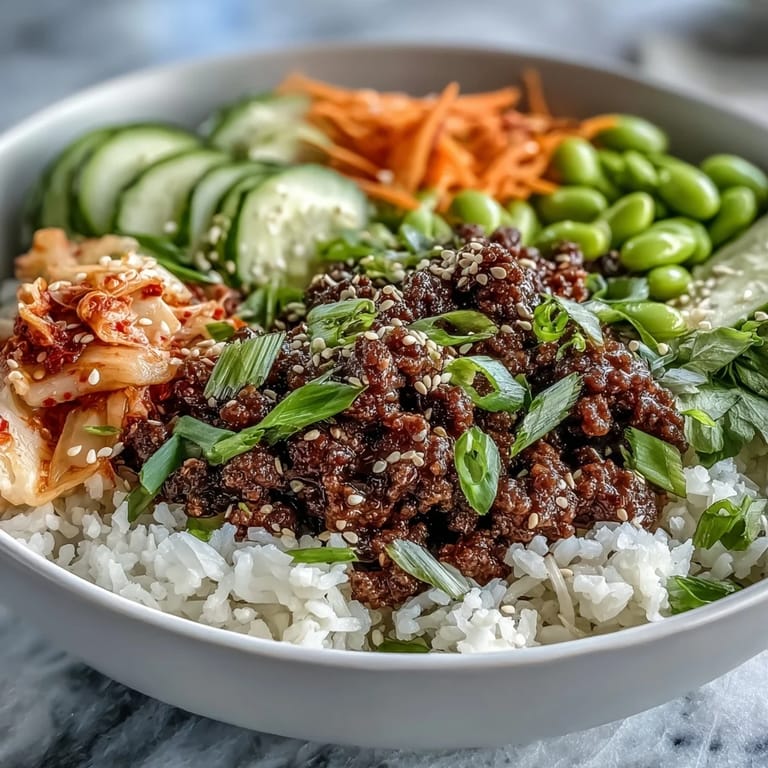
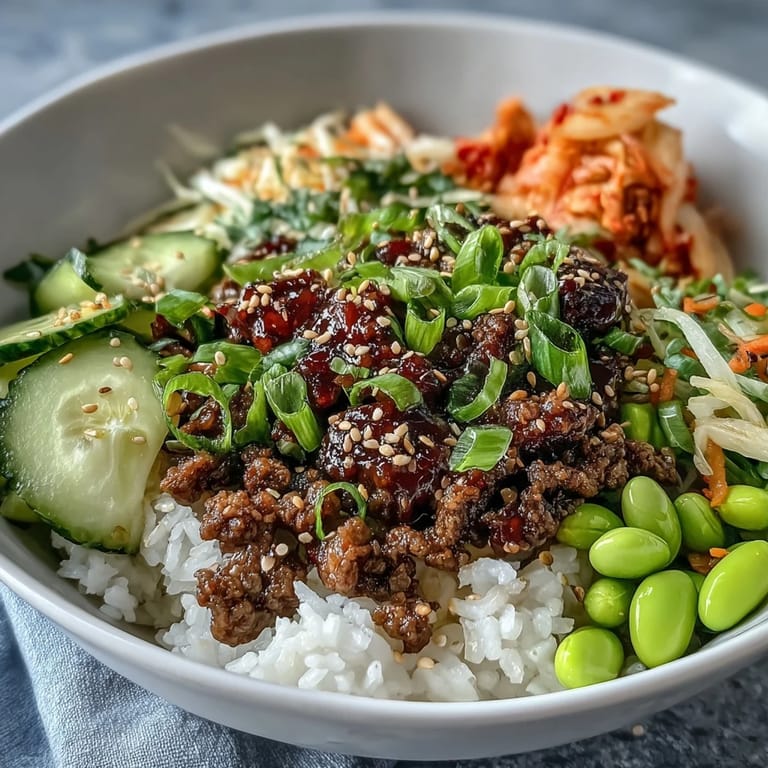
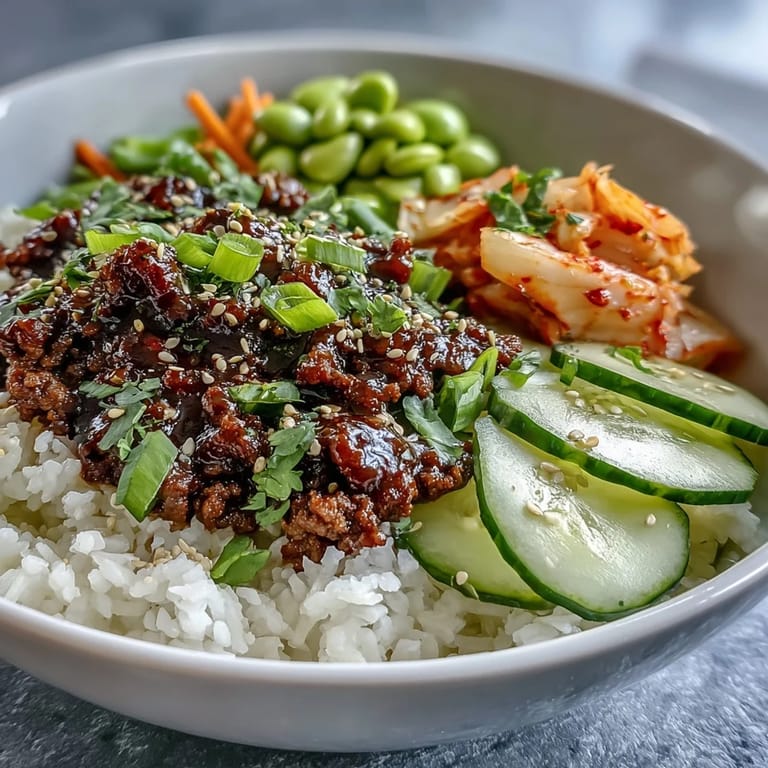
- Divide your warm rice among four serving bowls, creating a flat base for the toppings. Spoon the beef and its sauce over the rice, then arrange edamame, cucumber, and carrot in small sections around the bowl, distributing the kimchi throughout rather than piling it in one spot.
- Final touches:
- Sprinkle the remaining green onions and toasted sesame seeds over everything, then serve immediately while the rice and beef are still warm and the vegetables remain crisp. The contrast of temperatures is part of what makes this bowl sing.
 Save to Pinterest
 There was a moment during that dinner party when the table went quiet, everyone focused on their bowls, occasionally looking up to share a knowing glance about how good it was. That silence felt like the highest compliment, and it's what convinced me this wasn't just a weeknight dinner solution but something special enough to serve to people I care about.
How to Make It Your Own
The beauty of this bowl is that it's more like a template than a rigid recipe. Swap the beef for ground turkey or chicken if you want something lighter, or use plant-based crumbles if you're feeding vegetarians. Add sliced radish for extra crunch, shredded cabbage for volume, or even top it with a fried egg if you want to add richness and a runny yolk that mixes into the rice. The only thing I'd urge you not to skip is the gochujang itself, because that's what makes this distinctly Korean and what gives the whole bowl its personality.
Adjusting the Heat Level
Gochujang can range from mildly warm to quite spicy depending on the brand, so start with the full two tablespoons and taste as you go if you're uncertain. If you're cooking for people who avoid heat entirely, you can reduce it to one tablespoon and still have a flavorful sauce. On the flip side, if you love spice, add an extra teaspoon or two, or drizzle the finished bowls with a bit of gochugaru, the dried chili flake version, for even more kick.
Storage and Make-Ahead Tips
The beef keeps in an airtight container in the refrigerator for up to four days and actually tastes even better the next day as the flavors meld. You can cook the rice and vegetables ahead too, though I'd assemble the bowls fresh so the rice stays warm and the cucumber and carrot don't get soggy. If you're meal prepping for the week, keep the kimchi and sesame seeds separate until serving, as they lose their brightness if stored with the other components.
- Make the beef in a bigger batch and freeze it in portions for quick future meals.
- Pre-slice all your vegetables the night before and store them in separate containers for faster assembly.
- Toast extra sesame seeds and keep them in an airtight jar so you always have them ready when the craving hits.
 Save to Pinterest
 This bowl has become my go-to when I want something that feels impressive but doesn't demand hours in the kitchen. Once you've made it once, you'll understand why, and it'll likely become a regular on your table too.
Recipe FAQs
- → What does gochujang taste like?
Gochujang is a Korean fermented chili paste with a complex flavor profile. It combines sweet, savory, and spicy notes with a slight tang from fermentation. The heat level is moderate, similar to red pepper flakes but with more depth from the fermentation process.
- → Can I make this dish gluten-free?
Yes, simply replace the soy sauce with gluten-free tamari. Most other ingredients are naturally gluten-free, though some brands of gochujang may contain wheat, so check the label to be certain.
- → What can I substitute for ground beef?
Ground turkey, chicken, or plant-based meat crumbles work well as lighter alternatives. Pork is also a great option that complements the Korean flavors. The cooking time remains similar across these proteins.
- → How spicy is this dish?
The spice level is medium and can be adjusted. Use 1 tablespoon of gochujang for mild heat, or increase to 3 tablespoons for more kick. The brown sugar helps balance the heat, making it approachable even for those sensitive to spice.
- → Can I meal prep these bowls?
Absolutely. Store the cooked beef, rice, and vegetables in separate airtight containers for up to 4 days. Reheat the beef and rice, then assemble with fresh vegetables and kimchi when ready to eat. Add sesame seeds just before serving.
- → What other toppings work well?
Fried eggs with runny yolks add richness. Sliced radish, shredded cabbage, bean sprouts, or spinach provide extra crunch and nutrients. A drizzle of sesame oil or extra gochujang amps up the flavor before serving.