 Save to Pinterest
 There's something about the sizzle of chicken hitting a hot pan that makes me pause whatever I'm doing. Years ago, a friend brought over a container of homemade teriyaki chicken, and I watched it disappear in minutes—not because it was fancy, but because it tasted like comfort wrapped in that glossy, caramelized sauce. I've since made this bowl countless times, and it never fails to deliver that same magic of simple ingredients becoming something you actually crave.
I made this for my roommate's surprise birthday dinner, and the kitchen filled with this incredible aroma that drew everyone in before we'd even plated anything. She walked in mid-cook, caught that first whiff of garlic and ginger hitting the pan, and just sat down at the counter smiling. Turns out the best part of cooking isn't always the eating—it's that moment when someone realizes you've created something with intention.
Ingredients
- Boneless, skinless chicken thighs or breasts (1.5 lbs, cut into bite-sized pieces): Thighs stay juicier than breasts, but either works—just don't skip cutting them small so the sauce clings and they cook evenly.
- Soy sauce (1/3 cup): This is your umami backbone; use a good quality brand and check if it's gluten-free if that matters to you.
- Mirin (1/4 cup): The sweet rice wine that makes this taste authentically Japanese—don't substitute with sugar alone, it changes the whole flavor profile.
- Brown sugar (2 tbsp): Adds depth and helps build that glossy finish.
- Honey (2 tbsp): Balances the salty with something warm and lingering.
- Rice vinegar (1 tbsp): Cuts through the richness and keeps things from tasting cloying.
- Garlic and ginger (2 cloves and 1 tsp respectively): Fresh is non-negotiable here—jarred will taste flat and tired.
- Sesame oil (1 tsp): A little goes a long way; this toasted, nutty note is what makes people ask what's in it.
- Cornstarch slurry (1 tbsp cornstarch plus 2 tbsp water): Creates that glossy coating without flour; stir it smooth before adding or you'll get lumps.
- Jasmine or short-grain white rice (2 cups): Jasmine has a subtle floral note, but short-grain works beautifully too—whatever you have is fine.
- Broccoli, carrots, bell pepper, and snap peas (1 cup each mostly): These stay bright and crisp if you don't overcook them, which is the whole point.
- Fresh pineapple (1 cup, diced): Canned works in a pinch, but fresh gives you that juicy pop that balances the savory.
- Scallions and sesame seeds (2 tbsp and 1 tsp respectively): The finishing touches that make it look intentional and taste complete.
Tired of Takeout? 🥡
Get 10 meals you can make faster than delivery arrives. Seriously.
One email. No spam. Unsubscribe anytime.
Instructions
- Rinse and start your rice first:
- Cold water over the rice until it runs clear removes excess starch and keeps grains from clumping. Get it on the heat while you prep everything else so timing works out.
- Whisk your sauce ingredients together:
- Combine soy sauce, mirin, brown sugar, honey, rice vinegar, garlic, ginger, and sesame oil in a bowl—let the flavors mingle for a moment and taste it. It should taste bold and a little salty, knowing it'll coat chicken and mellow out.
- Coat and rest the chicken:
- Toss chicken pieces with half the sauce in a bowl and let them sit while you prep vegetables. This 10-minute head start means the chicken absorbs flavor before it even hits the pan.
- Get those vegetables crisp-tender:
- Heat oil in your skillet over medium-high heat until it shimmers, then add broccoli, carrots, bell pepper, and snap peas. Keep them moving with a spatula or wooden spoon for 3 to 4 minutes—you want them to have a little resistance when you bite them, not soft.
- Brown the chicken until cooked through:
- In the same (don't wash it) hot pan, add marinated chicken and let it sit for a minute before stirring so it gets some color. Keep stirring occasionally until the pieces are golden and cooked through, about 6 to 8 minutes total.
- Build that glossy sauce:
- Pour the remaining sauce into the pan with the chicken, then add your cornstarch slurry while stirring constantly. Watch it thicken in real time—it's deeply satisfying and takes just 2 to 3 minutes of simmering.
- Assemble your bowls with intention:
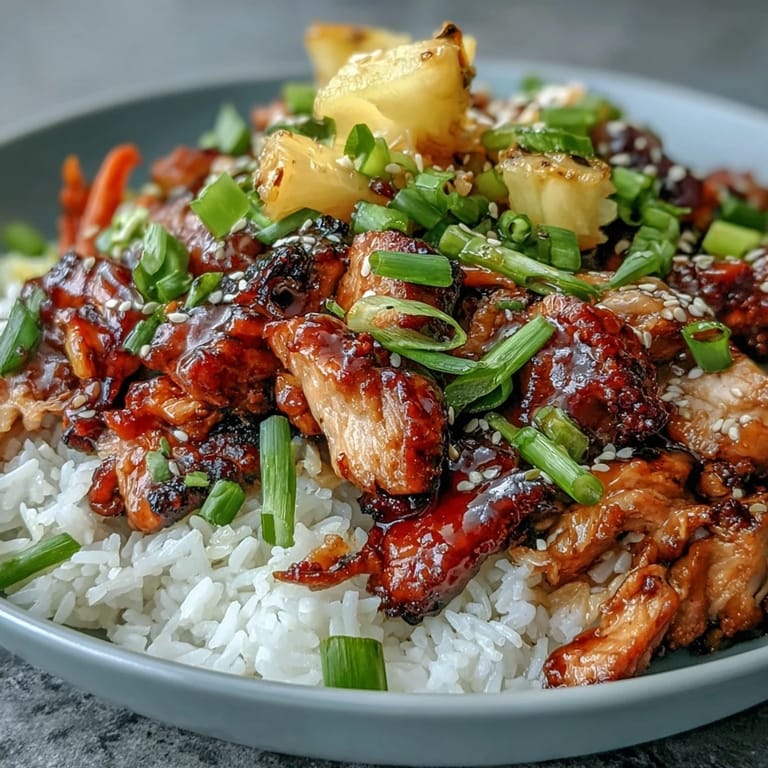
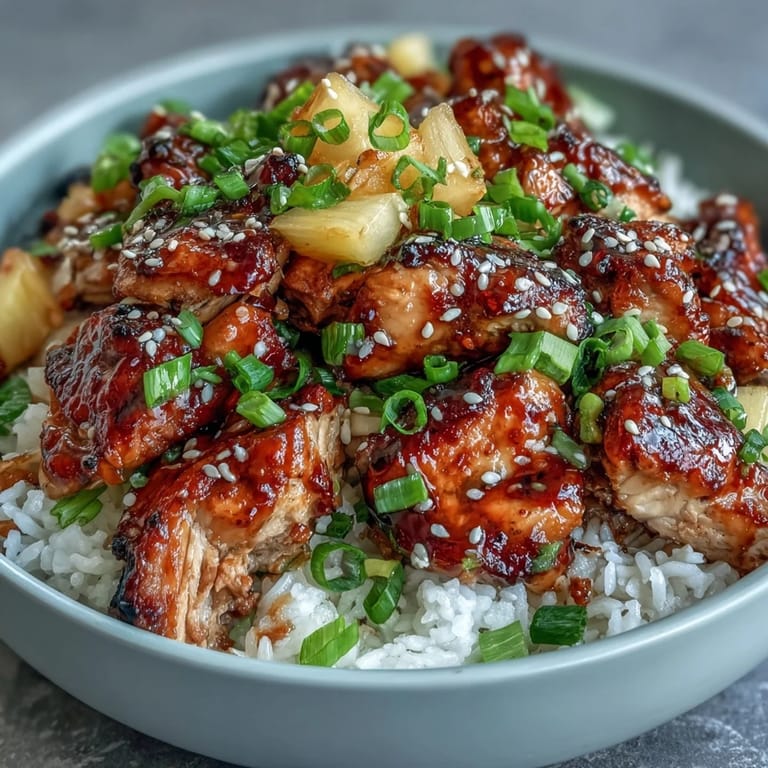
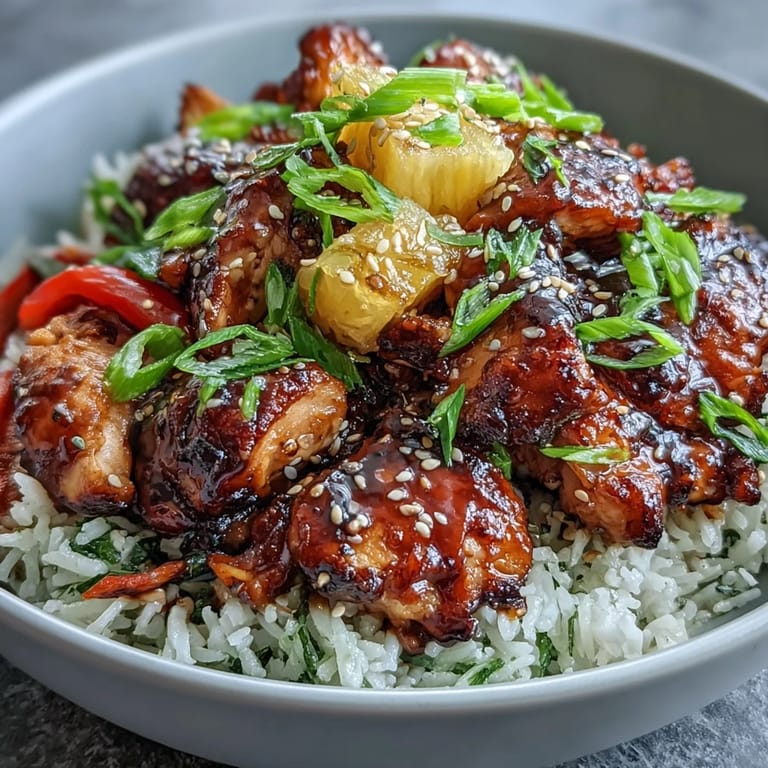
- Fluff the rice and divide among bowls, then top with chicken, vegetables, and pineapple. Finish with a scatter of scallions and sesame seeds so it looks as good as it tastes.
 Save to Pinterest
 My neighbor tasted this once and asked if she could bring her kids over specifically for it the following week. Something about feeding people something they ask for again hits different—it stopped being just dinner and became a reason to gather.
Why This Works Every Time
The genius of this bowl is that nothing is fussy, but everything feels deliberate. You're layering flavors without complicating technique—sweet and savory and bright and nutty all happening in one bite. The rice absorbs any extra sauce, the vegetables stay their own thing instead of disappearing into the chicken, and the pineapple reminds you this came from a place where someone knew how to balance heat with sweetness.
Variations That Work
I've swapped in tofu for chicken when cooking for vegetarian friends and honestly couldn't tell the difference—the sauce does all the heavy lifting. You can also throw in mushrooms, zucchini, or baby corn if that's what's in your fridge, and the bowl still tastes complete and intentional, not thrown together.
Making It Your Own
The beauty of this recipe is that it's a template, not a rulebook. Once you understand how the sauce works and how to time the components, you can build on it without overthinking. I've drizzled sriracha on top, added a squeeze of lime, even experimented with different proteins—each version felt like mine instead of something I was following.
- If you want extra heat, a drizzle of chili oil or sriracha on top adds complexity without drowning the dish.
- Pair it with a crisp white wine like Sauvignon Blanc if you're feeling fancy, or just drink what you like.
- Leftovers keep well for three days and actually taste better the next day as flavors settle.
 Save to Pinterest
 This is the kind of dish that feels like you're in on a secret—simple enough to make on a Tuesday, impressive enough to serve when it matters. Once you've made it once, you'll make it again and again.
Recipe FAQs
- → What makes homemade teriyaki sauce different from store-bought?
Homemade teriyaki sauce uses fresh ingredients like minced garlic, grated ginger, and real honey rather than preservatives and artificial flavors. You control the balance of sweet and savory elements, adjusting brown sugar and soy sauce to taste. The sauce thickens naturally as it simmers, creating that glossy restaurant-style coating.
- → Can I prepare the components ahead of time?
The teriyaki sauce can be made up to a week in advance and stored refrigerated. Chicken can be marinated for up to 24 hours before cooking. Cooked rice keeps well in the refrigerator for 2-3 days. For best results, stir-fry the vegetables just before serving to maintain their crisp texture, though they can also be pre-cooked and gently reheated.
- → What type of rice works best for teriyaki bowls?
Short-grain white rice is traditional in Japanese cuisine, offering a slightly sticky texture that helps soak up the teriyaki sauce. Jasmine rice provides a fragrant floral aroma and separates into individual grains. Brown rice adds nutty flavor and extra fiber but requires longer cooking time. Rinse any rice thoroughly before cooking to remove excess starch.
- → How do I get the sauce thick and glossy?
The cornstarch slurry is key for achieving that restaurant-quality gloss. Mix cornstarch with cold water until smooth before adding to the simmering sauce. Bring the mixture to a gentle bubble while stirring constantly—the sauce will thicken within 2-3 minutes. Avoid boiling vigorously, which can break down the starch and thin the sauce again.
- → What proteins can I substitute for chicken?
Firm tofu cubes work beautifully, absorbing the teriyaki marinade and achieving a golden sear. Tempeh offers a nutty flavor and hearty texture. Salmon fillets or shrimp cook quickly and pair naturally with the sweet-savory glaze. For vegetarian options, increase the vegetables or add edamame for protein. Adjust cooking times based on your chosen protein.
- → Is pineapple traditional in teriyaki bowls?
While not traditional in Japan, fresh pineapple has become popular in Western teriyaki bowls for its bright acidity that cuts through the rich sauce. The natural enzymes also help tenderize meat during marination. If pineapple isn't available, mandarin oranges or fresh mango offer similar sweetness and acidity.