 Save to Pinterest
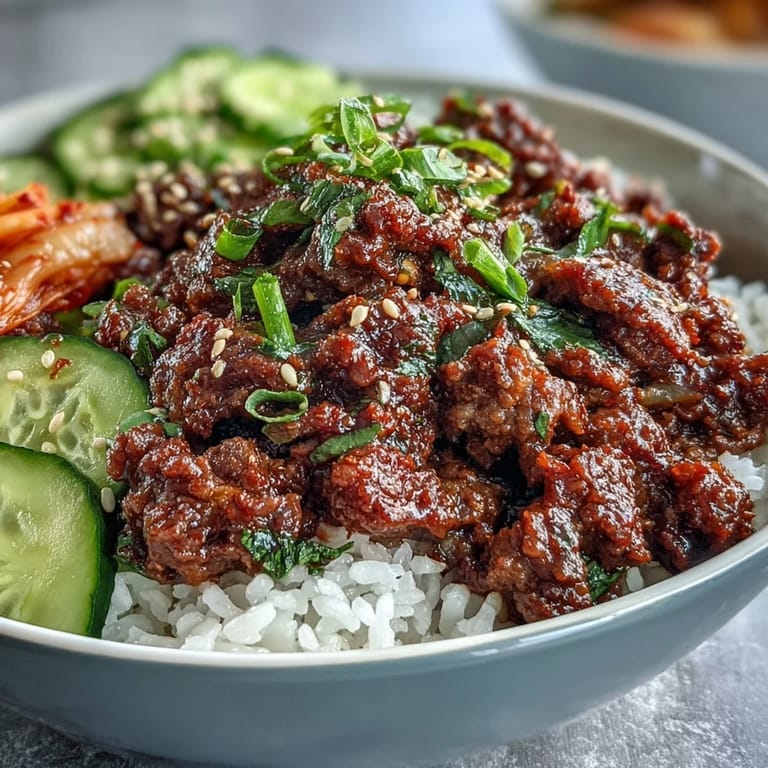
 My coworker Sarah brought a Korean beef bowl to lunch one day, and the way she mixed everything together on her last bite—rice, beef, pickled vegetables, all that bright color—made me stop mid-conversation. What struck me wasn't just how good it smelled, but how alive the bowl looked. I asked for the recipe that afternoon, and by that evening, I was browning ground beef and wondering why nobody had told me gochujang could taste this good.
I made this for my sister's book club night when she asked me to bring something that wasn't pasta. Everyone went back for seconds, and one person actually asked if I'd made the pickled vegetables from scratch—which felt like winning at cooking, honestly. The bowl sat on the counter looking almost too pretty to eat, but not for long.
Ingredients
- Lean ground beef: The backbone here—make sure it's actually lean so the sauce can coat each piece instead of swimming in grease.
- Gochujang: This Korean chili paste is what gives the whole thing its personality; find it in the Asian section or online, and don't skip it.
- Fresh garlic and ginger: Minced small means they distribute evenly and wake up everything else in the pan.
- Soy sauce: Adds that umami depth that makes people ask what your secret ingredient is.
- Rice vinegar: Keeps things bright instead of heavy; it's in the sauce and the pickled vegetables for a reason.
- Toasted sesame oil: Just a teaspoon goes a long way—this is where the nutty richness comes from.
- Carrot and daikon radish: Quick-pickling these while you cook means they're ready to add that tangy crunch exactly when you need it.
- Cucumber and radish: Fresh and cooling against the heat of the beef.
- Kimchi: The wild card that brings funk and fizz; use jarred or homemade, whatever you have.
- White or brown rice: The canvas everything else sits on—cook it however you normally do.
- Toasted sesame seeds: Sprinkle these at the very end for texture and that toasted flavor that makes you close your eyes.
Tired of Takeout? 🥡
Get 10 meals you can make faster than delivery arrives. Seriously.
One email. No spam. Unsubscribe anytime.
Instructions
- Start the pickled vegetables first:
- Whisk rice vinegar, sugar, and salt in a small bowl until the sugar dissolves completely. Toss in your julienned carrot and daikon radish, stir them around, and let them sit while you handle the beef—they'll soften slightly and soak up all that tang.
- Get the pan hot and aromatic:
- Heat vegetable oil in a large skillet over medium-high heat until it shimmers. Add minced garlic and grated ginger, and let them sizzle for about a minute until your kitchen smells incredible.
- Brown the beef properly:
- Add the ground beef and break it apart with a spoon as it cooks, about five to six minutes total. You want it browned and cooked through, not gray and clumpy—stir it frequently so it browns evenly.
- Build the sauce:
- Pour in the gochujang, soy sauce, brown sugar, rice vinegar, and sesame oil all at once. Stir everything together so the gochujang breaks up and coats each piece of beef, then let it bubble gently for two to three minutes until the sauce thickens slightly and tastes balanced.
- Finish with green onions:
- Stir in half the green onions and remove from heat. Taste it—if you want more heat, now's the time to add a drizzle of sriracha.
- Build your bowls:
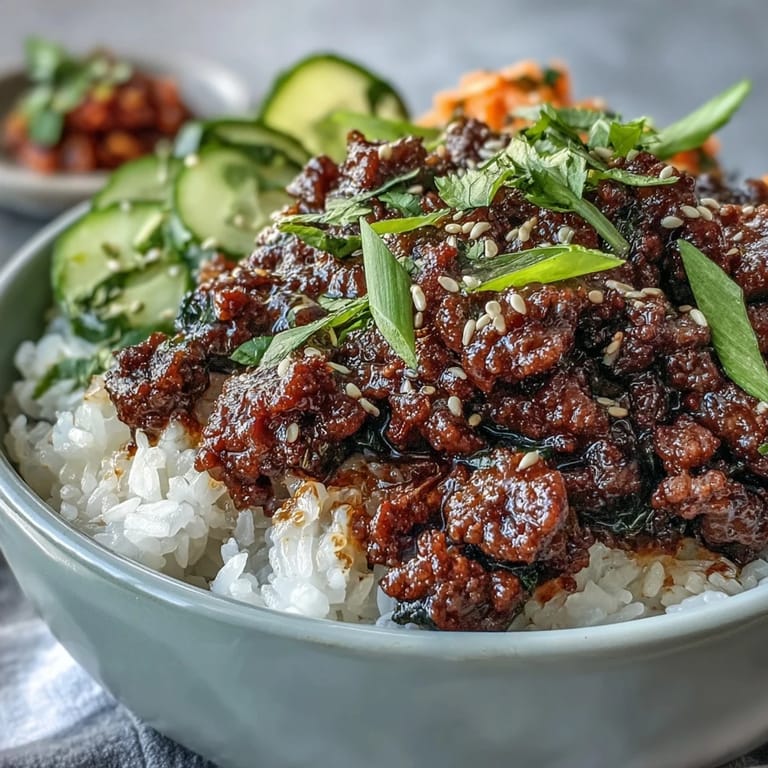
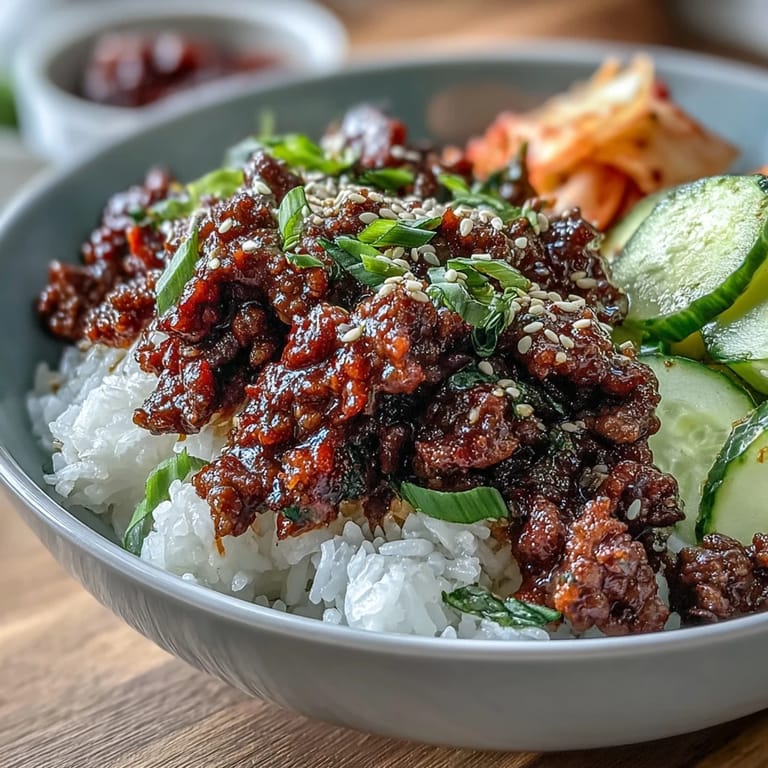
- Divide hot rice among four bowls, top each with a generous portion of beef and sauce. Arrange the pickled vegetables, fresh cucumber slices, radish, and chopped kimchi around the beef in whatever order feels right to you.
- Garnish and serve:
- Sprinkle the remaining green onions and toasted sesame seeds over everything. Eat it while the rice is still warm and the vegetables are still crisp.
 Save to Pinterest
 There's something about a bowl where everything is meant to be mixed together that changes how you eat. Instead of forks and plating, you're using chopsticks or a spoon, and every bite tastes different depending on what you grab.
The Story Behind Gochujang
Gochujang has been made in Korea for centuries by fermenting soybeans, red chiles, and other ingredients into a thick paste that somehow tastes both spicy and sweet at the same time. When I first used it, I wasn't sure if I liked it, but after a few bites, I realized I wasn't tasting it—I was tasting it in everything, like it had become part of my mouth. Now I keep a container of it at the front of my fridge like some people keep ketchup.
Why Pickling Matters Here
Quick-pickled vegetables aren't just pretty—they're a palate cleanser built into every bite. The vinegar cuts through the richness of the beef and the creaminess of the rice, making your mouth want the next spoonful immediately. It's the difference between a bowl that feels heavy and one that feels balanced.
Making It Your Own
This bowl is flexible in ways that matter. You can use ground chicken or turkey instead of beef if that's what you have, and it'll taste just as good because the sauce is what's doing the heavy lifting. The vegetables are suggestions, not commands—swap in whatever's crisp and raw in your produce drawer, and the whole thing still works.
- If you want to make it vegetarian, use crumbled tofu or mushrooms sautéed the same way as the beef.
- Brown rice works beautifully here if you want something chewier than white rice.
- Make the pickled vegetables the night before and they'll taste even better, more developed and less raw.
 Save to Pinterest
 This bowl has become one of those dishes I make when I want to feel like I'm cooking something interesting without the stress. It's bright, it's warm, and it tastes like someone who knows what they're doing made it.
Recipe FAQs
- → Can I make this dish less spicy?
Reduce the gochujang to 1-2 tablespoons and add a teaspoon of honey or brown sugar to balance the flavors. You can also serve with extra rice to mellow the heat.
- → What can I substitute for gochujang?
Sriracha mixed with a teaspoon of miso paste works well, or use Korean red pepper flakes (gochugaru) with a little soy sauce and sesame oil. The flavor profile will shift slightly but remain delicious.
- → How long do the pickled vegetables keep?
The quick-pickled carrots and daikon will stay fresh in an airtight container in the refrigerator for up to 1 week. They actually develop more flavor after sitting for a day.
- → Can I prepare the beef ahead of time?
Cook and season the beef mixture up to 2 days in advance. Store it in the refrigerator and reheat gently in a skillet before assembling the bowls. Fresh vegetables should be prepped just before serving.
- → Is this dish freezer-friendly?
The cooked beef mixture freezes well for up to 3 months. Thaw overnight in the refrigerator and reheat before serving. Avoid freezing the assembled bowls as the texture of rice and fresh vegetables will suffer.
- → What other proteins work in this bowl?
Ground chicken, turkey, or pork all work beautifully with the gochujang sauce. For a vegetarian version, use crumbled tofu or textured vegetable protein, adjusting cooking time accordingly.