 Save to Pinterest
 There's something magical about the sizzle of cold rice hitting a hot wok, the way it transforms from clumpy and stiff to separate, fluffy grains in just a few minutes. I discovered this dish out of necessity one weeknight when my fridge held little more than yesterday's rice, a couple of eggs, and whatever vegetables I'd bought earlier in the week. What started as a way to avoid ordering takeout became my go-to solution whenever I needed dinner on the table in twenty minutes flat, and I haven't looked back since.
I made this for my roommate one rainy Tuesday after he'd had the kind of day that left him too tired to cook. Watching his face light up when he tasted it—when he actually looked up from his bowl to ask what was in it—reminded me that the best meals aren't always the complicated ones. They're the ones that show up exactly when you need them, hot and satisfying and somehow better than expected.
Ingredients
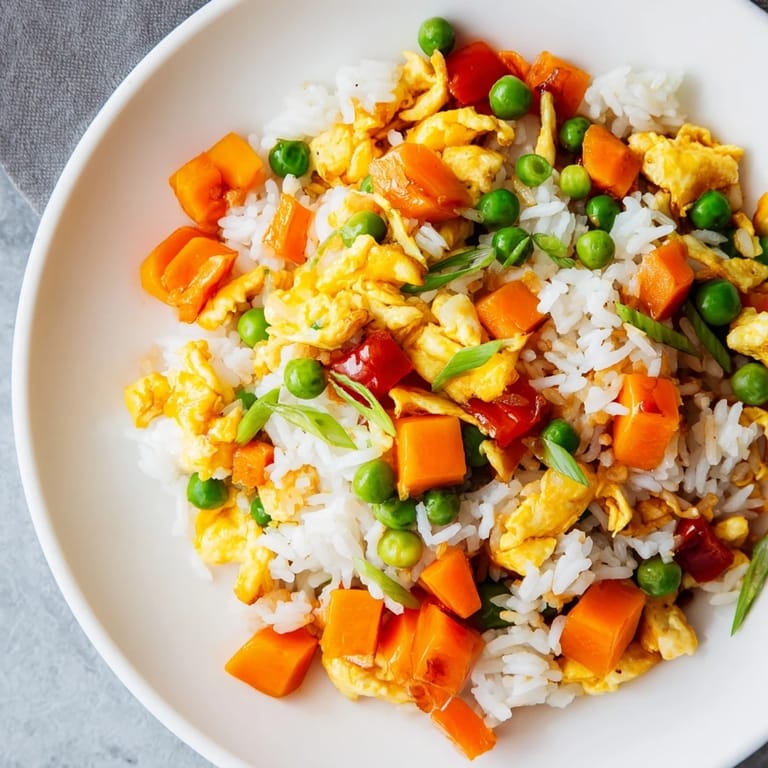
- Cooked leftover rice (2 cups, cold and preferably day-old): Cold rice is non-negotiable here; warm rice turns mushy and clumpy when stir-fried. If you only have fresh rice, spread it on a plate and let it cool completely first.
- Large eggs (2): They scramble quickly and create pockets of richness throughout the dish, so don't skimp or use smaller eggs.
- Diced carrots (1/2 cup): Cut them small enough to cook through in just a few minutes, and their natural sweetness balances the savory soy sauce beautifully.
- Frozen peas (1/2 cup, thawed): Thawing them first prevents the pan temperature from dropping and keeps everything cooking evenly.
- Chopped scallions (1/4 cup): Split this between cooking and garnish—some stirred in midway adds flavor, and the rest scattered on top brings freshness to every bite.
- Diced bell pepper (1/2 cup, optional): Use whatever color you have; red and yellow add slight sweetness while green brings a bit of bite.
- Soy sauce (2 tablespoons): Low-sodium soy sauce lets you taste everything else in the dish, not just salt.
- Sesame oil (1 teaspoon): A small amount goes a long way; it's the secret ingredient that makes people wonder what you did differently.
- Ground white or black pepper (1/4 teaspoon): White pepper dissolves invisibly into the rice while black pepper adds visible specks.
- Vegetable oil (2 tablespoons): Use something with a high smoke point so it doesn't burn during the high heat stir-frying.
- Salt to taste: Hold off on this until the very end when you can actually taste everything together.
Tired of Takeout? 🥡
Get 10 meals you can make faster than delivery arrives. Seriously.
One email. No spam. Unsubscribe anytime.
Instructions
- Set everything up first:
- Dice your carrots and pepper into pieces roughly the size of peas so they cook evenly. Thaw the peas if they're frozen, beat the eggs in a bowl, and measure out your soy sauce and sesame oil. When you start cooking, you won't have time to chop anything mid-stir-fry.
- Cook the eggs until just set:
- Heat one tablespoon of oil in your largest skillet or wok over medium-high heat until it shimmers, then add the beaten eggs. They'll look scattered at first, then start to set almost immediately. Scramble gently until they're cooked through but still soft—about two minutes—then push them onto a clean plate.
- Build flavor with the vegetables:
- Add the remaining tablespoon of oil to the pan, and you'll feel the heat jump immediately. Toss in your carrots and bell peppers, listening for that quick sizzle that tells you the pan is hot enough. Stir almost constantly for about two minutes until they soften slightly but still have some resistance when you bite into them.
- Add the peas and half the scallions:
- They'll cook through in about a minute, releasing a grassy, fresh aroma that fills the whole kitchen.
- Introduce the rice and break up clumps:
- This is where the dish comes together. Spread the cold rice across the hot pan, and use your spatula to break apart any stuck-together pieces as you stir. You'll feel the rice gradually separate and heat through, about two to three minutes. Keep moving it so it doesn't stick to the bottom.
- Season with soy sauce and sesame oil:
- Drizzle both over the rice and toss everything together, making sure the liquid coats each grain evenly. The sesame oil smell will become noticeably stronger and more fragrant as it warms.
- Reunite everything with the eggs:
- Return the scrambled eggs to the pan, breaking them into bite-sized pieces as you stir them in. One final minute of heat brings all the flavors together, and you can taste the seasoning now to add a pinch more pepper or salt if needed.
- Finish with remaining scallions:
- Remove from heat and scatter the rest of the scallions on top for a fresh pop of color and flavor. Serve immediately while everything is still hot.
 Save to Pinterest
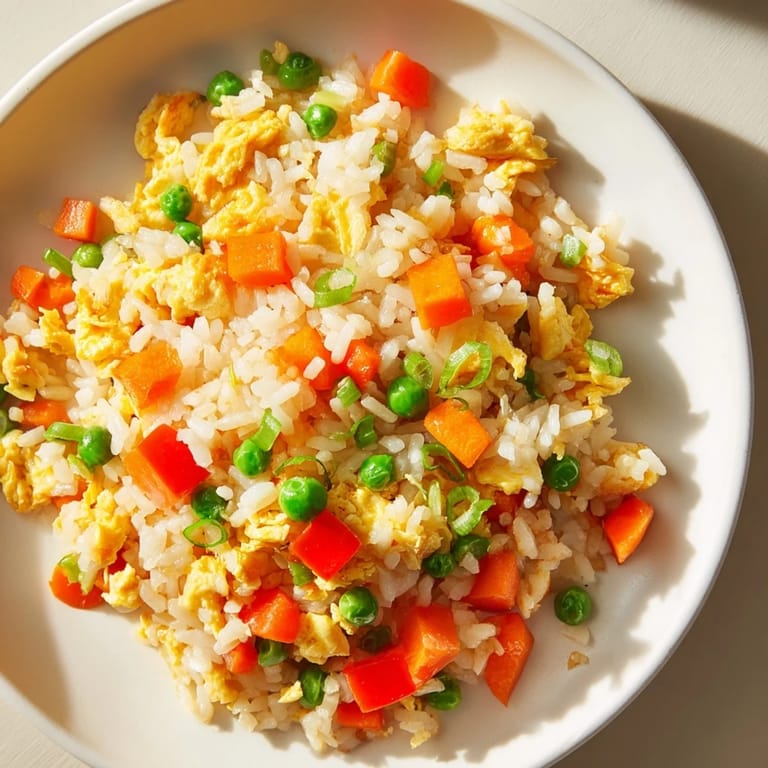
 What I love most about this dish is how it whispers rather than shouts. It's not fancy or pretentious, but when you nail it—when the rice is fluffy, the eggs are tender, and everything tastes both savory and somehow bright—it feels like you've done something genuinely skillful with the simplest ingredients. My friends often ask what restaurant I ordered from, and the answer is always just this kitchen, this pan, and about twenty minutes of attention.
The Power of Proper Prep
The first few times I made fried rice, I'd stand at the stove scrambling to dice vegetables while the pan overheated and the eggs turned rubbery. Then I learned the magic word: mise en place, which just means everything in its place before you start cooking. Now I spend two minutes gathering and prepping everything, and the actual cooking becomes almost meditative. You're not rushing; you're just responding to what the pan needs in that moment.
Making It Your Own
The beauty of this recipe is that it's more of a template than a rigid instruction. Your leftover rice, your vegetables that need using, your protein choices—they all become part of the story. I've made this with shrimp on fancy nights, with tofu when I'm eating vegetarian, with whatever green or root vegetable needed saving from the back of my crisper drawer. The core technique stays the same; the details shift based on what your kitchen holds.
Timing and Temperature Tips
The window between perfectly cooked and overdone fried rice is surprisingly narrow, usually just one or two minutes. That's why keeping your heat high and your movements constant matters so much. If you're cooking for two people and you have time, there's nothing wrong with making this in two batches; a slightly less crowded pan means better heat distribution and more even cooking. You'll notice I never add water or broth—the soy sauce and sesame oil provide all the moisture the rice needs, keeping it light instead of soupy.
- If your rice keeps clumping together, it's probably too warm; let it cool completely before cooking, or break it up more aggressively with your spatula.
- Scrambled egg pieces should be tender and yielding, never tough or overcooked; if you're unsure, pull them out slightly before they look completely done.
- The scallions on top aren't just garnish—they add a sharp, oniony contrast that cuts through the richness and brings the whole dish into focus.
 Save to Pinterest
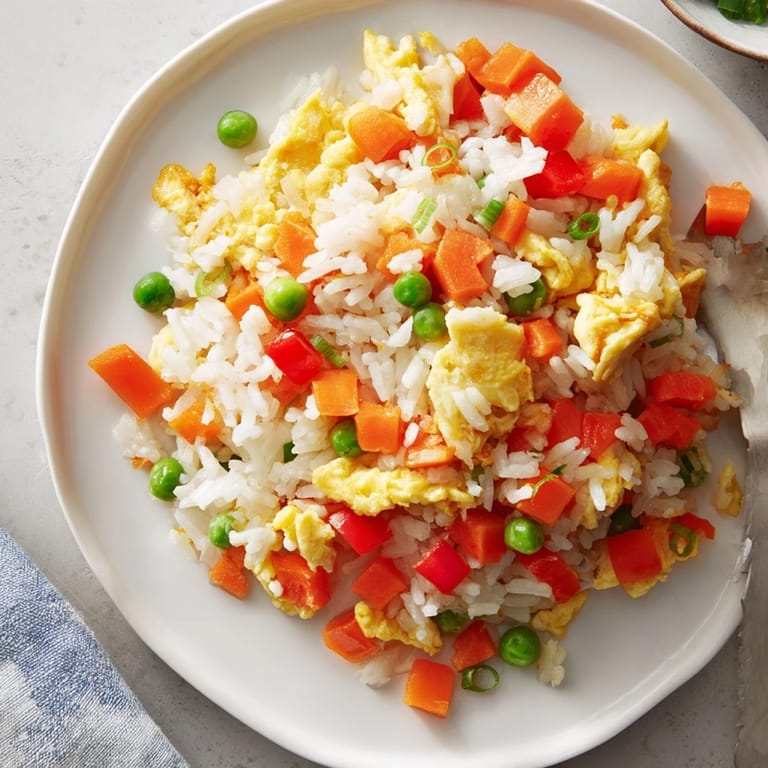
 This dish has become my answer to 'what's for dinner' more times than I can count, and I've never gotten tired of it. There's something deeply satisfying about turning forgotten rice and whatever else is on hand into something warm and complete in under twenty minutes.
Recipe FAQs
- → What type of rice works best for this dish?
Day-old, cold cooked rice works best as it prevents clumping and provides the perfect texture for stir-frying.
- → Can I add other vegetables?
Yes, you can swap or add vegetables like corn, snap peas, or broccoli based on your preference and availability.
- → How do I ensure the eggs stay fluffy?
Scramble eggs quickly over medium-high heat until just set and set aside before combining with other ingredients.
- → What oils are recommended for cooking?
Vegetable oil or another neutral oil is ideal for stir-frying, while sesame oil is added for flavor at the end.
- → Can this dish be made gluten-free?
Use certified gluten-free soy sauce or tamari to keep the dish gluten-free without sacrificing flavor.