 Save to Pinterest
 I'll never forget the evening I discovered that a cheese board could tell a story through color alone. It was at a small gallery opening in the city, where a striking arrangement of deep crimsons against brilliant golds caught my eye before I even tasted anything. The way those ruby-red wine-soaked cheeses glowed against the roasted golden peppers felt intentional, almost artistic. That night, I realized that appetizers don't just need to taste good—they need to make people pause and admire before they reach for their plate. The Crimson & Gold Gala was born from that moment, a celebration of contrast that transforms simple ingredients into something that feels like an occasion.
The first time I served this at a dinner party, I watched my usually quiet neighbor take a bite of wine-soaked cheese alongside a golden pepper, pause mid-chew, and ask for the recipe. That single moment—when someone discovers an unexpected flavor combination—reminded me why I love cooking. This board has a way of bringing out curiosity in people, making them braver about trying things.
Ingredients
- Fresh sweet cherries: The jewels of the red section—buy them a day ahead so they're perfectly chilled, and pit them gently to keep their shape intact.
- Wine-soaked cheese (Drunken Goat or Merlot BellaVitano): These are the unexpected stars; the wine infusion adds complexity that makes people lean in for another slice.
- Dried cranberries: They add a subtle tartness that keeps the reds from feeling too heavy, and they stay perfect at room temperature.
- Red grapes: Halve them to create more surface area for color and to make them easier for guests to pick up.
- Pomegranate seeds: Add those last, just before serving, so they don't weep and stain the other elements.
- Yellow bell peppers (roasted): Roasting awakens their sweetness in a way raw peppers can't match; the charred skin adds depth.
- Aged cheddar or gouda: Cube rather than slice to echo the structured, block-like arrangement of the platter.
- Gold leaf-topped crackers: If you can't find them, plain water crackers work just as well—gold leaf is luxury, not necessity.
- Golden raisins: These are sweeter than their darker cousins and provide texture contrast against the soft cheeses.
- Yellow cherry tomatoes: Halve them for the same reason as the grapes—it makes them guest-friendly and doubles the visual impact.
- Edible gold leaf (optional): A luxury touch that isn't essential but feels magical when you catch the light.
- Fresh basil or microgreens: These add a final whisper of freshness and break up the visual weight of all that richness.
- Olive oil and black pepper: The finishing touch for roasted peppers—don't skip this seasoning, as it brings out their natural sweetness.
Tired of Takeout? 🥡
Get 10 meals you can make faster than delivery arrives. Seriously.
One email. No spam. Unsubscribe anytime.
Instructions
- Roast the yellow peppers until they blush:
- Preheat your oven to 220°C (425°F) and place whole yellow bell peppers directly on a baking sheet. Let them roast for 10–12 minutes, turning occasionally, until the skins are deeply charred and blistered all over—don't be timid with the heat. You'll know they're ready when the kitchen smells like caramelized sweetness. Transfer them to a bowl, cover tightly with plastic wrap, and let them steam for 5 minutes; this makes the skin slip off like silk. Once cool enough to handle, peel away the blackened skin, remove the seeds with a gentle sweep of your knife, and slice into strips. Drizzle with olive oil, crack fresh black pepper over top, and let them cool completely.
- Gild the crackers if you're feeling luxe:
- If you've chosen gold leaf crackers or want to add edible gold leaf yourself, this is your moment. Follow the package instructions carefully—gold leaf is delicate and wants to stick to its own terms, not yours. Handle it with a feather or the back of a dry knife, and work gently. Even if you skip this step, your board will be stunning.
- Build the crimson block with intention:
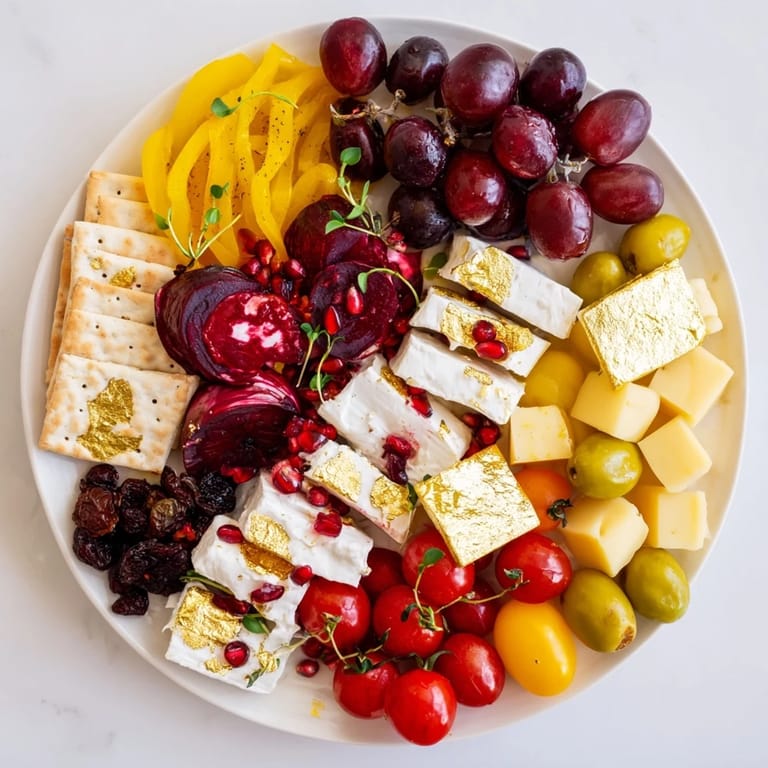
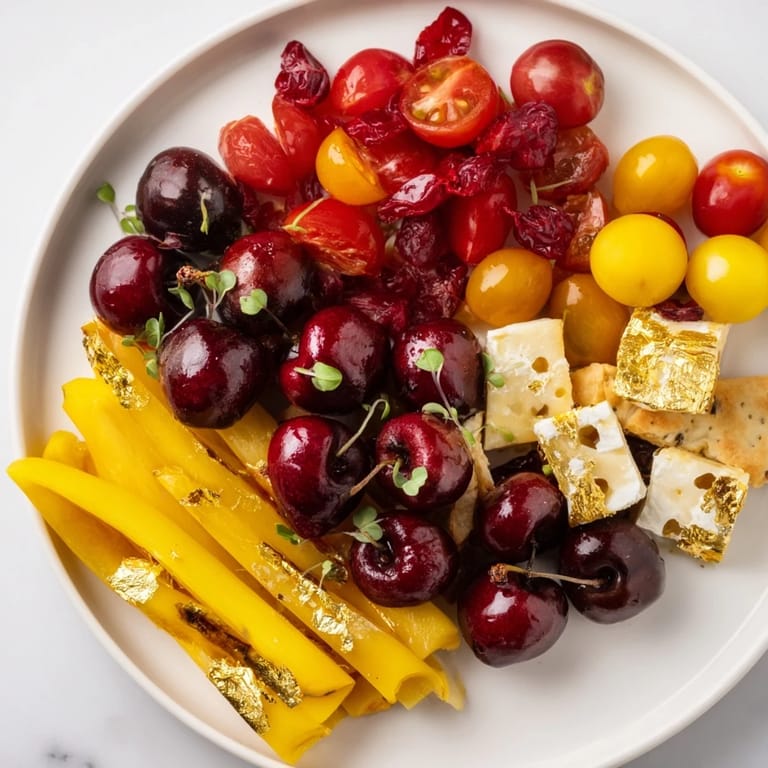
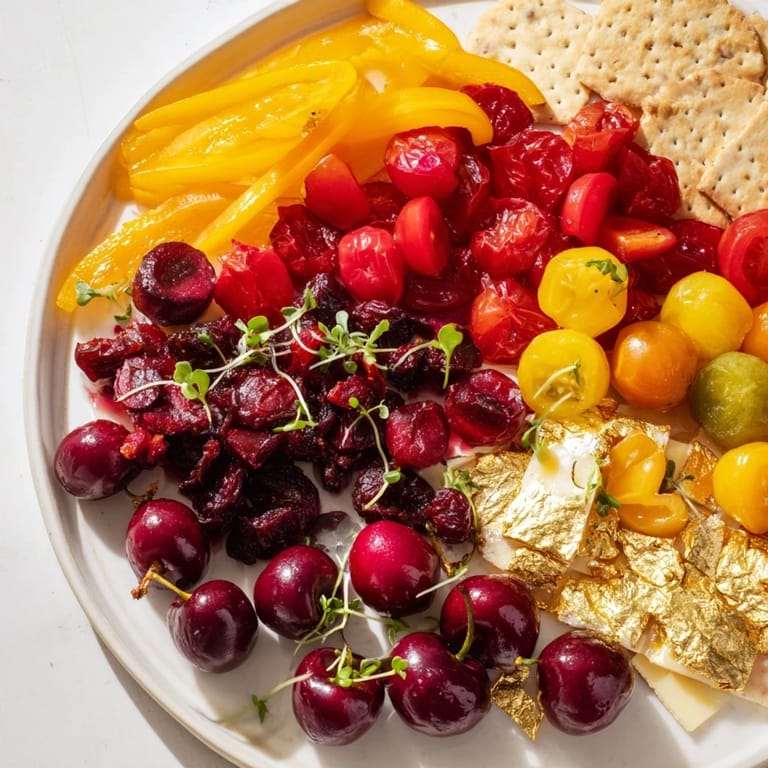
- On one side of your platter or board, arrange all the deep red elements in a tight, cohesive block: the pitted cherries, slices of wine-soaked cheese, dried cranberries, red grape halves, and pomegranate seeds. Nestle them close together so the colors meld into one rich, jewel-toned composition. Think of it like creating a mosaic where every element matters.
- Create the golden counterpoint:
- On the opposite side of the platter, build an equally striking block of all things golden: the roasted yellow pepper strips, cubes of aged cheddar or gouda, the gold leaf crackers, golden raisins, and yellow cherry tomato halves. The contrast should feel almost dramatic, like sun rising against twilight.
- Crown it with greens and serve:
- Scatter fresh basil leaves or delicate microgreens across both sections for a final flourish of color and a hint of freshness. Serve immediately while everything is at its best, and encourage your guests to mix flavors from opposite sides of the board—that's where the magic happens.
 Save to Pinterest
 There's something about watching people make their own flavor combinations on a board like this that feels like you've given them permission to be creative. I served this at my sister's engagement party, and I caught my usually rigid aunt pairing a golden raisin with a piece of wine-soaked cheese, closing her eyes like she'd just discovered something profound. That's when I knew this recipe was really about more than ingredients—it was about invitation.
The Art of High-Contrast Entertaining
Contrast is the secret language of memorable entertaining. When you present two opposing elements—deep crimson against bright gold—your guests' eyes are drawn in immediately. This principle works in your favor because it does half the work of hospitality for you. You're not just serving food; you're creating a moment that feels intentional and considered. The arrangement itself becomes a conversation starter, which takes the pressure off you to perform. Let the platter do the talking while you actually enjoy your guests.
Cheese Board Foundations That Never Fail
Every memorable cheese board follows the same quiet logic: temperature contrast, texture variety, and a story that ties the elements together. In this case, the story is told through color. But the foundation is the same whether you're building a crimson-and-gold board or any other variation. Start with a variety of textures—soft cheese alongside hard cubes, chewy dried fruits next to crisp crackers. Think about what each element contributes beyond just flavor; what does it add to the experience? A cracker's satisfying snap, a grape's burst of juice, a dried cranberry's subtle chew. The more varied your textures, the more interesting your board becomes.
When Simple Becomes Sophisticated
There's a secret that professional caterers don't always tell you: sophistication is rarely about complexity. It's about clarity of vision. This board has exactly what it needs and nothing more. The color scheme is restricted. The arrangement is simple. The ingredients are accessible. Yet somehow, all of these restraints create an effect that feels elegant and intentional. That's the magic of a focused idea executed with care. The next time you're tempted to add just one more element to a platter, resist. Sometimes the most powerful thing you can do is edit ruthlessly.
- If your peppers stubbornly refuse to char, move them closer to the oven's heating element for the final few minutes.
- Wine-soaked cheeses can be harder to find than you expect—ask your cheese counter staff, as they often source specialty items.
- You can prepare the roasted peppers up to two days ahead; just store them in an airtight container with a light coating of olive oil.
 Save to Pinterest
 This board is your permission to slow down and celebrate the simple act of gathering. Serve it, watch people light up, and know that you've given them something beyond food—you've given them a moment of beauty to share.
Recipe FAQs
- → How are the yellow peppers prepared?
Yellow bell peppers are roasted whole until charred, then peeled, seeded, sliced, and drizzled with olive oil and black pepper to bring out a smoky sweetness.
- → Can the platter accommodate dietary restrictions?
Yes, substituting plant-based cheeses and crackers creates a vegan-friendly version, while maintaining the platter's rich flavors and colors.
- → What is the purpose of gold leaf on crackers?
Edible gold leaf adds a luxurious visual accent without altering taste, enhancing the golden theme of the appetizer.
- → How should the platter be served for best flavor?
Serve immediately, encouraging guests to mix contrasting crimson and gold flavors and textures for an engaging tasting experience.
- → Are there suggested flavor pairings?
Drizzling honey over the golden elements or pairing with a light white wine can elevate the combined flavors further.