 Save to Pinterest
 There's something about October that makes me crave this soup, though honestly it sneaks onto my table in March too when I need comfort in a bowl. My neighbor once brought over an acorn squash from her garden, all deep green and heavy in my hands, and I roasted it out of pure curiosity. The kitchen filled with this warm, almost honeyed smell, and I suddenly understood why people got so excited about fall cooking. That first spoonful, silky and naturally sweet without being dessert, changed how I think about vegetables.
I made this for a dinner party once when everything else fell through, and it became the star of the night. People asked for seconds, then thirds, and someone actually asked for the recipe before dessert arrived. That's when I realized this soup has a quiet confidence about it, the kind of dish that doesn't need to shout to be memorable.
Ingredients
- Acorn squash (2 medium, about 2 lbs): The foundation here, with that natural sweetness roasting brings out beautifully, so choose squashes that feel heavy for their size.
- Yellow onion (1 medium, chopped): This builds the savory base and sweetens itself as it cooks, creating depth that keeps the soup from tasting one-note.
- Garlic (2 cloves, minced): Just enough to whisper its presence without overpowering the delicate squash flavor.
- Carrot (1 medium, peeled and chopped): Adds a subtle earthiness and helps the soup feel more substantial.
- Vegetable broth (4 cups): Quality matters here since it's doing the talking, so use something you'd actually drink on its own.
- Water (1 cup): Keeps the broth from becoming too concentrated, letting the squash shine through.
- Heavy cream or coconut milk (1/2 cup): The final flourish that makes everything silky, though either one works beautifully depending on what you're in the mood for.
- Olive oil (2 tbsp total): Use a good one since you'll taste it, especially that first tablespoon on the squash.
- Salt and black pepper: Fundamental adjustments you'll fine-tune at the end because everyone's palate is different.
- Ground nutmeg (1/4 tsp): This is the secret whisper of warmth that makes people pause and wonder what they're tasting.
- Ground cinnamon (1/4 tsp): A tiny pinch that echoes the nutmeg without making the soup taste like dessert.
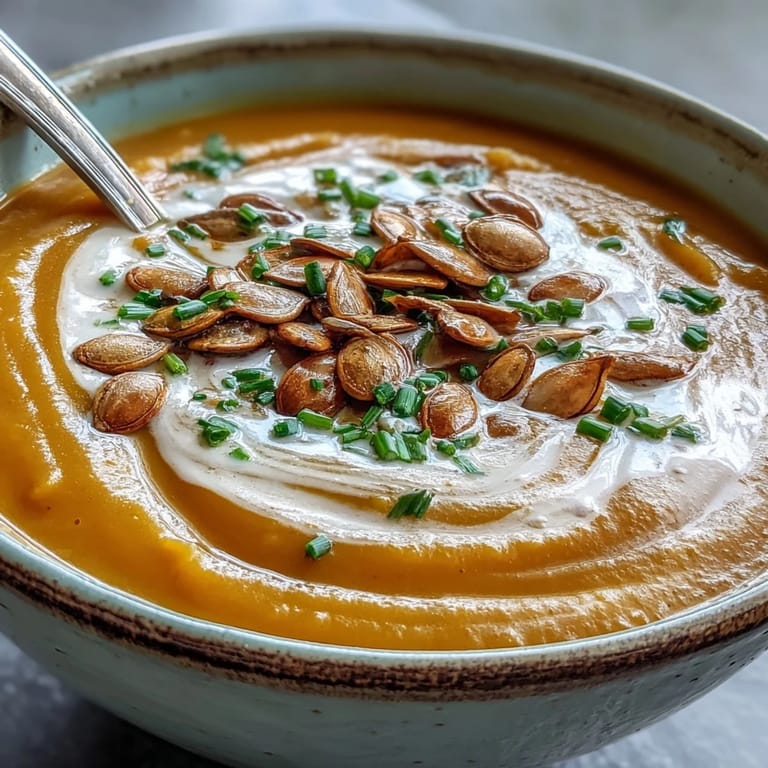
- Pumpkin seeds, fresh chives, and cream for garnish: These aren't required but they transform a simple bowl into something you want to photograph.
Tired of Takeout? 🥡
Get 10 meals you can make faster than delivery arrives. Seriously.
One email. No spam. Unsubscribe anytime.
Instructions
- Get your squash ready for roasting:
- Preheat your oven to 400°F and line a baking sheet with parchment paper so nothing sticks. This is worth doing because roasting is where the magic happens, concentrating the squash's natural sugars into something almost caramel-like.
- Roast the squash until it surrenders:
- Brush those cut sides with olive oil and lay them cut-side down on your sheet, then roast for 30 to 35 minutes until the flesh is completely tender and you can easily drag a spoon through it. Let it cool just long enough to handle, then scoop out the golden flesh and throw away the skin.
- Build the flavor foundation:
- Heat your remaining olive oil in a large pot over medium heat, then add your chopped onion, carrot, and garlic. Sauté for about 5 to 7 minutes, letting them soften and turn translucent at the edges, which is when you know they're releasing their sweetness.
- Bring it all together:
- Add that roasted squash flesh, your broth, water, salt, pepper, nutmeg, and cinnamon to the pot. Bring everything to a boil, then drop the heat down and let it simmer gently for 10 minutes so all those flavors get acquainted.
- Transform it into silk:
- Remove from heat and use an immersion blender to puree everything until it's completely smooth, working in batches if you need to use a countertop blender instead. You want that luxurious velvety texture, so take your time here.
- Finish with cream:
- Stir in your cream or coconut milk, taste it, and adjust the salt and spices until it tastes exactly right to you. Reheat gently if it's cooled down, but don't let it boil.
- Serve with intention:
- Ladle into bowls and add those garnishes if you have them—the pumpkin seeds add a nice crunch, the chives bring brightness, and a drizzle of cream makes it feel special.
 Save to Pinterest
 There was an afternoon when my daughter came home sick from school and I made her a bowl of this, and she actually ate it without complaining. It was the first time I realized this soup has healing properties that go beyond nutrition, something about its warmth and sweetness that just makes you feel looked after.
The Magic of Roasting
I used to boil my squash until I learned from a friend that roasting changes everything. The dry heat caramelizes the natural sugars, turning pale squash flesh into something that tastes almost buttery and rich without any added fat. Now roasting is non-negotiable for me, not just for squash but for any vegetable going into a soup where you want real flavor depth. It takes thirty-five minutes instead of fifteen, but those extra twenty minutes are where all the deliciousness gets created.
Making It Your Own
This soup is forgiving enough to adapt to what you have on hand. I've added a pinch of cayenne when I wanted heat, or a splash of apple cider vinegar for brightness, and each version felt like a different conversation with the same core ingredients. Some people love it with sage instead of cinnamon, others swear by a tiny bit of ginger, so think of this recipe as a starting point rather than a rulebook.
Storage and Make-Ahead Magic
This soup is one of those dishes that tastes better the next day because the flavors have time to settle and deepen, making it perfect for meal prep or cooking when you have a moment to spare. It keeps well in the refrigerator for about four days, or you can freeze it for up to three months in containers that leave a little headroom for expansion. When you're ready to eat it, just gently reheat on the stove and add that splash of broth back in since it will have thickened during storage.
- Cool it completely before refrigerating to avoid condensation making it watery.
- Freeze in portions so you can thaw exactly what you need instead of the whole batch.
- Add the cream or coconut milk fresh after reheating rather than before freezing for the best texture.
 Save to Pinterest
 This soup reminds me that comfort doesn't have to be complicated, and that sometimes the best dishes are the ones that make people feel genuinely cared for. Make it once and you'll understand why it stays on rotation.
Recipe FAQs
- → Can I make this soup ahead of time?
Absolutely. This soup actually improves in flavor when made ahead and stored in the refrigerator for up to 3 days. Reheat gently over low heat, adding a splash of broth or cream if needed to adjust consistency.
- → Can I freeze acorn squash soup?
Yes, freeze for up to 3 months in airtight containers. For best results, freeze before adding the cream. Thaw overnight in the refrigerator and reheat, then stir in cream just before serving.
- → What can I substitute for acorn squash?
Butternut squash, kabocha squash, or delicata squash work beautifully as alternatives. Each brings slightly different sweetness levels but will create equally delicious results.
- → How do I make this soup dairy-free?
Simply replace heavy cream with full-fat coconut milk. The coconut adds subtle richness while maintaining the silky texture. Ensure your vegetable broth is certified gluten-free.
- → What's the best way to achieve the smoothest texture?
Roasting the squash first concentrates natural sweetness and softens the flesh. An immersion blender works wonderfully, but a high-speed blender creates the silkiest results. Blend in batches if using a countertop blender.
- → Can I add protein to make it more filling?
Pair with crusty bread, serve alongside a green salad with nuts, or top with roasted chickpeas and pumpkin seeds. The soup also pairs beautifully with grilled cheese sandwiches for a complete meal.