 Save to Pinterest
 I discovered this salad on a humid summer afternoon when my roommate came home with a bag of fresh soba noodles and challenged me to do something beyond the basic stir-fry I'd been making for weeks. We threw together whatever vegetables were lingering in the crisper drawer, mixed up a dressing that smelled impossibly good, and ended up eating it straight from the mixing bowl because we couldn't wait. Now it's my go-to when the kitchen feels too hot to turn on the oven, and somehow it tastes even better the next day.
There's something special about bringing this to a potluck and watching people's faces change from polite interest to genuine surprise. A friend once asked me for the recipe halfway through her first bite, and that's when I knew the sesame oil was doing its job. It became the dish people actually ask me to make, not the obligatory pasta salad everyone brings to every gathering.
Ingredients
- Soba noodles (250 g): These buckwheat beauties cook in just 5-7 minutes and have a slightly nutty flavor that pairs perfectly with the dressing; rinsing them thoroughly stops the cooking and removes starch so they don't clump together.
- Carrot (1 medium, julienned): Use a mandoline or vegetable peeler to get thin, delicate strands that actually taste refreshing instead of woody and tough.
- Cucumber (1 small): Slice it thin and eat some raw while you're prepping because that's what cooking is really about.
- Red bell pepper (1): The sweetness balances the sesame and peanut, and it adds a pop of color that makes people think you know what you're doing.
- Spring onions (2): The fresh bite here is essential; don't skip them or use regular onions, which would overpower everything.
- Red cabbage (1 cup shredded): It stays crisp longer than other vegetables and the color never fades, even after sitting overnight.
- Smooth peanut butter (3 tbsp): The foundation of the whole dressing; use something you actually enjoy eating because it's going to be the star.
- Soy sauce (2 tbsp): This is where the umami lives; don't cheap out on the soy sauce.
- Rice vinegar (1 tbsp): Milder than regular vinegar, it adds brightness without making your face screw up.
- Toasted sesame oil (1 tbsp): A little goes a long way; this is liquid gold and worth buying the good stuff.
- Maple syrup or honey (1 tbsp): Just enough sweetness to make the dressing sing instead of shout.
- Fresh ginger (1 tsp grated): Freshly grated tastes completely different from ground ginger; trust me on this.
- Garlic clove (1 small, minced): Adds depth without overwhelming; one clove is all you need.
- Water (1–2 tbsp): Use this to adjust the dressing consistency to your liking; some people like it thicker, others prefer it to coat the noodles like a light sauce.
- Toasted sesame seeds (2 tbsp): Buy them toasted so you skip a step and get maximum flavor instantly.
- Fresh cilantro (2 tbsp chopped): Adds a fresh herbal note that makes everything feel restaurant-quality.
- Red chili (1 small, optional): For heat without adding any liquid to the salad.
Tired of Takeout? 🥡
Get 10 meals you can make faster than delivery arrives. Seriously.
One email. No spam. Unsubscribe anytime.
Instructions
- Bring water to a boil and cook the noodles:
- Drop the soba noodles into salted boiling water and set a timer for 5-7 minutes, depending on how much you like them to give. You'll hear them soften and smell that distinct buckwheat aroma, which is your signal to start paying attention.
- Drain and chill the noodles immediately:
- Pour them into a colander and run ice-cold water over them for a full minute, stirring with your fingers to separate the strands. This stops the cooking dead and makes them taste fresher, not mushy.
- Build the dressing in a large bowl:
- Whisk together the peanut butter, soy sauce, rice vinegar, sesame oil, maple syrup, ginger, and garlic until it's smooth and smells incredible. Add water one tablespoon at a time until you get the consistency you want; it should pour but coat things, not run off like water.
- Julienne and slice your vegetables:
- Cut the carrot and cucumber into thin matchsticks, slice the bell pepper into strips, thinly slice the spring onions and shred the red cabbage. Do this while the dressing is getting thick because fresh vegetables are best assembled as close to eating as possible.
- Toss everything together gently but thoroughly:
- Add the cooled noodles and all the vegetables to the dressing and toss with two forks or your hands, making sure every noodle and vegetable gets coated. You want it evenly dressed, not clumpy or pooling at the bottom of the bowl.
- Plate it and finish with a flourish:
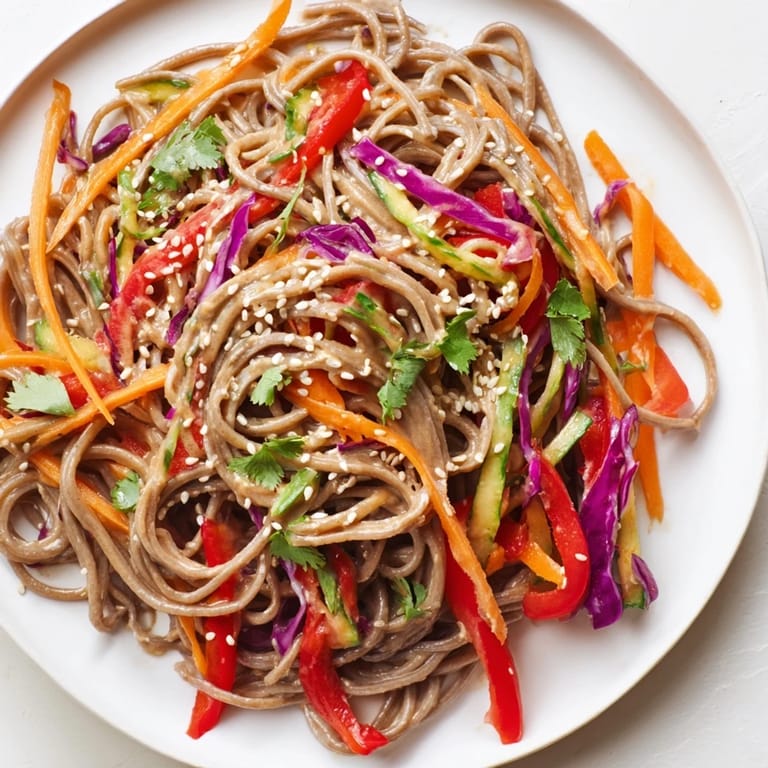
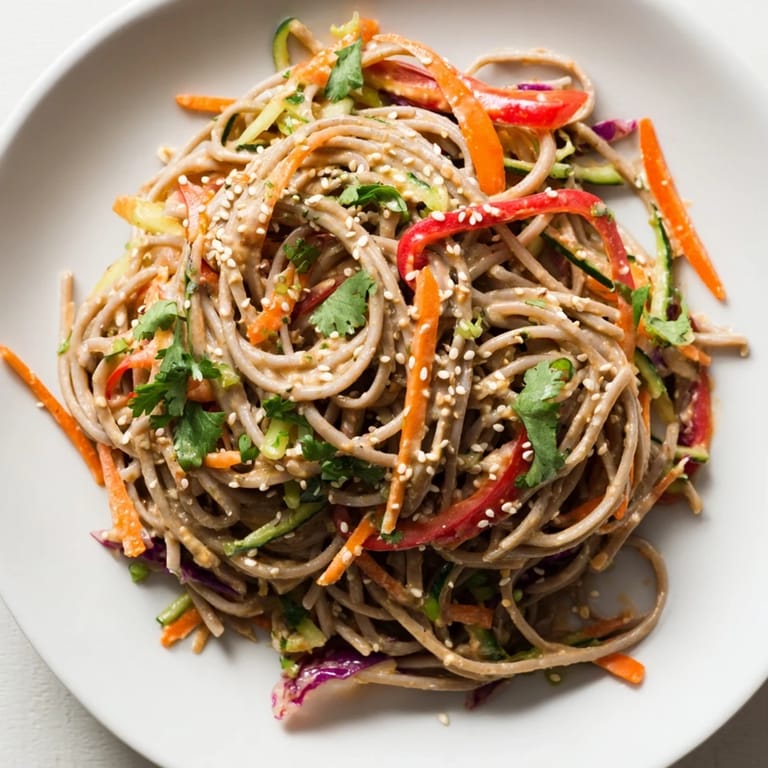
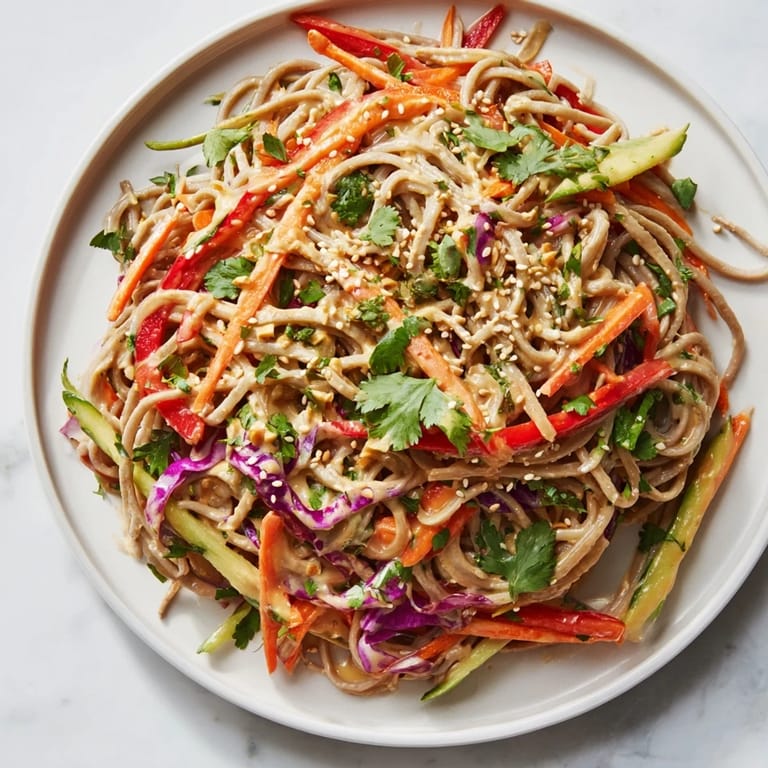
- Divide among bowls and scatter toasted sesame seeds and fresh cilantro on top. Serve with lime wedges so people can adjust the brightness to their taste.
 Save to Pinterest
 I made this for my partner on a night when neither of us wanted to deal with hot food, and we ended up eating it on the balcony watching the sun set, talking about nothing important. That's when I realized this salad isn't really about being refreshing or easy or impressing people—it's about making something that tastes genuinely delicious when you're just trying to exist on a warm day.
Storage and Make-Ahead Tips
This salad holds up remarkably well in the refrigerator, actually tasting better the next day once the flavors have had time to get friendly with each other. If you're making it ahead, store the noodles and vegetables separately from the dressing, then toss everything together 30 minutes before serving so the vegetables stay crisp instead of getting soggy. A squeeze of lime juice right before eating brings everything back to life if it's been sitting in the fridge.
Variations to Keep Things Interesting
The base of this salad is flexible enough to work with whatever you have on hand or whatever sounds good that day. I've made it with tahini instead of peanut butter when I wanted a more subtle, earthy flavor, added shredded grilled tofu for protein, and once threw in some steamed edamame because I had them in the freezer. The dressing is forgiving enough that small swaps won't break anything, so treat this as a framework rather than a rulebook.
Dietary Adjustments and Allergen Swaps
This recipe is naturally vegetarian and can easily be vegan if you use maple syrup instead of honey, and it's dairy-free by default. For a nut-free version, swap the peanut butter with tahini and you get a completely different but equally delicious dressing. If gluten is a concern, use 100% buckwheat soba noodles and tamari instead of soy sauce, and check all your other ingredient labels because you'd be surprised where gluten hides.
- Always taste the dressing before committing it to the salad; every brand of peanut butter and soy sauce tastes slightly different.
- Toast your own sesame seeds if you have time, or buy them pre-toasted and spend that time on something else that matters more to you.
- Serve this cold, not at room temperature, because the cold is part of what makes it feel so refreshing instead of just like noodles with vegetables.
 Save to Pinterest
 This has become my favorite kind of recipe because it doesn't require any special skills or expensive ingredients, yet somehow it tastes like you actually know what you're doing in the kitchen. Make it once and you'll find yourself coming back to it all summer long.
Recipe FAQs
- → How do you prevent soba noodles from sticking together?
Rinse cooked soba noodles thoroughly under cold running water to remove excess starch and stop the cooking process, then drain well before tossing with the dressing.
- → Can I substitute peanut butter in the dressing?
Yes, tahini is an excellent substitute that maintains the creamy sesame flavor while avoiding nuts.
- → Is it possible to make this dish gluten-free?
Use 100% buckwheat soba noodles and tamari in place of regular soy sauce to keep the dish gluten-free.
- → What are good protein additions for this salad?
Adding edamame, grilled tofu, or shredded chicken can enhance protein content and make it more filling.
- → How should leftovers be stored?
Store in an airtight container in the fridge for up to 2 days; refresh with a squeeze of lime before serving.