 Save to Pinterest
 The air was thick with humidity that July afternoon, my tiny apartment kitchen feeling more like a sauna than a cooking space. I had craving hit me like a sudden summer stormcold, slippery noodles coated in that nutty, savory sauce that makes your cheeks tingle. No oven, no stove heat, just mixing bowls and chopsticks and a refrigerator humming its faithful song.
My roommate Sarah wandered in, drawn by the smell of toasted sesame and garlic hitting the cold air. She ended up eating half the batch standing over the counter, chopsticks in one hand, a glass of white wine in the other. We sat on the kitchen floor afterward, noodles gone, sauce bowls scraped clean, planning all the variations we would try next time.
Ingredients
- 350 g wheat noodles or spaghetti: These become the silky canvas that holds every drop of sauce, so choose noodles with some body
- 1 tbsp sesame oil: Tossing hot noodles with this prevents sticking and adds another layer of nutty depth right from the start
- 4 tbsp tahini or Chinese sesame paste: The absolute soul of the dish, creating that velvety texture and intense sesame flavor
- 2 tbsp smooth peanut butter: I know purists skip this, but it adds an earthy creaminess that makes the sauce coat every strand perfectly
- 3 tbsp low-sodium soy sauce: Brings the salty umami foundation that balances the rich nut butters
- 2 tbsp rice vinegar: This bright acid cuts through all that richness and wakes up your palate
- 1 tbsp honey or maple syrup: Just enough sweetness to round out the sharp corners and make flavors meld
- 1 tbsp toasted sesame oil: Completely different from regular sesame oil, this adds that gorgeous aromatic finish
- 2 cloves garlic, finely grated: Grating releases all the oils and eliminates any harsh raw bite
- 1 tbsp fresh ginger, grated: Fresh ginger brings a gentle heat and brightness that dried ginger can never replicate
- 1 to 2 tsp chili oil: Start with one teaspoon and taste, you can always add more heat but you cannot take it back
- 3 to 5 tbsp cold water: This magical ingredient transforms the sauce from thick paste to silky pourable perfection
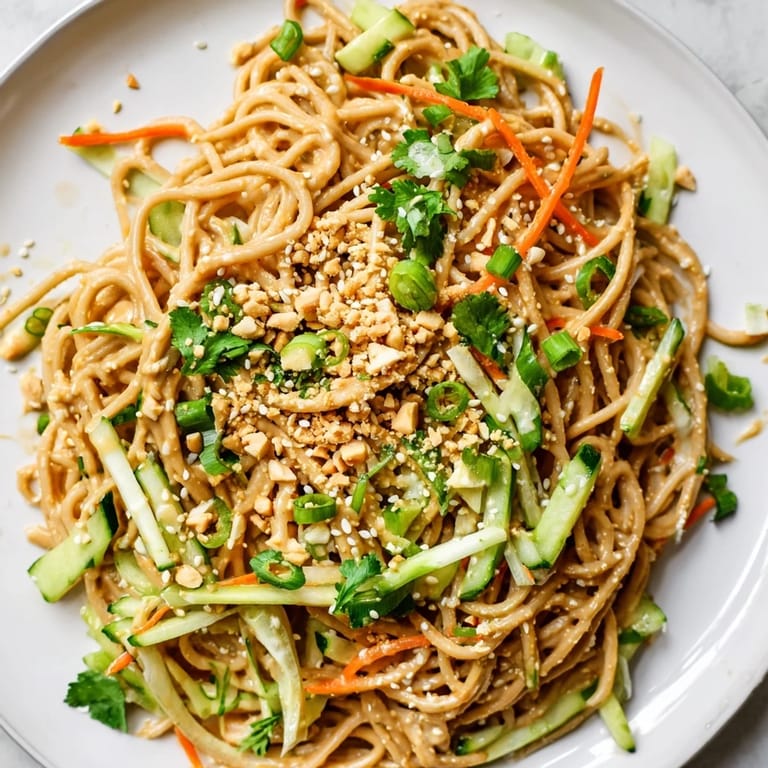
- 1 medium cucumber, julienned: Cold cucumber adds a refreshing crunch that contrasts beautifully with the soft noodles
- 2 medium carrots, julienned: These bring sweetness and color, plus a satisfying snap in every bite
- 2 spring onions, thinly sliced: Their mild onion flavor and bright pop make everything taste fresh
- 2 tbsp toasted sesame seeds: Sprinkled on top, they add tiny bursts of nutty flavor and delightful texture
- 1 handful fresh cilantro, chopped: Cilantro adds a herbal freshness that cuts through the rich sauce
- Crushed roasted peanuts: Optional but absolutely worth it for the crunch and extra protein boost
- Lime wedges: A squeeze of lime right before serving brightens everything and wakes up the flavors
Tired of Takeout? 🥡
Get 10 meals you can make faster than delivery arrives. Seriously.
One email. No spam. Unsubscribe anytime.
Instructions
- Cook and cool the noodles:
- Boil noodles according to package directions, then drain and rinse under cold water until they are completely cold to the touch, tossing with sesame oil so they do not clump together.
- Make the sauce:
- Whisk tahini, peanut butter, soy sauce, vinegar, honey, toasted sesame oil, garlic, ginger, and chili oil until combined, then gradually whisk in cold water until the sauce reaches a creamy, pourable consistency.
- Coat the noodles:
- Pour the sauce over the cold noodles in a large bowl and toss thoroughly until every strand is glossy and covered.
- Add the toppings:
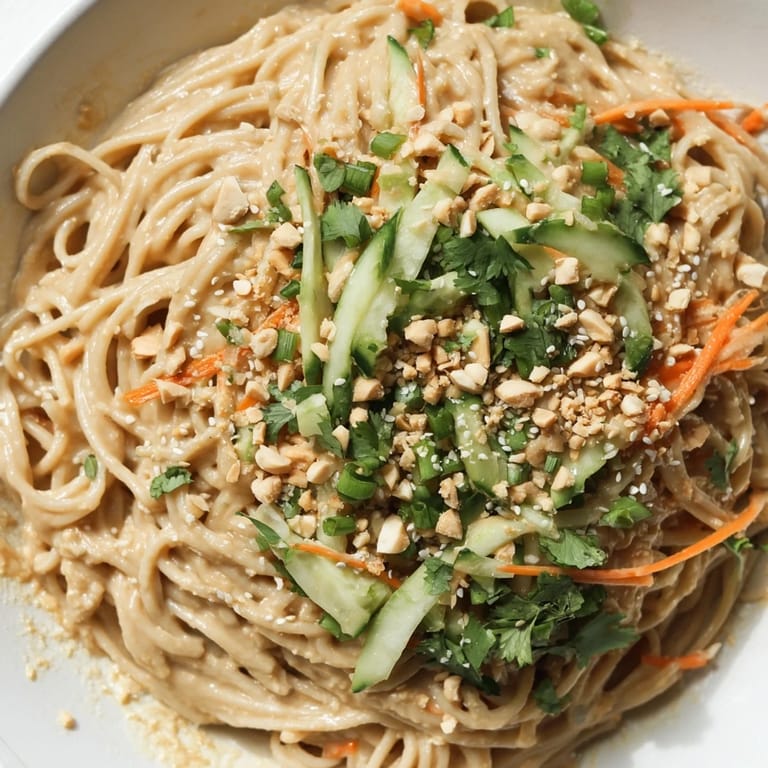
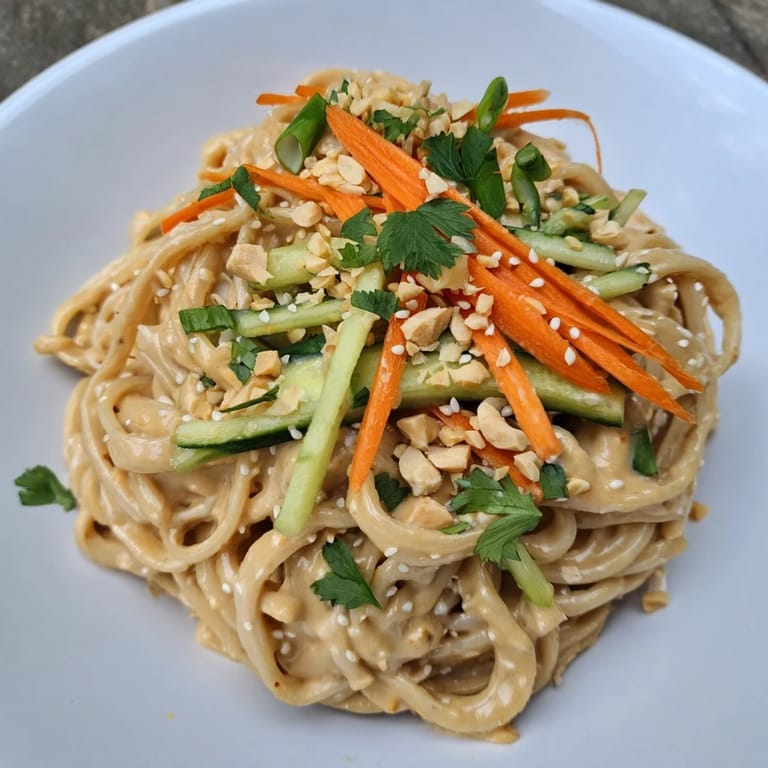
- Divide noodles into bowls and arrange cucumber, carrots, spring onions, sesame seeds, cilantro, and peanuts on top, serving with lime wedges on the side.
- Chill before serving:
- Let the noodles rest in the refrigerator for 10 to 15 minutes to let flavors meld, or eat immediately if you cannot wait another second.
 Save to Pinterest
 Last summer I brought a huge batch to a potluck, and my friend Mike, who claims to hate peanut butter in savory food, went back for thirds. He stood by the bowl with a fork, picking out all the crispy vegetables first, then finally admitting the sauce might be the best thing he had ever tasted.
Make It Yours
Once you master the basic sauce, the variations are endless. I have added shredded rotisserie chicken for a heartier version, and my sister swears by adding cubes of crispy fried tofu. The sauce works with soba, rice noodles, or even spiralized vegetables if you want to go completely grain free.
Temperature Magic
Cold sesame noodles are their best self after at least an hour in the refrigerator. The noodles firm up slightly, the sauce thickens and clings better, and all the flavors have time to really know each other. That said, I have also eaten them piping hot straight from the pot, and they are still incredible, just a completely different experience.
Serving Strategy
These noodles make the most perfect make ahead lunch because they actually get better as they sit. I pack them in glass jars with the vegetables layered on top so nothing gets soggy, and they have saved me from many a sad desk lunch. They also travel beautifully to picnics and potlucks because they do not need to be reheated.
- Double the sauce and keep it in a jar in the refrigerator for instant noodles all week
- Try adding quick pickled vegetables for extra tang and crunch
- Top with a soft boiled egg or edamame for more protein
 Save to Pinterest
 There is something deeply satisfying about eating food that requires a fork in one hand and a napkin in the other. These noodles have become my answer to almost every question about what to make when I want something that feels special but does not demand hours over a hot stove.
Recipe FAQs
- → What type of noodles work best for this dish?
Wheat noodles or spaghetti are ideal as they hold the sauce well and have a pleasant texture when chilled.
- → Can the sauce be adjusted for spiciness?
Yes, adding chili oil to taste introduces a gentle heat, which complements the creamy sesame flavor.
- → How should the noodles be prepared to prevent sticking?
After boiling and cooling under cold water, toss noodles with a tablespoon of sesame oil to keep them separate and glossy.
- → Are there gluten-free options available?
Gluten-free noodles combined with tamari instead of soy sauce provide a safe alternative without sacrificing flavor.
- → What garnishes enhance this noodle dish?
Julienned cucumber, carrots, spring onions, toasted sesame seeds, and fresh cilantro add texture, aroma, and brightness.
- → Can this dish be prepared in advance?
Yes, chilling the noodles for 10-15 minutes enhances flavor, making it perfect for make-ahead meals.