 Save to Pinterest
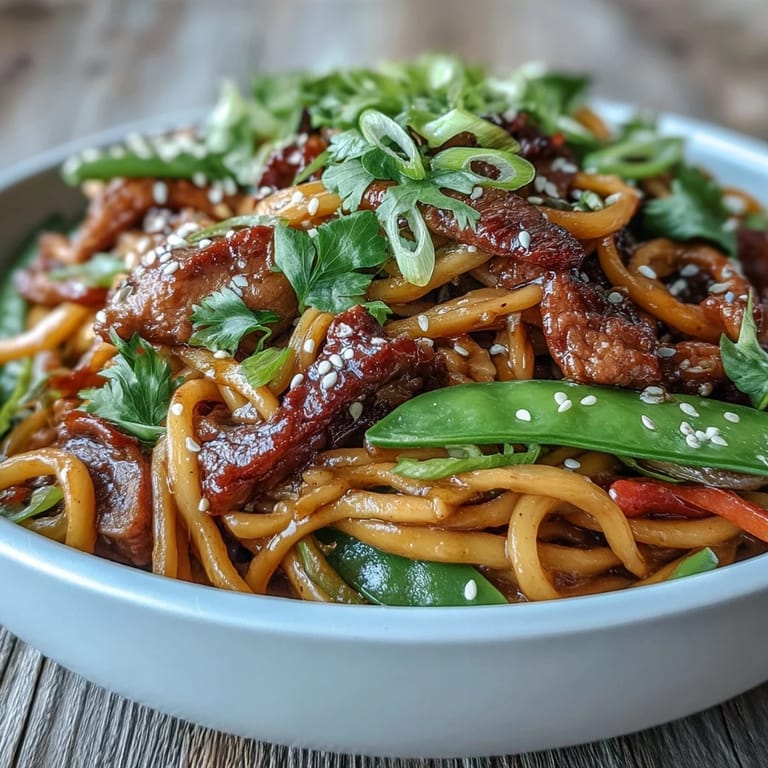
 The sizzle of pork hitting a screaming hot wok is one of those sounds that pulls everyone into the kitchen. I threw this stir-fry together on a Tuesday when the fridge was looking sparse and I had exactly thirty minutes before dinner needed to be on the table. The noodles tangled with crisp vegetables and glossy sauce, and by the time I plated it, my partner was already hovering with chopsticks in hand. It became our go-to ever since.
I once made this for a friend who claimed she didnt like stir-fry because it was always too oily or bland. She finished her bowl and asked for seconds, then texted me the next day asking for the recipe. That moment reminded me how a few smart ingredient choices and high heat can completely change someones mind about a dish. Now I make it whenever I want to impress someone without breaking a sweat.
Ingredients
- Pork loin or tenderloin: Thin slices cook fast and stay tender, especially when you give them a quick cornstarch marinade to lock in moisture.
- Soy sauce (marinade): This seasons the meat from the inside out and adds that essential umami base.
- Cornstarch: A tiny bit creates a velvety coating on the pork that helps it brown beautifully without drying out.
- Egg noodles or rice noodles: Either works, but I lean toward egg noodles for their chew and the way they soak up sauce.
- Red bell pepper: Julienned strips add sweetness and a pop of color that makes the dish look as good as it tastes.
- Carrot: Thin matchsticks cook quickly and bring a subtle earthiness to balance the savory sauce.
- Sugar snap peas: These stay crisp and bright green if you dont overcook them, adding a satisfying crunch.
- Spring onions: Tossed in at the end, they stay sharp and fresh, cutting through the richness.
- Garlic and ginger: The aromatic duo that makes the whole kitchen smell like a proper stir-fry.
- Soy sauce (sauce): The salty backbone of the stir-fry sauce that ties everything together.
- Oyster sauce: Adds a deep, slightly sweet richness that you cant replicate with anything else.
- Hoisin sauce: A touch of sweetness and complexity that rounds out the savory notes.
- Sesame oil: Just a teaspoon at the end brings a toasty, nutty aroma that makes the dish feel complete.
- Brown sugar: Balances the salty and savory with a hint of caramel sweetness.
- Vegetable oil: High smoke point oil is essential for getting that wok sear without burning.
- Sesame seeds and coriander: Optional, but they add texture and a fresh finish that makes it look restaurant-worthy.
Tired of Takeout? 🥡
Get 10 meals you can make faster than delivery arrives. Seriously.
One email. No spam. Unsubscribe anytime.
Instructions
- Marinate the pork:
- Toss the thinly sliced pork with soy sauce and cornstarch in a bowl, making sure every piece is coated. Let it sit for ten minutes while you prep everything else.
- Cook the noodles:
- Boil the noodles according to the package directions, then drain and set them aside. A quick rinse under cold water stops them from clumping.
- Mix the stir-fry sauce:
- Whisk together soy sauce, oyster sauce, hoisin sauce, sesame oil, brown sugar, and water in a small bowl. Having this ready means you wont scramble later.
- Sear the pork:
- Heat a tablespoon of oil in a large wok over high heat until it shimmers, then add the pork in a single layer. Let it sear for two to three minutes until browned, then remove and set aside.
- Stir-fry the vegetables:
- Add the remaining oil, then toss in garlic, ginger, bell pepper, carrot, and sugar snap peas. Keep everything moving for three to four minutes until just tender but still crisp.
- Combine everything:
- Return the pork to the wok, add the cooked noodles and the sauce, and toss everything together for two to three minutes. The noodles should be glossy and well coated.
- Finish and serve:
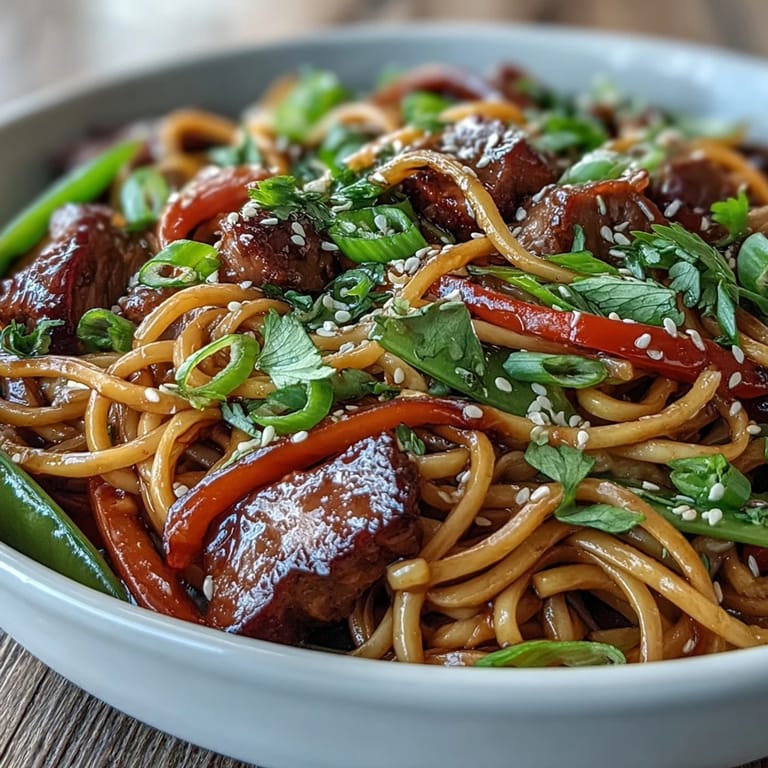
- Stir in the spring onions, give it one last toss, then remove from heat. Serve immediately with sesame seeds and coriander if you like.
 Save to Pinterest
 One evening, I made this after a long day and forgot to slice the pork thinly enough. The pieces took forever to cook and the vegetables turned musty by the time everything was done. That mistake taught me the importance of prep work and thin, even slices. Now I take the extra two minutes to do it right, and the dish comes together like clockwork every time.
Choosing Your Protein
Pork loin is my default because its affordable and stays tender, but Ive swapped it for chicken thighs, firm tofu, or even shrimp when I want a lighter version. Each protein brings its own texture and flavor, but the sauce and technique remain the same. If youre using tofu, press it well and give it a good sear so it doesnt fall apart when you toss everything together.
Noodle Options
Egg noodles have a satisfying chew and soak up the sauce beautifully, but rice noodles work just as well if youre after a gluten-free option or a lighter texture. Ive even used udon noodles when I had them on hand, and they turned the dish into something heartier and more filling. Whatever you choose, just make sure theyre cooked al dente so they dont turn mushy when you stir-fry them.
Serving and Pairing
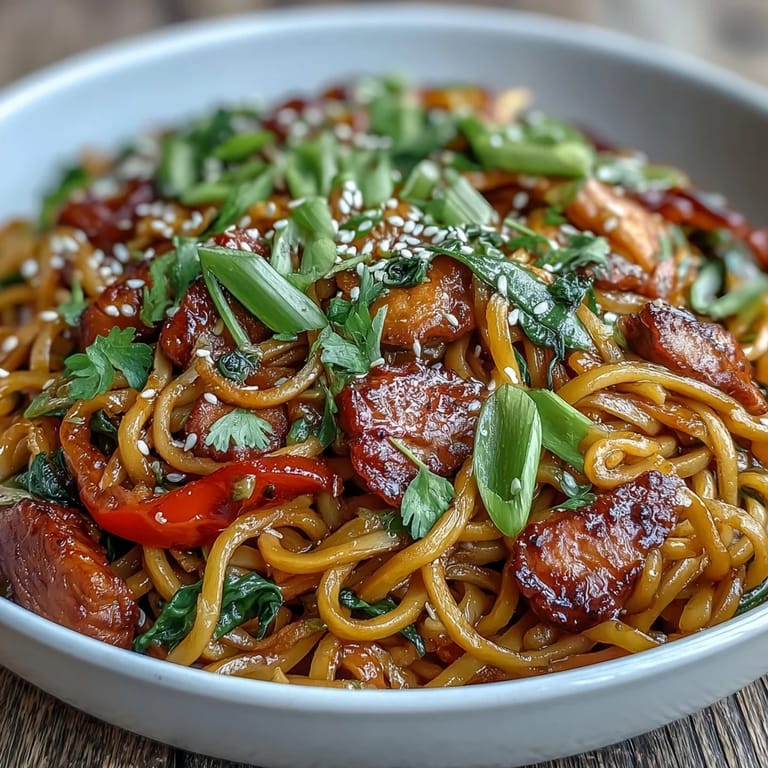
This stir-fry is a complete meal on its own, but sometimes I serve it with a side of pickled vegetables or a simple cucumber salad to cut through the richness. A crisp Riesling or a light lager pairs beautifully with the savory-sweet sauce and keeps things refreshing. Leftovers reheat surprisingly well in a hot skillet with a splash of water to loosen the noodles.
- Garnish with extra chili if you want a bit of heat to balance the sweetness.
- Double the sauce if you like your noodles extra saucy and glossy.
- Prep all your vegetables the night before to make weeknight cooking even faster.
 Save to Pinterest
 This dish has saved me on countless busy nights when I needed something fast, satisfying, and full of flavor. I hope it becomes a staple in your kitchen the way it has in mine.
Recipe FAQs
- → Can I use a different protein instead of pork?
Yes, you can easily substitute chicken, beef, shrimp, or tofu for the pork. Adjust cooking times accordingly—chicken takes similar time, while shrimp cooks faster.
- → What type of noodles work best for this stir-fry?
Egg noodles or rice noodles both work wonderfully. You can also use udon, soba, or even spaghetti in a pinch. Cook according to package directions before adding to the wok.
- → How do I prevent the vegetables from getting soggy?
Keep the heat high and stir-fry the vegetables quickly, just until tender-crisp. Avoid overcrowding the wok, and cook in batches if necessary to maintain proper temperature.
- → Can I make this dish gluten-free?
Absolutely. Use tamari instead of soy sauce, gluten-free rice noodles, and check that your oyster and hoisin sauces are certified gluten-free. Many brands offer gluten-free alternatives.
- → How can I add more vegetables to this dish?
Feel free to add mushrooms, baby corn, bok choy, broccoli, or snap peas. Just maintain the high heat and quick cooking method to keep vegetables crisp and colorful.
- → What can I serve alongside this stir-fry?
This dish is complete on its own, but pairs beautifully with spring rolls, edamame, or a light Asian cucumber salad. A crisp Riesling or light lager complements the savory flavors nicely.