 Save to Pinterest
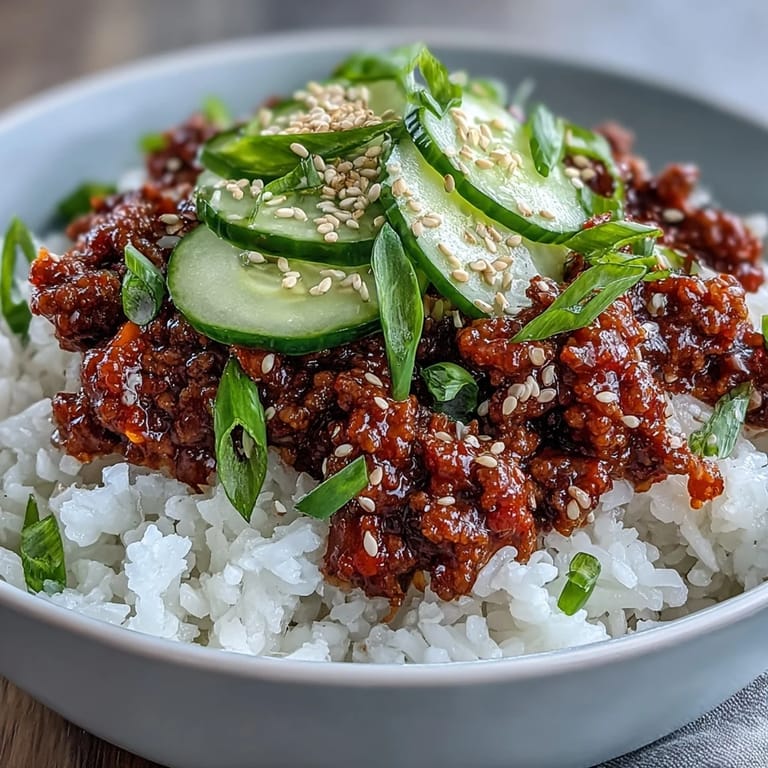
 This Easy Korean Beef Bowl is a quick and flavorful Korean-inspired dish that brings the bold tastes of gochujang and fresh ginger to your dinner table. Featuring savory ground beef simmered in a spicy sauce and served over your choice of regular or cauliflower rice, it is a perfect meal that balances satisfying protein with vibrant, fresh garnishes.
Save to Pinterest With only 10 minutes of preparation and 15 minutes of cooking time, this dish is an ideal solution for busy weeknights without compromising on nutritional value or taste.
Ingredients
Tired of Takeout? 🥡
Get 10 meals you can make faster than delivery arrives. Seriously.
One email. No spam. Unsubscribe anytime.
- Beef & Sauce
- 1 lb (450 g) lean ground beef
- 2 tablespoons gochujang (Korean chili paste)
- 3 tablespoons low-sodium soy sauce (or tamari for gluten-free)
- 2 tablespoons brown sugar
- 1 tablespoon sesame oil
- 2 cloves garlic, minced
- 1 teaspoon fresh ginger, grated
- 1 tablespoon rice vinegar
- 1/2 teaspoon black pepper
- Rice Base
- 4 cups cooked white rice or cauliflower rice (about 1 cup per serving)
- Fresh Toppings
- 1 cup cucumber, thinly sliced
- 1 cup carrot, julienned or shredded
- 2 green onions, thinly sliced
- 1 tablespoon toasted sesame seeds
- Optional: 1 fresh red chili, sliced thin
- Optional: Kimchi for serving
Instructions
- Step 1
- In a large skillet over medium-high heat, add sesame oil. When hot, add the ground beef. Cook, breaking up the meat, for 4-5 minutes until browned and cooked through.
- Step 2
- Add garlic and ginger; sauté for 1 minute until fragrant.
- Step 3
- Stir in gochujang, soy sauce, brown sugar, rice vinegar, and black pepper. Mix well and simmer for 2-3 minutes until the sauce thickens slightly and coats the beef.
- Step 4
- Taste and adjust seasoning as desired. Remove from heat.
- Step 5
- To serve, divide cooked rice or cauliflower rice among bowls. Top each with Korean beef.
- Step 6
- Garnish with cucumber, carrot, green onions, sesame seeds, and optional chili or kimchi. Serve immediately.
Zusatztipps für die Zubereitung
To achieve the best flavor, allow the beef to simmer with the sauce for the full 2-3 minutes. This ensures the gochujang and brown sugar create a slightly thickened glaze that coats the meat perfectly.
Varianten und Anpassungen
Substitute the lean ground beef with ground turkey or chicken for a lighter protein option. For a low-carb version, use cauliflower rice as the base. If you require a gluten-free meal, ensure you use tamari and a certified gluten-free gochujang paste.
Serviervorschläge
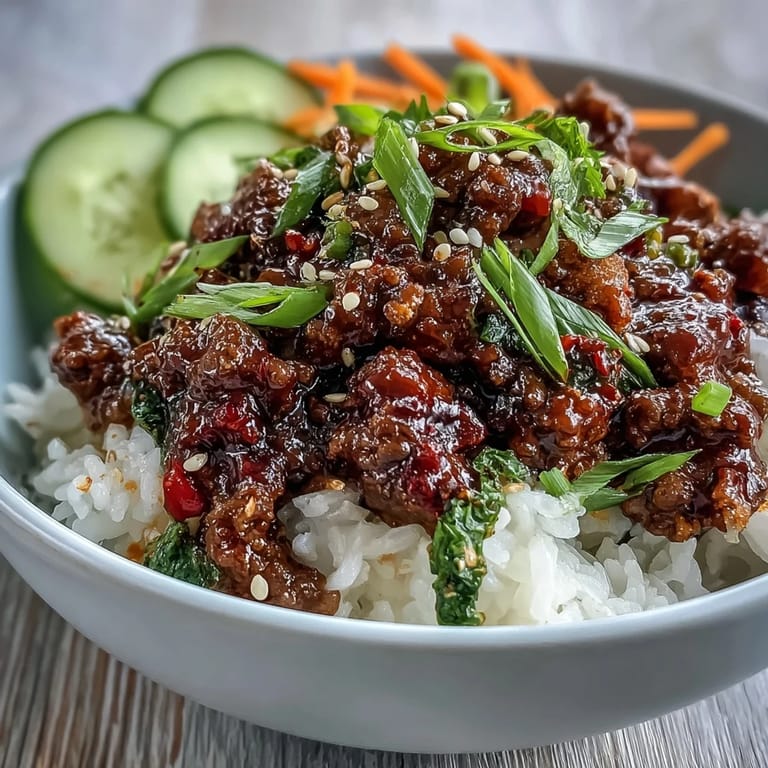
Divide your choice of rice into four bowls and top with the savory beef mixture. Add plenty of fresh cucumber and julienned carrots for crunch, and garnish with sliced green onions and toasted sesame seeds. For a more traditional experience, serve with a side of kimchi.
 Save to Pinterest
 This nutritious and satisfying Easy Korean Beef Bowl provides 28g of protein per serving when enjoyed with cauliflower rice, making it as fueling as it is delicious.
Recipe FAQs
- → What is gochujang?
Gochujang is a Korean fermented chili paste with a sweet, savory, and spicy flavor profile. It's made from red chili powder, glutinous rice, fermented soybeans, and salt. You can find it in Asian markets or well-stocked grocery stores.
- → Can I make this dish less spicy?
Absolutely. Start with 1 tablespoon of gochujang and taste the sauce before adding more. You can also reduce the amount gradually or add a tablespoon of honey or extra brown sugar to balance the heat.
- → What other proteins work well?
Ground turkey, chicken, or pork all substitute beautifully. Keep in mind that leaner meats may cook faster, and you might want to add a small amount of oil to prevent sticking.
- → How do I store leftovers?
Store the beef and rice separately in airtight containers in the refrigerator for up to 4 days. The vegetables are best added fresh when reheating. Reheat gently with a splash of water to restore the sauce consistency.
- → Can I freeze this dish?
The seasoned beef freezes well for up to 3 months. Freeze in portion-sized containers and thaw overnight in the refrigerator. Rice and fresh toppings should be prepared fresh when serving.
- → Is this dish gluten-free?
Use tamari instead of regular soy sauce and verify your gochujang is certified gluten-free, as some brands contain wheat. With these substitutions, the dish becomes completely gluten-free.