 Save to Pinterest
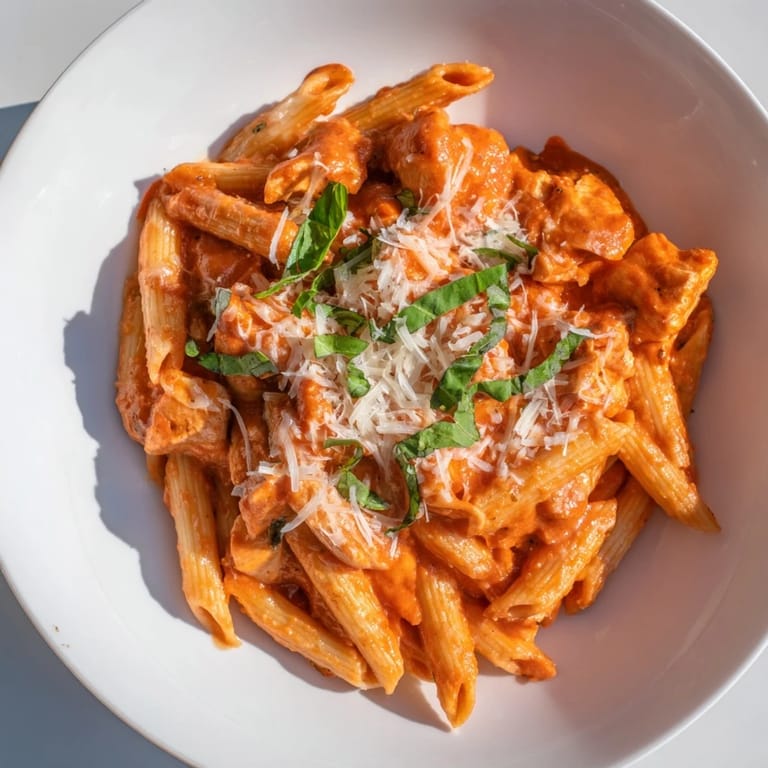
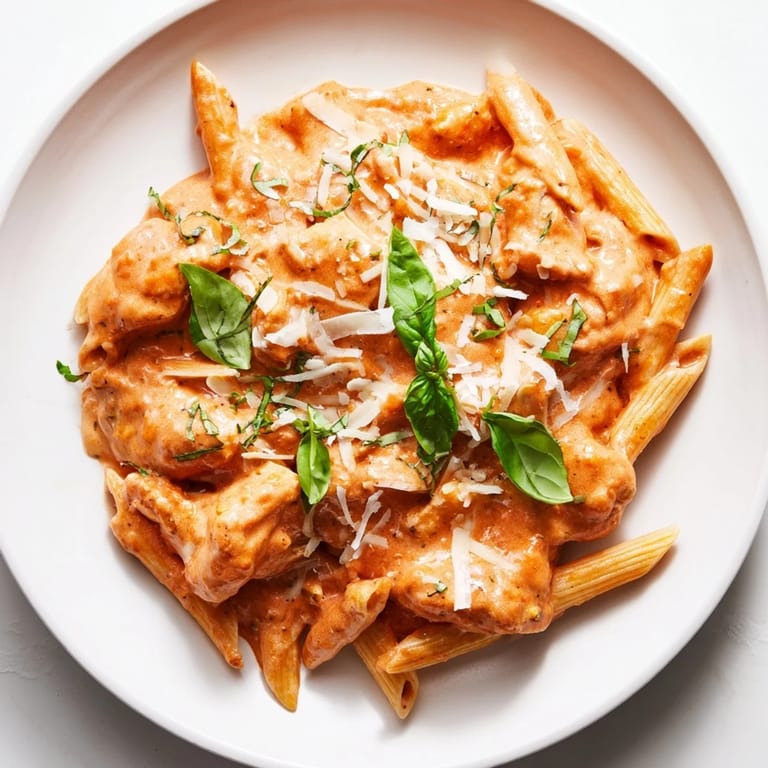
 There's something about the smell of garlic hitting hot butter that stops me in my tracks every time. I first made this creamy tomato basil chicken pasta on a Tuesday night when I had exactly forty minutes before friends arrived, and I needed something that looked like I'd planned it for days. The sauce came together faster than expected, turning silky and rich while the chicken stayed impossibly tender, and by the time everyone sat down, I realized I'd found my go-to comfort meal.
I made this for my sister on a rainy Saturday when she'd had a rough week, and watching her close her eyes on that first bite told me everything I needed to know. She asked for the recipe before she'd even finished her plate, and now whenever we video call, she tells me she's made it again. It became our thing, this pasta, proof that sometimes the best comfort comes wrapped in cream and tomato.
Ingredients
- Penne pasta, 12 oz: Al dente is your target—it'll have a tiny firm center when you bite it, which means it won't turn mushy when you toss it in the warm sauce.
- Chicken breasts, 1 lb: Pounding them slightly thinner helps them cook evenly and faster; nobody wants a dry edges-cooked-through center.
- Salt and black pepper for chicken: Season generously before the pan hits heat so the chicken seasons from the inside out, not just on the surface.
- Olive oil, 1 tbsp: Use good quality oil for the initial sear since it's where the chicken gets its golden crust.
- Unsalted butter, 2 tbsp: The foundation of your sauce; unsalted gives you control over seasoning and tastes richer than salted.
- Yellow onion, 1 medium, finely chopped: The finer you chop, the more it melts into the sauce and becomes almost invisible, adding sweetness and depth.
- Garlic cloves, 3, minced: Don't use a press if you have time to mince by hand—you'll taste the difference in how the garlic distributes through the sauce.
- Red pepper flakes, 1/2 tsp: Optional but worth it; they add a whisper of heat that makes you wonder what's in the sauce but doesn't announce itself.
- Crushed tomatoes, 1 can (14 oz): Buy whole tomatoes and crush them yourself if you can; canned crushed tomatoes sometimes feel more uniform and less bright.
- Heavy cream, 1/2 cup: Room temperature cream blends smoother into the sauce and reduces the chance of breaking or curdling.
- Parmesan cheese, 1/3 cup, freshly grated: Freshly grated melts into the sauce like silk; pre-grated contains cellulose that can make it grainy.
- Fresh basil leaves, 1/2 cup, chopped: Add it in two stages so some melts into the sauce while some stays bright and alive on top.
- Salt and pepper, to taste: Taste as you go; you'll need more than you think because cream and pasta dilute seasoning.
Tired of Takeout? 🥡
Get 10 meals you can make faster than delivery arrives. Seriously.
One email. No spam. Unsubscribe anytime.
Instructions
- Get the pasta going:
- Fill a large pot with salted water—it should taste like the sea—and bring it to a rolling boil before adding penne. Stir occasionally so nothing sticks together, and set a timer for one minute before the package says it's done so you can start tasting.
- Prepare the chicken:
- While water heats, pat your chicken breasts dry with paper towels and season both sides generously with salt and pepper. Dry chicken browns better than wet chicken, which is one of those small things that makes a real difference.
- Sear the chicken:
- Heat olive oil in a large skillet over medium-high heat until it shimmers and moves easily. Lay chicken in without moving it for the first few minutes so it develops that golden crust, then flip and cook the other side until the thickest part reads 165°F on a thermometer or the juices run clear.
- Rest and slice:
- Move cooked chicken to a plate and let it sit for five minutes; this keeps it from being dry when you slice it. Slice against the grain for the most tender pieces.
- Build your base:
- In the same skillet, melt butter over medium heat and add chopped onion, stirring now and then until it turns soft and golden, about three to four minutes. It should smell sweet, not sharp.
- Add garlic and heat:
- Toss in minced garlic and red pepper flakes, stirring constantly for just one minute so the garlic becomes fragrant without burning. Burnt garlic tastes bitter and will haunt your sauce.
- Simmer the tomatoes:
- Pour in crushed tomatoes and let the mixture bubble gently for about five minutes so the flavors deepen and the raw-tomato sharpness softens.
- Cream it:
- Reduce heat to low and slowly pour in heavy cream while stirring gently, letting it blend into the red sauce until everything turns a beautiful peachy pink. Simmer for two to three minutes until it thickens slightly, which means the cream has married with the tomato.
- Add cheese and herbs:
- Stir in grated parmesan and half the basil, stirring until the cheese melts completely into the sauce so there are no grainy bits. Taste and season with salt and pepper.
- Bring it together:
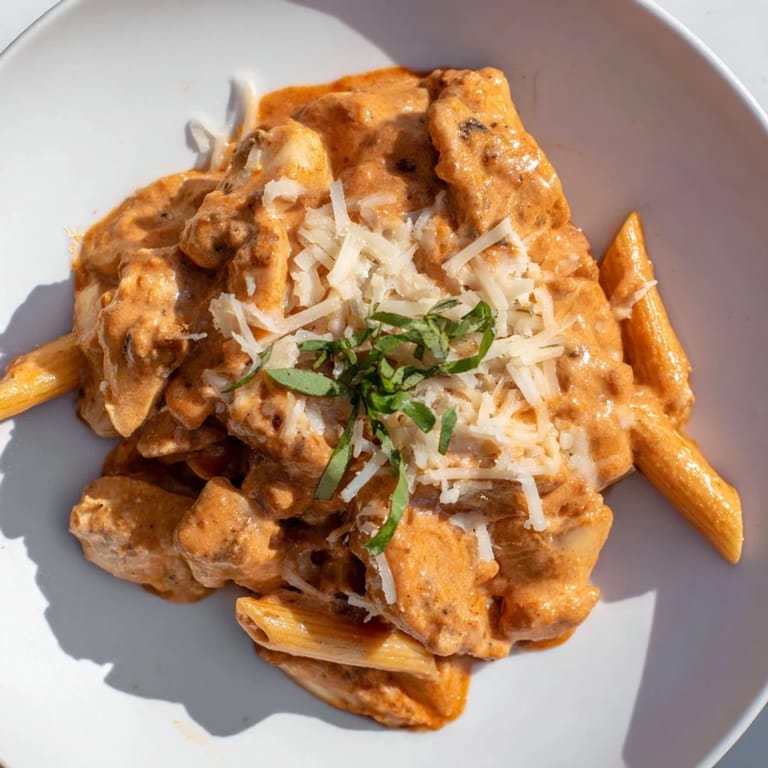
- Add sliced chicken and drained pasta to the sauce and toss gently until everything is coated. Pour in some of the reserved pasta water a little at a time until the sauce coats the pasta with a silky sheen instead of looking dry.
- Finish and serve:
- Plate immediately while everything is hot, scatter the remaining fresh basil over top, and offer extra parmesan at the table for anyone who wants it.
 Save to Pinterest
 There was a moment, just before serving, when my mom tasted a spoonful of sauce straight from the pot and said, "This is what good cooking tastes like." Not complicated or showing off, just pure, balanced comfort that made her close her eyes. That's when I understood this recipe isn't about technique or fancy ingredients; it's about taking simple things and treating them with care.
Why Chicken Matters Here
Chicken breasts are often thought of as bland canvas, but when you cook them right—seasoned, seared until golden, and finished before they dry out—they become the perfect vehicle for a cream sauce. The way the meat absorbs and plays against the brightness of basil and tartness of tomato is why this dish feels so balanced. Cooking them all the way through but not a second longer is the difference between dinner that tastes great and dinner that tastes memorable.
Timing Is Everything
The beauty of forty minutes total is that everything happens in sequence without stress, which means you're never scrambling and the components come together at their peak. Pasta water simmers while you work on the chicken; the sauce builds while the chicken rests; everything joins at exactly the right moment so nothing sits cooling on the counter. Once you've made this twice, your hands know the rhythm, and it becomes almost meditative to prepare.
Variations That Work
This sauce is forgiving enough to shift with what you have or what you're craving, and I've learned that the best versions come from trusting your instinct to adjust. Spinach brings an earthiness that makes the dish feel lighter; mushrooms add umami depth; even a splash of white wine after the onions mellows everything in a different way. The core structure—butter, onion, garlic, tomato, cream—stays the same, so you're just shifting the supporting cast.
- A handful of fresh spinach wilted into the warm sauce at the end adds green without changing the flavor much.
- Sautéed mushrooms replace the chicken if you want vegetarian, and they soak up the sauce beautifully.
- A crisp white wine sipped alongside makes the meal feel intentional, even if it's a Tuesday night.
 Save to Pinterest
 This is the kind of recipe that reminds you why cooking matters—not because it's impressive, but because it brings people to the table. Make it tonight.
Recipe FAQs
- → How do I ensure the chicken stays tender?
Cook chicken over medium-high heat until golden and cooked through, then let it rest before slicing to retain juices.
- → Can I substitute the penne pasta with something else?
Yes, rigatoni or fusilli work well and hold the sauce nicely.
- → What’s the best way to get a creamy sauce without it splitting?
Simmer cream gently on low heat after adding to avoid curdling and stir constantly.
- → How to deepen the sauce’s flavor?
Deglaze the pan with a splash of white wine after sautéing the onions for added complexity.
- → Can I switch basil for another herb?
Spinach can be used for a different twist, adding a mild, fresh flavor.