 Save to Pinterest
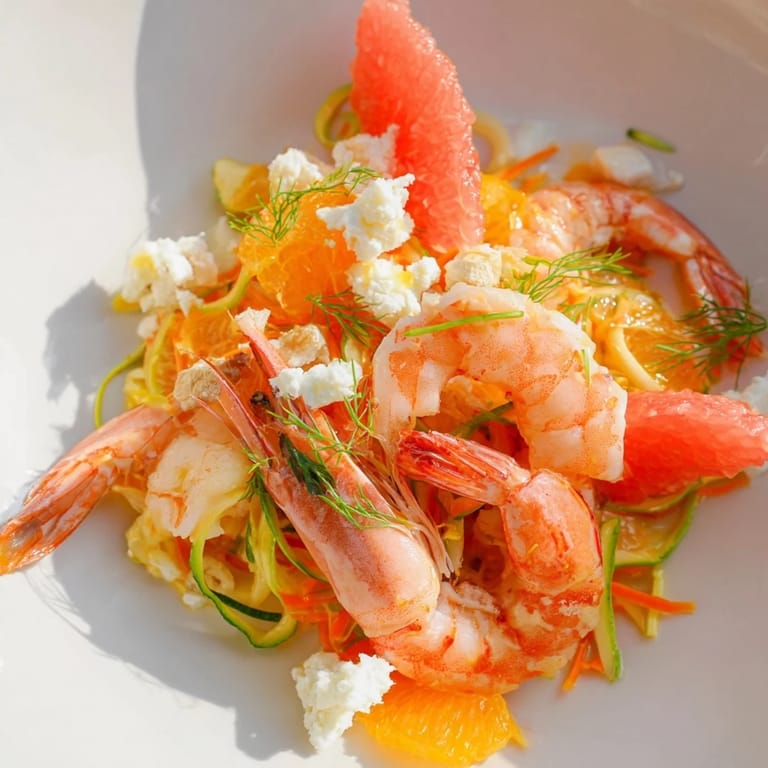
 The first time I plated The Coral Reef, I was trying to impress someone who'd just returned from a diving trip in the Maldives. They'd spent weeks underwater, mesmerized by the colors and movement down there, and I wanted to capture that magic on a plate. I remembered them describing how the reef seemed to glow at sunset, with shrimp darting through shadows and light bouncing off every surface. That conversation stuck with me, and one Tuesday evening, I found myself arranging pink shrimp, citrus segments, and melted cheese like I was building my own tiny ecosystem. It wasn't about recreating the ocean—it was about creating a moment that felt alive.
I made this for a dinner party where everyone was tired of the same old chicken-and-sauce routine, and the moment that platter came out of the broiler, the whole conversation shifted. Someone laughed and said it looked too beautiful to eat, which is ridiculous, but that's exactly the kind of reaction I've learned to trust. The dish sits somewhere between sophisticated and playful—it doesn't take itself too seriously, but it absolutely delivers on flavor.
Ingredients
- Large pink shrimp (500 g): These cook so quickly that you have maybe two minutes of grace before they toughen up, so buy them fresh if you can and don't walk away from the skillet.
- Oranges and pink grapefruit: The segmentation takes a little patience, but the payoff is worth it—those jewel-like pieces are what make the plate sing visually and taste bright.
- Lemon juice: This is your insurance policy; it keeps the shrimp tender and prevents the whole dish from feeling heavy.
- Gruyère cheese (120 g): Don't skip the real stuff—that nutty, complex flavor is what separates this from any old cheese-topped seafood situation.
- Ricotta cheese (50 g): A dollop here and there adds clouds of creaminess that the broiler will turn almost mousse-like.
- Zucchini and carrot ribbons: Cut them thin so they soften in moments and become the tender base everything else sits on.
- Fresh chives and dill: These go on at the very end to keep their brightness and snap.
- Good olive oil: This is your finishing touch, so use something you actually enjoy tasting.
Tired of Takeout? 🥡
Get 10 meals you can make faster than delivery arrives. Seriously.
One email. No spam. Unsubscribe anytime.
Instructions
- Get your oven ready:
- Preheat your broiler to high while you prep everything else. You want it hot and eager when those vegetables are arranged, so you're only a few minutes away from the finish line.
- Season and cook the shrimp:
- Toss them with olive oil, lemon juice, salt, and pepper in a bowl, then sauté them in a hot skillet for exactly two minutes per side—they'll be just barely cooked through, still tender inside. Don't overcrowd the pan or you'll steam them instead of searing them.
- Prepare the citrus:
- Segment your oranges and grapefruit into a separate bowl, then toss them gently with the orange zest and a whisper of salt to coax out their juice.
- Soften the vegetables:
- Steam your zucchini ribbons and carrot strips for just a minute or two—they should still have a little snap to them. This is a dish that celebrates bright, fresh textures, not mush.
- Build your reef:
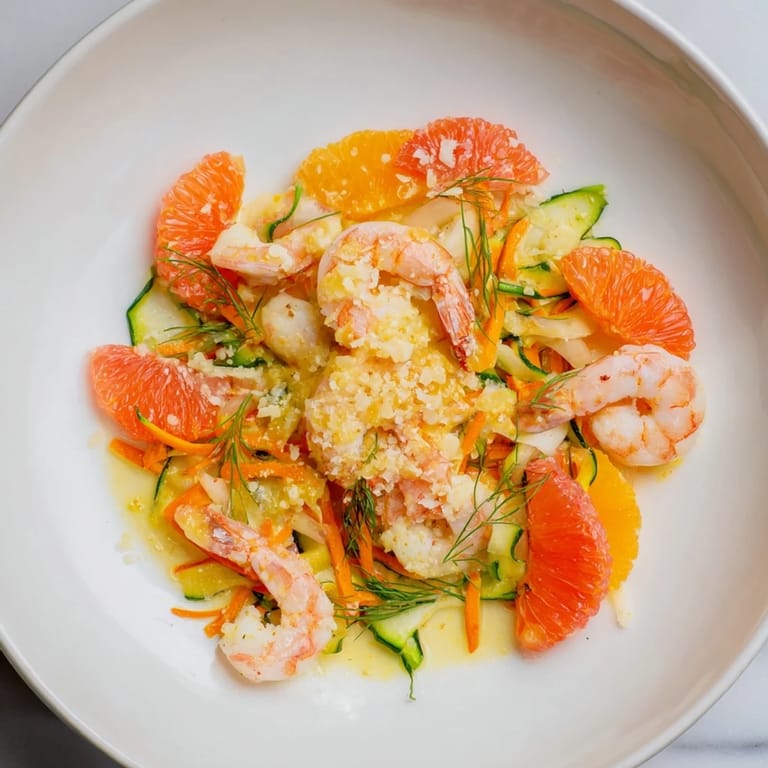
- Arrange those steamed vegetables on an oven-safe platter like they're the foundation of your coral structure, then nestle the shrimp and citrus pieces into and around them, thinking about color and balance as you go.
- Add the cheese:
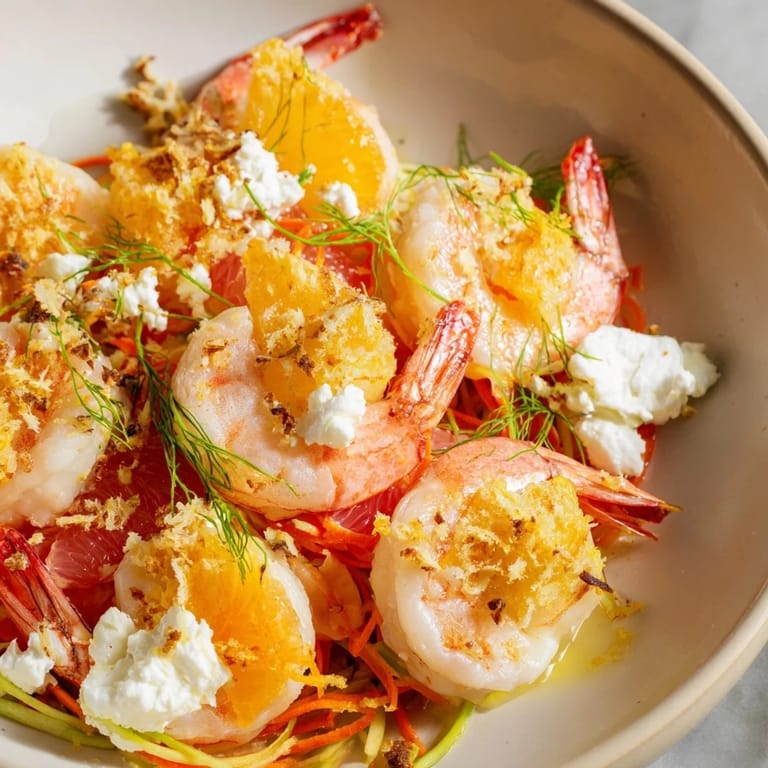
- Scatter your grated Gruyère evenly over everything, then dot it here and there with small spoonfuls of ricotta—don't be shy, but do be strategic.
- Broil until golden:
- Slide the platter under that hot broiler for 2 to 3 minutes, watching closely so the cheese bubbles and browns without burning. You're aiming for that moment when it's just starting to char at the edges.
- Finish and serve:
- Pull it out, scatter your fresh chives and dill over the top, drizzle with that last bit of olive oil, and get it to the table while everything's still hot and the cheese is at its most glorious.
 Save to Pinterest
 What surprised me most about this dish is that it became the thing people asked for instead of something I offered. It transformed a dinner party from polite and predictable into a moment where everyone was genuinely excited about what was in front of them.
Why This Tastes Like the Ocean Without Tasting Like Fish
The magic here is balance. The shrimp brings that briny, tender sweetness without any fishiness—that's what happens when you treat them with respect and don't overcook them. The citrus cuts through any richness and adds brightness, while the cheese adds umami depth. Together, they create something that feels sophisticated and ocean-inspired without tasting like you're eating a raw seafood bar. The steamed vegetables ground everything with a fresh, almost delicate texture.
Playing With Color and Arrangement
I've learned that how a dish looks affects how it tastes—not scientifically, but psychologically. When you slow down to arrange the pink shrimp, the sunset-orange segments, the pale green zucchini, and the orange carrots, you're creating anticipation. The platter becomes a conversation starter before anyone takes a bite. Don't overthink it, but do think about it. Contrast, repetition, and a little white space on the platter go a long way.
Customizing Your Reef
This dish is more flexible than it looks. Love pomegranate? Scatter those rubies across the top before serving. Have a block of Emmental instead of Gruyère? It'll bubble and brown just as beautifully. This is the kind of recipe that welcomes improvisation as long as you respect the core idea: tender, bright, and a little bit special. Think of it as a canvas, not a script.
- Try adding thin slices of watermelon radish or a handful of pomegranate seeds for extra color and a pop of tartness.
- Swap in Emmental or bubbly mozzarella if Gruyère isn't what you have on hand.
- A crisp Sauvignon Blanc or dry rosé is your drink of choice here, though a light lager works too if that's what you're in the mood for.
 Save to Pinterest
 This dish reminds me why I love cooking—it's a chance to turn something beautiful into something delicious, and to share both with people who matter. Make it, serve it, and watch what happens.
Recipe FAQs
- → What type of shrimp is best for this dish?
Large pink shrimp, peeled and deveined, work best as they cook quickly and retain a delicate texture.
- → Can I substitute Gruyère cheese?
Yes, Emmental or a bubbly mozzarella are excellent alternatives that still melt beautifully under the broiler.
- → How should the vegetables be prepared?
Zucchini ribbons and julienned carrots are steamed briefly until tender but still crisp, providing a fresh, colorful base.
- → What citrus fruits are included?
Segments of oranges and pink grapefruit, combined with lemon juice and orange zest, bring bright, fresh acidity.
- → How is the dish finished before serving?
A final broil melts and lightly browns the Gruyère cheese, followed by garnishing with fresh chives, dill, and a drizzle of olive oil.
- → Are there suggested wine pairings?
A crisp Sauvignon Blanc or a dry rosé complements the vibrant flavors and seafood elements effectively.