 Save to Pinterest
 I discovered the magic of wine-stained boards at a dinner party years ago when a friend casually arranged cheeses that had been swimming in red wine for weeks. The moment guests saw that dramatic bottle centerpiece surrounded by jewel-toned ingredients, the entire evening shifted—suddenly we weren't just nibbling appetizers, we were experiencing something theatrical and intimate all at once. Now, whenever I want to create that same sense of occasion, I build this board.
I'll never forget bringing this board to a potluck where someone asked if I'd attended culinary school. The truth was simpler and better: I'd learned that good food isn't about complexity, it's about intention and presentation. That conversation taught me that feeding people well is as much about the story you tell with your board as it is about what's on it.
Ingredients
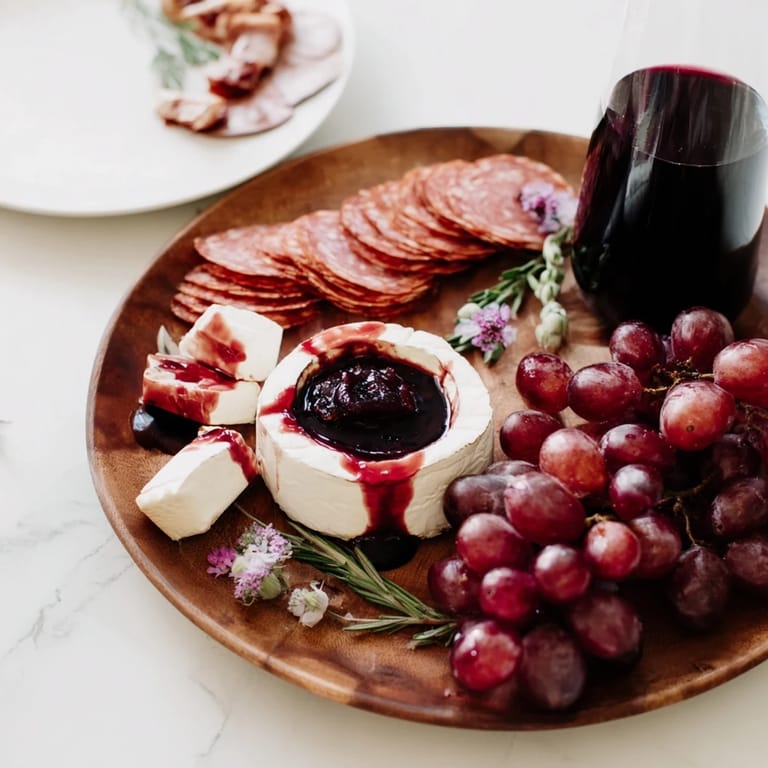
- Drunken goat cheese (200 g, sliced): This is the quiet star—the soft, creamy texture absorbs red wine beautifully, turning from white to a pale rose color. Slice it just before serving so it stays fresh and doesn't dry out.
- Red Wine BellaVitano or similar hard cheese (150 g, cubed): The hardness means it holds the wine's color longer and creates textural contrast. Look for cheeses specifically labeled as wine-aged or wine-soaked.
- Red wine-cured salami (100 g, thinly sliced): The wine cure gives it a subtle sweetness that balances salt. If you can't find wine-cured, regular salami works but won't have that special depth.
- Prosciutto (80 g, torn into ribbons): The delicate way it tears by hand makes arranging it feel less like food prep and more like creating art. Its saltiness plays beautifully against sweet wine notes.
- Red wine jelly (1/2 cup): This wobbling jewel catches light and invites people to spread it on crackers. Make it ahead so it sets properly.
- Red wine-poached grapes (1/2 cup): They become semi-translucent and taste like concentrated wine and fruit—guests always ask what they are.
- Red wine-infused dried cherries (1/4 cup): The acidity of cherries and tannins of wine create this perfect tart-sweet balance that keeps people reaching back.
- Red wine-marinated olives (1/3 cup): Whatever olives you choose, the wine marinade softens their harshness and makes them taste like they belong on this board.
- Baguette (1 small, sliced): Slice it fresh the day of serving, or toast it lightly. This is the edible surface for everything else.
- Red wine and rosemary crackers (1 cup): These amplify the wine theme and add herbal notes that tie the whole board together.
- Fresh rosemary sprigs and edible flowers: These aren't just decoration—the rosemary's aroma mingles with the wine scent, and flowers add color that makes people want to photograph it before eating.
Tired of Takeout? 🥡
Get 10 meals you can make faster than delivery arrives. Seriously.
One email. No spam. Unsubscribe anytime.
Instructions
- Set your stage:
- Find a large wooden board—the color matters because it will make your wine-stained cheeses glow. Remove any label from your wine bottle and give it a gentle wash. This bottle becomes your centerpiece, so place it off-center on the board (dead center looks too formal). Let the board sit on your counter for a moment so you can visualize how things will flow around that bottle.
- Arrange the main cheeses:
- Take your drunken goat cheese and let it tell the story first. Arrange slices in an arc around the base of the bottle, letting a few pieces actually rest against the glass at an angle—this creates visual movement. Do the same with the red wine BellaVitano cubes, alternating colors and textures. Step back. Does it look balanced? It should.
- Add the meats with intention:
- If using salami and prosciutto, create small piles rather than scattering everything evenly. Fan the salami slightly so its wine-dark color shows. Tear the prosciutto by hand into loose ribbons—the imperfect edges look more inviting than neat slices. Tuck these between cheese clusters.
- Nestle the jelly and scatter the accents:
- Pour your red wine jelly into a small dish and place it where it's visible but not dominant. Now scatter your poached grapes, infused cherries, and marinated olives in small clusters—think of them as edible jewels that draw the eye to different parts of the board. Vary the clusters; don't make them all the same size.
- Frame with bread and crackers:
- Arrange baguette slices in an arc, standing them at slight angles. Create another arc or line with your wine crackers. These aren't just functional—they're part of the composition, so placement matters.
- Finish with rosemary and flowers:
- Tuck fresh rosemary sprigs into gaps between cheeses. If using edible flowers, scatter them where they'll catch light. Step back and let your eyes travel around the board—every element should feel like it was meant to be there, not placed randomly.
- Serve with theater:
- Bring the board to your guests and pause for a moment. Let them take it in. Then encourage them to mix flavors—cheese with jelly, salami with grapes, crackers with everything. This isn't about eating in a specific order; it's about discovery.
 Save to Pinterest
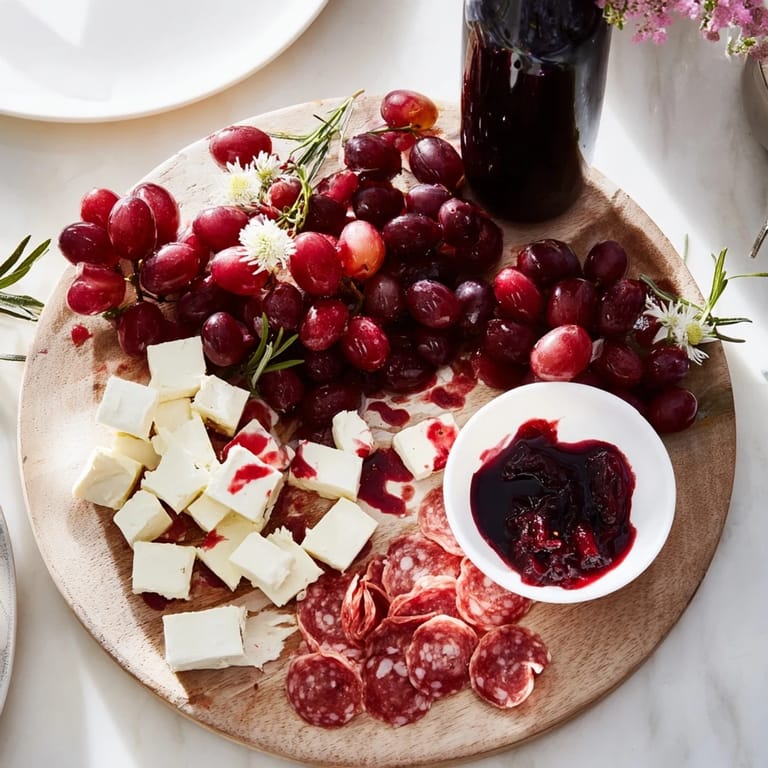
 The first time I made red wine-poached grapes, I was skeptical—grapes in wine seemed redundant. But biting into one of those concentrated, half-translucent gems changed my mind. A guest closed her eyes after eating one, and that's when I understood: this board isn't just food, it's an experience of flavors that taste like they've been loved and cared for.
Making Your Own Wine-Infused Components
While the cheeses come already wine-soaked from your cheese shop, the magic deepens when you prepare a few elements yourself. The poached grapes teach you something important: wine doesn't just add flavor, it transforms texture. When you simmer those seedless red grapes for exactly 10 minutes with sugar and a cinnamon stick, you're watching the boundary between fruit and syrup blur. The grapes absorb the wine's tannins and sweetness, becoming something that tastes more like wine than like grapes—in the best way. The same happens with dried cherries if you let them steep in leftover wine overnight. Take time to taste as you go. Your palate is the best guide.
The Art of Board Balance
A beautiful board is really about balance—color, texture, flavor, and visual weight distributed so your eye keeps moving instead of getting stuck in one place. The pale pink of drunken goat cheese needs dark wine-stained BellaVitano nearby. Soft textures (cheese, grapes) need contrast with something crisp (crackers, toast). Rich salted meats need something sweet or tart to clean your palate. When you understand these opposites create harmony, you stop thinking about placement as rules and start thinking about it as conversation—each ingredient talking to its neighbors.
Wine Pairing and Timing
This board practically makes itself when you have the right wine nearby. A fruity medium-bodied red—Pinot Noir, Merlot, or even a young Grenache—becomes both the inspiration for the ingredients and the perfect drink to sip while you eat. The tannins in the wine echo the flavors in every cheese, every bit of cured meat. If you're pouring wine as you serve the board, keep the bottle visible, maybe even place it near your centerpiece bottle. Let people understand that wine isn't just something you drink here—it's woven through every bite. One final thought: this board is best eaten slowly, in good company, where people aren't rushing. Give yourself permission to let it sit on the table for an hour if you need to. The flavors only deepen as everything reaches room temperature.
- Make the poached grapes and marinated components the day before if you can, so flavors have time to develop
- Keep extra crackers and bread in a basket nearby—people always want more than you expect
- Taste everything before you arrange it; you'll know exactly what flavors to highlight
 Save to Pinterest
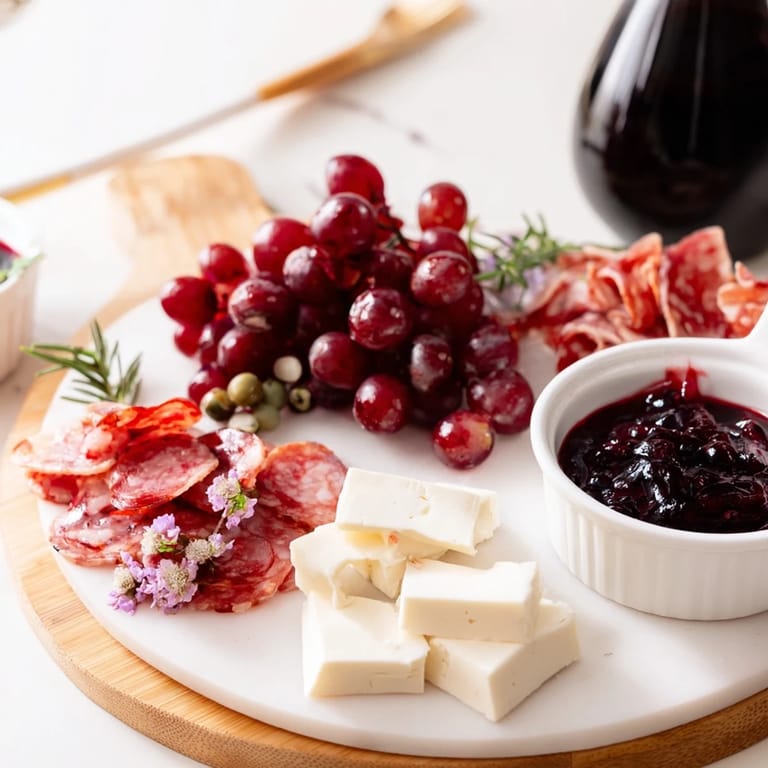
 This board is my answer to the question of how to make ordinary ingredients feel extraordinary. Every time someone looks at it with wonder before eating, I remember that hospitality isn't complicated—it's just about showing people they're worth the effort to arrange something beautiful.
Recipe FAQs
- → How are the cheeses prepared for this board?
The cheeses are soaked or infused with red wine beforehand, enhancing their flavor and creating a striking color contrast on the board.
- → Can this board accommodate vegetarian diets?
Yes, simply omit the cured meats and consider adding extra cheese or roasted nuts to maintain variety and texture.
- → What is the purpose of placing a wine bottle at the center?
The empty wine bottle acts as a visual centerpiece, around which the cheeses and accompaniments are artfully arranged for an appealing display.
- → How are the grapes prepared for the board?
Seedless grapes are poached in dry red wine with sugar and cinnamon, then cooled to add a sweet, wine-infused bite to the assortment.
- → What flavors can guests expect from this board?
Guests will enjoy a balance of rich, fruity, savory, and herbal notes from the wine-soaked cheeses, cured meats, marinated olives, and fresh rosemary garnish.
- → What accompaniments are included on the board?
Bread such as baguette slices and wine-and-rosemary crackers are served alongside red wine jelly, poached grapes, dried cherries, and marinated olives for diverse textures and flavors.