 Save to Pinterest
 There's something about a charcuterie board that stops conversations mid-sentence. I discovered this years ago when a friend brought one to a dinner party—not the fussy, tiny-cubed kind, but a sprawling wooden platter scattered with thick, unruly slices of meat and delicate cheese ribbons that caught the light. That night taught me that food doesn't need perfection to feel luxurious, just intention and a little drama. The Burlap and Lace is my homage to that philosophy: rustic meets refined, bold meets delicate, and somehow it all belongs together.
I made this for my partner's family last fall, and what I remember most is his mother laughing—actually laughing—at how I'd torn the smoked beef by hand instead of slicing it perfectly. She called it honest, and suddenly the whole platter felt less like something I'd assembled and more like something I'd created. She took photos. We drank wine until the bread ran out. Sometimes the best meals aren't about flawlessness at all.
Ingredients
- Smoked beef, 120 g: Thickly slice or tear by hand—the roughness is the point, and it catches the oil beautifully.
- Rustic country ham, 120 g: Roughly chop this into pieces that feel generous and unrefined; it anchors the platter with salt and funk.
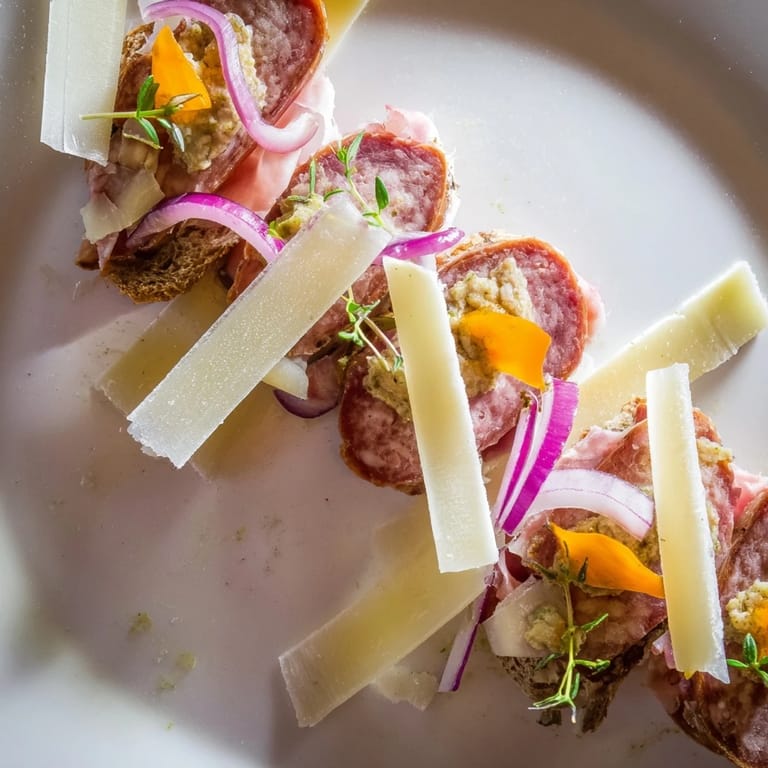
- Smoked sausage, 120 g: Thick-cut rounds or wedges work best; thin slices disappear, but meaty chunks command attention.
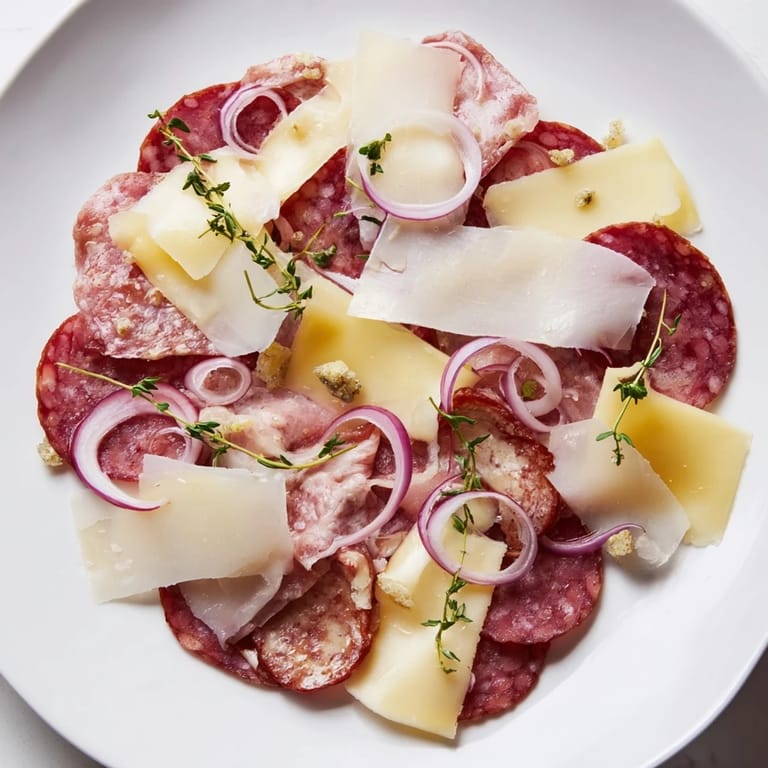
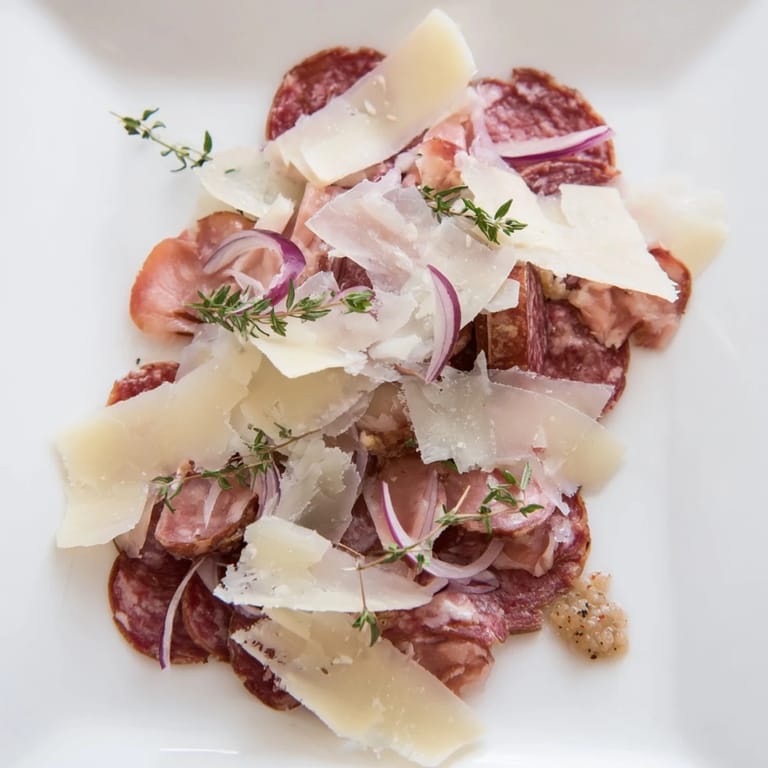
- Parmigiano Reggiano, 60 g: This is the MVP—use a cheese plane to shave it into translucent sheets that taste like crystalline salt and umami.
- Aged Manchego, 60 g: Its nuttiness bridges the gap between the sharp Parm and creamy Gruyère; shave it the same way.
- Gruyère, 60 g: The smooth operator that ties everything together; those thin ribbons melt slightly from the warmth of your hands.
- Cornichons, 1 small handful: Their sharp brine cuts through the richness like a palate cleanser, though honestly, they're half decoration.
- Red onion, 1 small: Thinly slice it raw; the bite adds drama and the purple looks stunning against aged gold.
- Grainy mustard, 2 tbsp: Small dollops act as flavor accents and visual punctuation on the board.
- Fresh thyme or rosemary sprigs, 1 small bunch: More than garnish—rub it between your fingers first so the oils release and perfume the whole experience.
- Rustic country loaf or crusty baguette, sliced (optional): If you include bread, slice it just before serving so it stays crisp and warm.
Tired of Takeout? 🥡
Get 10 meals you can make faster than delivery arrives. Seriously.
One email. No spam. Unsubscribe anytime.
Instructions
- Build Your Foundation:
- Arrange the rough-cut meats in overlapping layers or casual mounds across your wooden board, leaving room to breathe. Don't overthink placement; rusticity means imperfection is the style.
- Shave the Cheeses:
- Using a cheese plane or vegetable peeler, draw the blade away from you in long, deliberate strokes to create thin, almost translucent ribbons. Drape them over and beside the meats like you're laying silk—they'll catch light and air, and that's where the elegance lives.
- Scatter the Accents:
- Distribute cornichons, sliced red onion, and small dollops of grainy mustard around the platter with intention but without fussiness. These pockets of brightness prevent any single flavor from overwhelming the palate.
- Finish with Aroma:
- Tuck fresh thyme or rosemary sprigs throughout, then gently crush some leaves between your fingers and scatter the pieces. The aroma hits before the taste.
- Serve with Confidence:
- Bring it to the table immediately, with fresh bread on the side if you're using it. Set it down and step back—let people discover it themselves.
 Save to Pinterest
 My grandmother used to say that a good charcuterie board is proof that hospitality doesn't require hours in the kitchen. She meant it as a practical lesson, but I think she was talking about something deeper: the generosity of knowing what's already good and trusting it to shine. That insight changed how I cook.
The Art of Rough Elegance
There's a deliberate tension on this platter between what looks effortless and what actually takes a steady hand. The torn meats suggest kitchen carelessness, but those cheese ribbons require patience and the right tool. Leaning into this contradiction—celebrating both the rustic and the refined—is what makes the board feel intentional rather than thrown together. I learned this by watching how people react: they eat with a kind of reverence, like they're being let in on a secret about how good food works.
Pairing and Wine Logic
This board craves bold company. A full-bodied red wine—something with enough tannin to stand up to the salt and smoke—transforms the meal into conversation. But I've also found that a crisp, dry white, especially a Sauvignon Blanc or Albariño, cuts through the richness in an unexpected way that people love. The key is choosing one wine type and committing; mixing styles across the table dilutes the experience. Think of the wine as a fifth ingredient that ties the whole story together.
Building Your Own Version
The beauty of this board is its flexibility without losing its identity. You can swap cheeses for other aged, firm varieties—Gruyère for Emmental, Manchego for Mitica—and no one will know the difference. Some nights I add toasted walnuts for crunch or dried figs for sweetness, which completely shifts the mood. Dried apricots work too, and they gild the board with color. The foundation stays constant: quality meats, shaved cheeses, brightness, and aroma. Everything else is personal preference.
- Toast walnuts at 350°F for 8 minutes to amplify their nuttiness and snap.
- Chop dried fruits roughly so they don't disappear between meat slices.
- Taste everything before placing it; your palate is your only guide.
 Save to Pinterest
 This board won't make you famous, but it might make someone remember the evening differently. That's enough.
Recipe FAQs
- → What types of meats work best for this platter?
Smoked beef, rustic country ham, and smoked sausage provide a hearty, flavorful base with varied textures that complement the cheeses well.
- → How should the cheeses be prepared for best presentation?
Using a cheese plane or vegetable peeler, shave the cheeses into thin, translucent ribbons to highlight their texture and allow them to drape elegantly over the meats.
- → Can I customize the accompaniments on the platter?
Yes, feel free to add nuts like toasted walnuts or dried fruits such as figs or apricots to enhance flavor and variety.
- → What herbs are recommended for garnishing?
Fresh sprigs of thyme or rosemary add aromatic notes and visual appeal to the platter.
- → Is this platter suitable for a gluten-free diet?
Yes, the platter ingredients themselves are gluten-free, though serving with bread should be avoided or substituted with gluten-free options.
- → How long does it take to assemble the platter?
The preparation takes about 15 minutes with no cooking required, making it a quick and elegant dish to assemble.