 Save to Pinterest
 Black currant panna cotta arrived in my kitchen on a rainy afternoon when a friend mentioned craving something elegant but not fussy. I'd never worked with black currants before, honestly—they felt a bit mysterious, that deep purple color almost intimidating. But there's something about the way they burst in the pan, releasing that tart, sophisticated flavor, that made me understand why this dessert exists. It's the kind of thing that looks like you spent hours on it, when really you're just letting time and the refrigerator do the work.
I made this for my partner's birthday dinner last summer, and I remember standing in the kitchen listening to them talk with friends in the living room while the panna cottas chilled. Every hour I'd peek at them through the fridge door like they were precious cargo, and by the time we plated them with that glossy berry glaze on top, I felt genuinely proud. They took one bite and their whole face changed—that's the moment I knew this recipe was a keeper.
Ingredients
- Heavy cream: This is where the magic happens—use the best quality you can find because it's the star here, and you'll taste the difference between grocery store and real cream.
- Whole milk: Keeps things from being too rich while still giving you that luxurious mouthfeel.
- Granulated sugar: Dissolves cleanly into the warm cream without leaving any grainy feeling behind.
- Powdered gelatin: The invisible hero—it gives panna cotta its signature wobble without making it rubbery or dense.
- Cold water: Essential for blooming the gelatin properly, which is the one thing you genuinely can't skip.
- Pure vanilla extract: A whisper of it rounds out the cream and lets the black currant shine without competing.
- Fresh or frozen black currants: Both work equally well—frozen are sometimes easier to find and honestly just as good once they warm up.
- Black currant jam: The optional glaze, but if you use it, look for one with real fruit and minimal added anything.
Tired of Takeout? 🥡
Get 10 meals you can make faster than delivery arrives. Seriously.
One email. No spam. Unsubscribe anytime.
Instructions
- Bloom the gelatin:
- Sprinkle the powdered gelatin over cold water in a small bowl and let it sit for five minutes—it'll look a bit like wet sand, which is exactly right. This step matters because it lets the gelatin absorb water evenly, so it dissolves smoothly later without lumps.
- Warm the cream base:
- Combine heavy cream, milk, and sugar in a medium saucepan over medium heat, stirring gently until the sugar disappears completely. You're aiming for steamy and hot, but stop before it boils—boiling cream changes its texture in ways you don't want.
- Bring the gelatin into the mix:
- Remove the saucepan from heat and add your bloomed gelatin along with vanilla extract, whisking steadily until everything is completely smooth and combined. The warmth of the cream is just enough to dissolve the gelatin without any grainy texture remaining.
- Cook down the black currants:
- In a separate small saucepan, combine black currants, sugar, and water, then simmer over medium heat for five to seven minutes until the berries burst and release their juice. You'll know it's ready when the mixture looks thicker and the berries have mostly fallen apart.
- Strain out the solids:
- Pour the cooked black currant mixture through a fine-mesh sieve, pressing gently with the back of a spoon to extract as much ruby-colored juice as possible. This step gives you that smooth, pure puree without any grainy bits of seed or skin.
- Marry the flavors:
- Whisk the strained black currant puree into the warm cream mixture slowly and steadily until the color is even and uniform throughout. Take your time here—rushing this step sometimes creates streaks instead of that beautiful marbled effect.
- Set in the ramekins:
- Pour the mixture evenly into four lightly greased ramekins or dessert glasses, then let them cool to room temperature on the counter before moving them to the refrigerator. Set them somewhere level and undisturbed—at least four hours, but honestly overnight is even better if you have the patience.
- Glaze and serve:
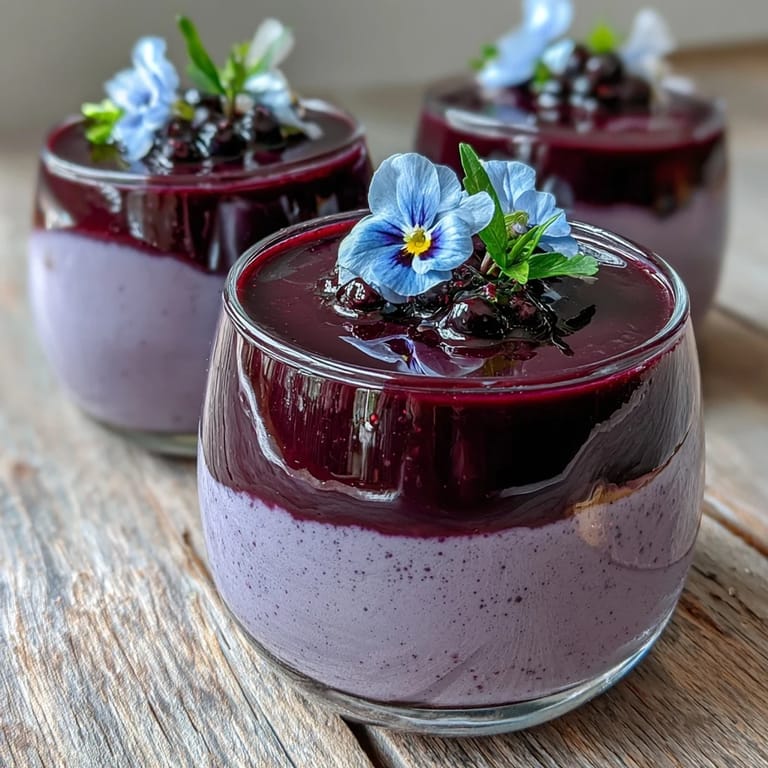
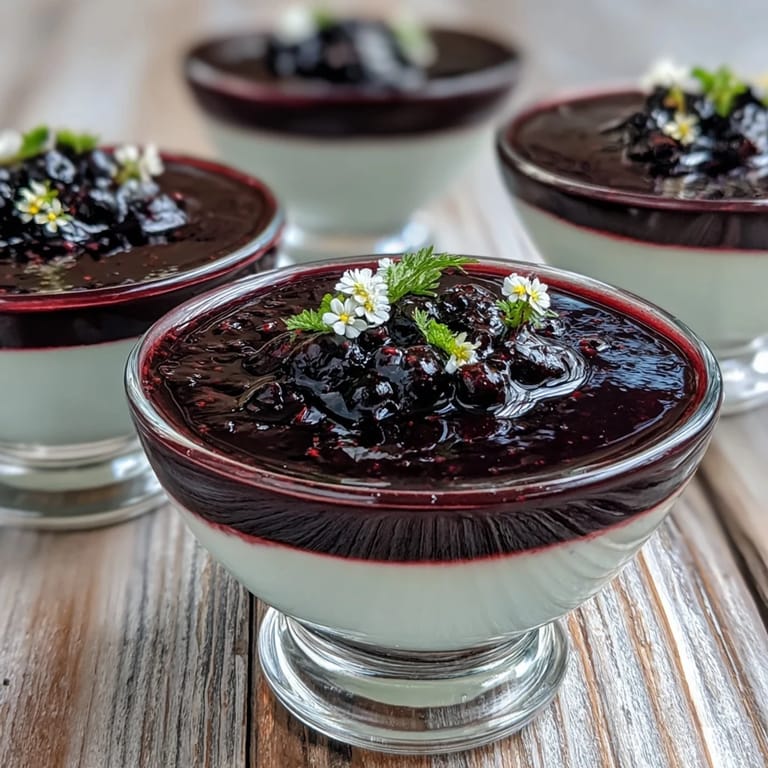
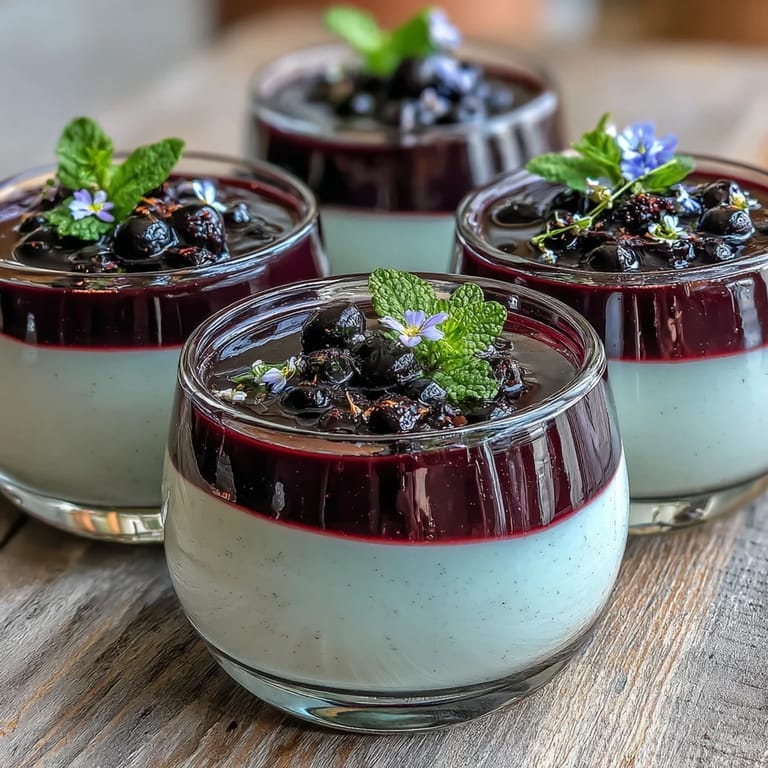
- If you're using the optional glaze, warm the black currant jam with a tablespoon of water in a small saucepan until it's smooth and pourable, let it cool for a minute, then spoon a thin layer over each panna cotta just before serving. This adds a little extra texture and a glossy finish that looks restaurant-quality.
 Save to Pinterest
 There's a moment when you pull the panna cottas from the fridge and see them perfectly set, that slight wobble when you move the ramekin, the color shifted from cream to this gorgeous purple-rose—that's when you realize you've made something genuinely beautiful. My grandmother saw this dessert at a dinner party and asked for the recipe, and I loved that it bridged something between the cooking I was learning and the cooking she'd always known.
Why Black Currants Matter Here
Black currants are a bit of a secret weapon in the dessert world—they're tart without being sour, complex without being overwhelming, and they have this deep, almost jammy quality that feels instantly sophisticated. When I first started cooking with them, I thought they'd be too bold, but the cream somehow tames them while they add real character to something that could otherwise feel plain. They're also packed with flavor, so you don't need much to make an impact, which means your dessert never tastes cloyingly sweet.
Make It Your Own
This recipe is genuinely forgiving once you understand the basic structure, which means you can play with it without breaking anything. I've seen people add a splash of Cassis liqueur to the cream base, or layer blackberries or raspberries instead of black currants, or even add a tiny pinch of cardamom to the vanilla. The foundation is solid enough that you can experiment, and the worst that happens is you learn something for next time.
Serving and Storage
Panna cotta is best served cold, straight from the fridge, and it keeps beautifully for three to four days covered loosely—though honestly it rarely lasts that long. You can top it with fresh black currants, a small dollop of whipped cream, or even a crisp almond biscuit if you want to add textural contrast. If you're making this for a dinner party, assemble everything except the glaze the day before, then add that final glossy layer right before serving for maximum visual impact.
- Serve each panna cotta in its ramekin, or run a small warm knife around the edge and invert onto a plate for a more dramatic presentation.
- Pair it with Moscato d'Asti or Prosecco—the slight sweetness and bubbles complement the tart berries perfectly.
- If black currants aren't available where you live, frozen ones ship well, and blackberries or blueberries make genuine substitutes without changing the spirit of the dish.
 Save to Pinterest
 This dessert taught me that simple ingredients, proper technique, and patience create something that tastes like you've been cooking for years. Every time I make it, it feels a little bit like magic.
Recipe FAQs
- → What makes panna cotta different from other custards?
Panna cotta uses gelatin rather than eggs for setting, creating a lighter, silkier texture that's less dense than traditional baked custards. The absence of eggs allows the delicate cream flavor to shine through while the gelatin provides a gentle, melt-in-your-mouth consistency.
- → Can I prepare this dessert in advance?
Absolutely. Panna cotta actually benefits from being made ahead—it needs at least 4 hours to set properly. You can prepare it up to 2 days in advance and keep it refrigerated, covered with plastic wrap. Add the glaze just before serving for the best presentation.
- → What can I use if I can't find fresh black currants?
Frozen black currants work perfectly and are often more readily available. You can also substitute with blackberries, blueberries, or even cherries for a different but equally delicious variation. Adjust sugar slightly depending on the natural sweetness of your chosen fruit.
- → Why is my panna cotta not setting properly?
This usually happens if the gelatin wasn't fully dissolved or if the mixture boiled, which can break down the gelatin's structure. Ensure the cream mixture only heats until steaming and sugar dissolves—never to a rolling boil. Also make sure gelatin blooms fully before adding.
- → How do I unmold panna cotta successfully?
Dip the ramekin briefly in warm water for 5-10 seconds, then run a thin knife around the edge. Place a serving plate on top and invert quickly and confidently. If serving in glasses, simply skip unmolding and layer the currant puree between cream layers for a beautiful presentation.