 Save to Pinterest
 I discovered black currant marshmallows quite by accident when a friend handed me a jar of homemade purée and challenged me to do something unexpected with it. The tart, almost jammy smell reminded me of late summer in northern Europe, and I found myself wondering if that intensity could translate into something light and airy. That evening, I stood in my kitchen mixing gelatin and hot syrup, watching it transform into clouds, then swirling in that gorgeous deep purple fruit. What emerged was something between a childhood candy memory and an entirely new experience.
My sister came home from uni one winter and found me testing batches on the kitchen counter. She tried one and immediately started dunking them into hot chocolate, declaring they were better than anything store-bought. By the next morning, I'd made three more batches. That's when I knew these weren't just a fun experiment—they were the kind of thing people actually want to eat again and again.
Ingredients
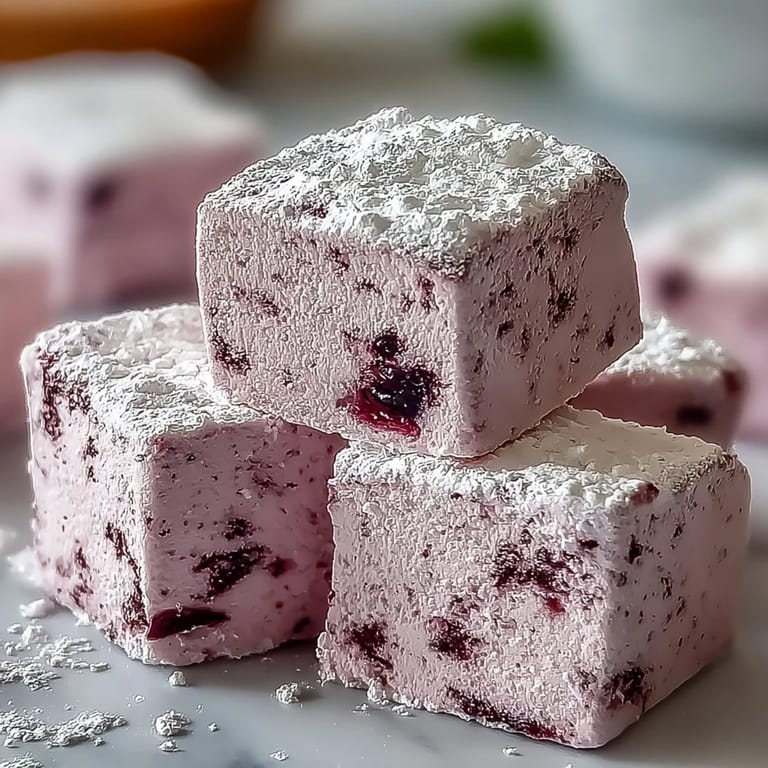
- Blackcurrant Purée (2/3 cup): The star that gives these marshmallows their distinctive tart personality and gorgeous lavender hue; use fresh or frozen berries blended smooth and strained to remove seeds.
- Powdered Unflavored Gelatin (3 packets): The structure that creates that signature pillowy texture—don't skip blooming it properly or your marshmallows will be dense.
- Granulated Sugar (1 1/2 cups): Dissolved in syrup and cooked to hard-ball stage, this is what creates the airy structure when whipped with gelatin.
- Light Corn Syrup (1/2 cup): Prevents crystallization and keeps marshmallows tender; don't substitute without understanding how it changes texture.
- Vanilla Extract (1 tsp): A subtle note that balances the tartness without competing with the black currant.
- Cold Water (1/2 cup for gelatin, 1/4 cup for syrup): Temperature matters here—cold water blooms gelatin properly, and the syrup water must be measured exactly.
- Salt (1/4 tsp): Brightens the black currant flavor and prevents the marshmallows from tasting one-dimensional.
- Confectioners Sugar and Cornstarch (1/2 cup and 1/4 cup): The dusting mixture that prevents sticking and keeps marshmallows from clumping together in storage.
Tired of Takeout? 🥡
Get 10 meals you can make faster than delivery arrives. Seriously.
One email. No spam. Unsubscribe anytime.
Instructions
- Prepare Your Canvas:
- Line your 8x8 inch pan with parchment paper and dust generously with the confectioners sugar-cornstarch mix; this prevents the marshmallows from sticking and makes them easier to cut later. Take a moment to make sure the mixture gets into the corners.
- Reduce the Black Currants:
- In a small saucepan, combine the purée with water and sugar, then simmer for 4–5 minutes until it darkens slightly and thickens just a touch. This concentrates the flavor and removes excess moisture that could make your marshmallows weep.
- Bloom the Gelatin:
- Sprinkle the gelatin over cold water in your stand mixer bowl and let it sit undisturbed for 10 minutes—you'll see it absorb the water and become spongy. This step is non-negotiable; it ensures the gelatin dissolves smoothly when the hot syrup hits it.
- Cook the Syrup to Temperature:
- Combine sugar, corn syrup, and water in a saucepan over medium-high heat, stirring only until the sugar dissolves, then insert a candy thermometer and stop stirring. Watch it carefully as it approaches 240°F—you want hard-ball stage, not beyond, or the texture becomes grainy.
- Combine Hot and Cold:
- With the mixer on low speed, pour the hot syrup slowly into the bloomed gelatin—this is where patience saves you from splatters and overheating. Once it's in, increase the speed to high and whip for 6–8 minutes until the mixture triples in volume and becomes thick and glossy, almost like meringue.
- Fold in Flavor:
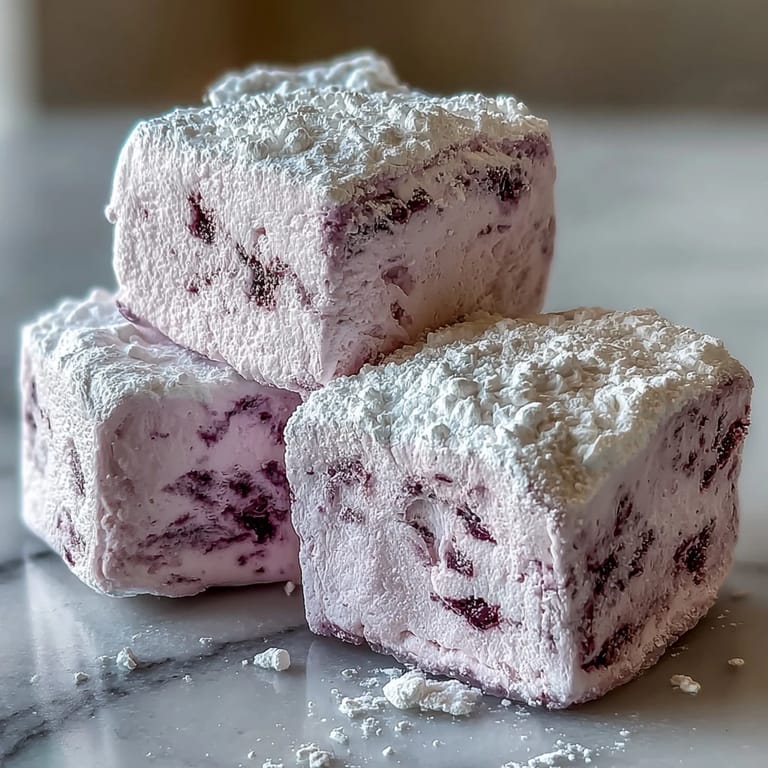
- Add salt, vanilla, and the cooled black currant purée, then whip for another 1–2 minutes until the color is even and the mixture is fully combined. You'll watch it shift from white to a soft, dreamy lavender—this is the moment it becomes beautiful.
- Set the Marshmallows:
- Pour the mixture immediately into your prepared pan and smooth the top with a spatula; work quickly because the mixture starts to set almost right away. Sift another generous layer of the sugar-cornstarch mixture on top and let it sit uncovered at room temperature for at least 4 hours, though overnight is even better.
- Cut and Finish:
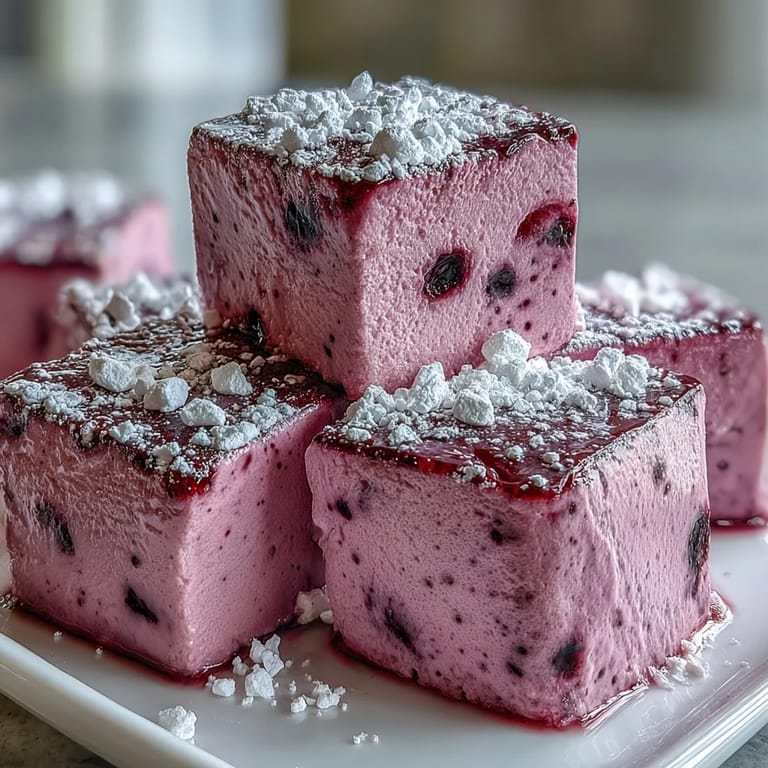
- Turn the slab onto a cutting board, peel away the parchment, and dust all exposed sides with more of the sugar-cornstarch mix. Cut into squares with a sharp knife that you've also dusted in the mixture—wet the knife slightly between cuts if it starts to stick.
 Save to Pinterest
 There's something deeply satisfying about making marshmallows from scratch that reminds me why I love cooking at all. It's technical enough to feel like an accomplishment, yet the result is something so simple and joyful that sharing them feels like giving someone a little piece of happiness.
Why Black Currants Work Here
Black currants have a complexity that vanilla marshmallows never achieve—they're tart without being sour, floral without being perfumy, and intense enough that a little goes a long way. The first time I tasted the finished marshmallow, I was struck by how the tartness lingered on my tongue, making me want another bite immediately. That tartness is the secret to why these don't feel cloyingly sweet like some store-bought marshmallows.
Troubleshooting Your Attempt
If your marshmallows come out dense, either your gelatin wasn't bloomed enough or your syrup didn't reach the right temperature—both are fixable next time with a thermometer and a timer. If they're too sticky to cut, you likely need more setting time or the humidity in your kitchen was higher than expected; store-bought desiccant packets become your best friend in this scenario. If the color is mottled instead of even, it usually means the black currant purée wasn't fully incorporated before pouring, which is why that final minute of whipping matters so much.
Beyond Hot Chocolate
While these shine in a mug of hot chocolate, I've found them equally at home crumbled over vanilla panna cotta or stirred into dark chocolate mousse for texture contrast. They also pair beautifully with a cup of Earl Grey tea, where the tartness echoes the bergamot.
- Dip them halfway in melted dark chocolate and let it set for an elegant after-dinner treat.
- Crush them and layer into homemade ice cream for a marshmallow-studded dessert.
- Keep them in an airtight container with parchment between layers to prevent sticking during storage.
 Save to Pinterest
 Homemade marshmallows have a way of making people feel cared for—there's something about offering something you made yourself that tastes nothing like the supermarket version. Once you've made these once, you'll understand why it becomes the gift people ask you to make again.
Recipe FAQs
- → What makes blackcurrant marshmallows unique?
The vibrant blackcurrant purée infuses these marshmallows with tart, fruity flavor and creates a beautiful soft lavender color throughout the fluffy interior.
- → How long do homemade marshmallows need to set?
Allow the marshmallow slab to sit uncovered at room temperature for at least 4 hours until fully set before cutting into squares.
- → Can I substitute other fruits for blackcurrant?
Yes, blackberry, raspberry, or cherry purée work beautifully as alternatives following the same preparation method.
- → Why is a candy thermometer essential?
The syrup must reach exactly 240°F (115°C) for proper marshmallow structure. Without accurate temperature, the texture will be too soft or sticky.
- → How should I store these marshmallows?
Keep in an airtight container with layers of parchment paper between pieces. They stay fresh for up to one week at room temperature.
- → What creates the marshmallow's fluffy texture?
Whipping the hot syrup into bloomed gelatin incorporates air and triples the volume, creating that signature pillowy, cloud-like consistency.